• 文献检索
  • 文档翻译
  • 深度研究
  • 学术资讯
  • Suppr Zotero 插件Zotero 插件
  • 邀请有礼
  • 套餐&价格
  • 历史记录
应用&插件
Suppr Zotero 插件Zotero 插件浏览器插件Mac 客户端Windows 客户端微信小程序
定价
高级版会员购买积分包购买API积分包
服务
文献检索文档翻译深度研究API 文档MCP 服务
关于我们
关于 Suppr公司介绍联系我们用户协议隐私条款
关注我们

Suppr 超能文献

核心技术专利:CN118964589B侵权必究
粤ICP备2023148730 号-1Suppr @ 2026

文献检索

告别复杂PubMed语法,用中文像聊天一样搜索,搜遍4000万医学文献。AI智能推荐,让科研检索更轻松。

立即免费搜索

文件翻译

保留排版,准确专业,支持PDF/Word/PPT等文件格式,支持 12+语言互译。

免费翻译文档

深度研究

AI帮你快速写综述,25分钟生成高质量综述,智能提取关键信息,辅助科研写作。

立即免费体验

基于机器学习的肺癌患者个体化药物反应预测。

Machine learning based personalized drug response prediction for lung cancer patients.

机构信息

College of Science and Engineering, Hamad Bin Khalifa University, Doha, Qatar.

FAST National University of Computer and Emerging Sciences, Karachi, Pakistan.

出版信息

Sci Rep. 2022 Nov 7;12(1):18935. doi: 10.1038/s41598-022-23649-0.

DOI:10.1038/s41598-022-23649-0
PMID:36344580
原文链接:https://pmc.ncbi.nlm.nih.gov/articles/PMC9640729/
Abstract

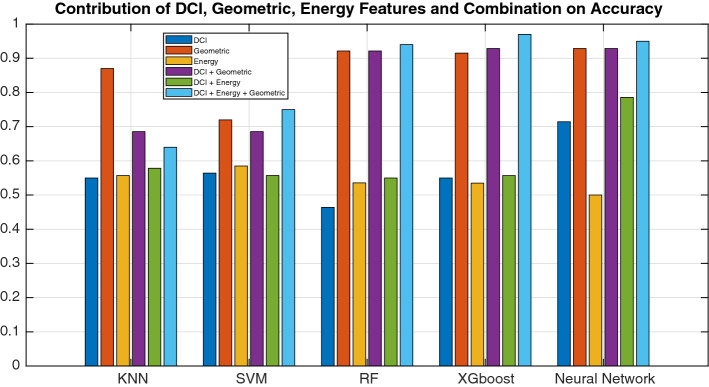
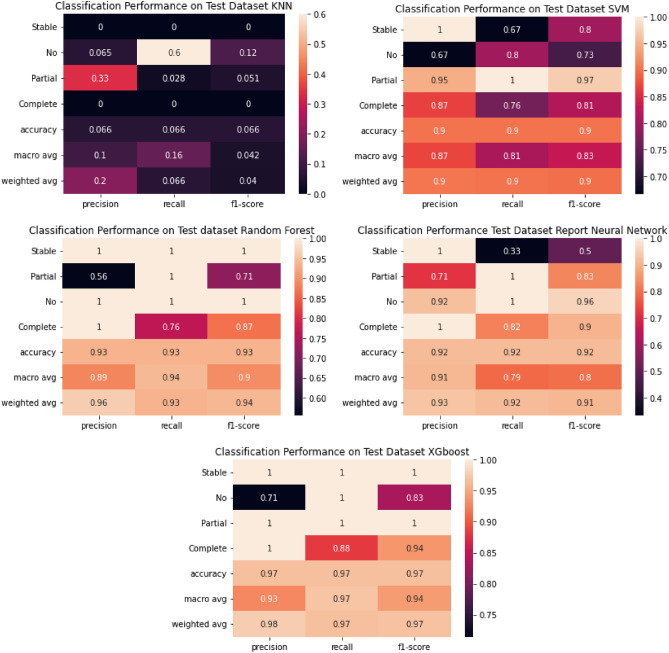
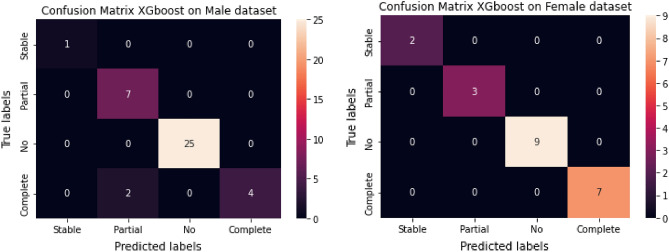
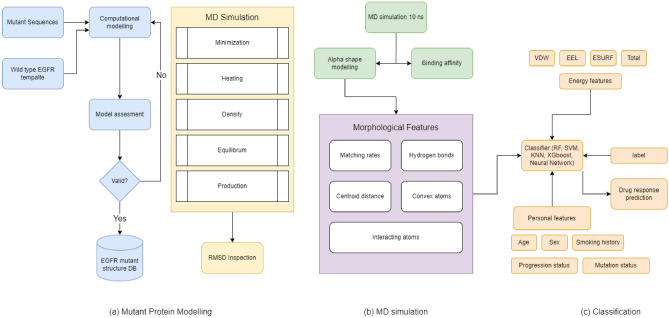
Lung cancers with a mutated epidermal growth factor receptor (EGFR) are a major contributor to cancer fatalities globally. Targeted tyrosine kinase inhibitors (TKIs) have been developed against EGFR and show encouraging results for survival rate and quality of life. However, drug resistance may affect treatment plans and treatment efficacy may be lost after about a year. Predicting the response to EGFR-TKIs for EGFR-mutated lung cancer patients is a key research area. In this study, we propose a personalized drug response prediction model (PDRP), based on molecular dynamics simulations and machine learning, to predict the response of first generation FDA-approved small molecule EGFR-TKIs, Gefitinib/Erlotinib, in lung cancer patients. The patient's mutation status is taken into consideration in molecular dynamics (MD) simulation. Each patient's unique mutation status was modeled considering MD simulation to extract molecular-level geometric features. Moreover, additional clinical features were incorporated into machine learning model for drug response prediction. The complete feature set includes demographic and clinical information (DCI), geometrical properties of the drug-target binding site, and the binding free energy of the drug-target complex from the MD simulation. PDRP incorporates an XGBoost classifier, which achieves state-of-the-art performance with 97.5% accuracy, 93% recall, 96.5% precision, and 94% F1-score, for a 4-class drug response prediction task. We found that modeling the geometry of the binding pocket combined with binding free energy is a good predictor for drug response. However, we observed that clinical information had a little impact on the performance of the model. The proposed model could be tested on other types of cancers. We believe PDRP will support the planning of effective treatment regimes based on clinical-genomic information. The source code and related files are available on GitHub at:   https://github.com/rizwanqureshi123/PDRP/ .

摘要

具有突变表皮生长因子受体 (EGFR) 的肺癌是全球癌症死亡的主要原因。针对 EGFR 开发了靶向酪氨酸激酶抑制剂 (TKI),这些抑制剂在生存率和生活质量方面显示出可喜的结果。然而,耐药性可能会影响治疗计划,并且大约一年后治疗效果可能会丧失。预测 EGFR 突变型肺癌患者对 EGFR-TKI 的反应是一个关键的研究领域。在这项研究中,我们提出了一种基于分子动力学模拟和机器学习的个性化药物反应预测模型 (PDRP),用于预测第一代 FDA 批准的小分子 EGFR-TKI,吉非替尼/厄洛替尼,在肺癌患者中的反应。在分子动力学 (MD) 模拟中考虑了患者的突变状态。考虑到 MD 模拟,为每个患者的独特突变状态建模,以提取分子水平的几何特征。此外,还将其他临床特征纳入药物反应预测的机器学习模型中。完整的特征集包括人口统计学和临床信息 (DCI)、药物-靶标结合位点的几何性质以及 MD 模拟中药物-靶标复合物的结合自由能。PDRP 采用 XGBoost 分类器,在 4 类药物反应预测任务中实现了 97.5%的准确率、93%的召回率、96.5%的精度和 94%的 F1 分数,达到了最先进的性能。我们发现,结合结合自由能对结合口袋的几何形状进行建模是药物反应的良好预测指标。然而,我们观察到临床信息对模型性能的影响很小。该模型可以在其他类型的癌症上进行测试。我们相信 PDRP 将支持基于临床基因组信息制定有效的治疗方案。源代码和相关文件可在 GitHub 上获得:https://github.com/rizwanqureshi123/PDRP/ 。
https://cdn.ncbi.nlm.nih.gov/pmc/blobs/d18d/9640729/b85fff52cbd1/41598_2022_23649_Fig12_HTML.jpg
https://cdn.ncbi.nlm.nih.gov/pmc/blobs/d18d/9640729/aa49a340bc66/41598_2022_23649_Fig1_HTML.jpg
https://cdn.ncbi.nlm.nih.gov/pmc/blobs/d18d/9640729/cec0a198be22/41598_2022_23649_Fig2_HTML.jpg
https://cdn.ncbi.nlm.nih.gov/pmc/blobs/d18d/9640729/4643e33a7ed1/41598_2022_23649_Fig3_HTML.jpg
https://cdn.ncbi.nlm.nih.gov/pmc/blobs/d18d/9640729/b6d43b4dddc5/41598_2022_23649_Fig4_HTML.jpg
https://cdn.ncbi.nlm.nih.gov/pmc/blobs/d18d/9640729/1f503e8fd592/41598_2022_23649_Fig5_HTML.jpg
https://cdn.ncbi.nlm.nih.gov/pmc/blobs/d18d/9640729/0b16ca7e905b/41598_2022_23649_Fig6_HTML.jpg
https://cdn.ncbi.nlm.nih.gov/pmc/blobs/d18d/9640729/d7670c7c2e82/41598_2022_23649_Fig7_HTML.jpg
https://cdn.ncbi.nlm.nih.gov/pmc/blobs/d18d/9640729/b707711b02aa/41598_2022_23649_Fig8_HTML.jpg
https://cdn.ncbi.nlm.nih.gov/pmc/blobs/d18d/9640729/a88b9c4a8034/41598_2022_23649_Fig9_HTML.jpg
https://cdn.ncbi.nlm.nih.gov/pmc/blobs/d18d/9640729/935a05020bab/41598_2022_23649_Fig10_HTML.jpg
https://cdn.ncbi.nlm.nih.gov/pmc/blobs/d18d/9640729/930b3d7befb2/41598_2022_23649_Fig11_HTML.jpg
https://cdn.ncbi.nlm.nih.gov/pmc/blobs/d18d/9640729/b85fff52cbd1/41598_2022_23649_Fig12_HTML.jpg
https://cdn.ncbi.nlm.nih.gov/pmc/blobs/d18d/9640729/aa49a340bc66/41598_2022_23649_Fig1_HTML.jpg
https://cdn.ncbi.nlm.nih.gov/pmc/blobs/d18d/9640729/cec0a198be22/41598_2022_23649_Fig2_HTML.jpg
https://cdn.ncbi.nlm.nih.gov/pmc/blobs/d18d/9640729/4643e33a7ed1/41598_2022_23649_Fig3_HTML.jpg
https://cdn.ncbi.nlm.nih.gov/pmc/blobs/d18d/9640729/b6d43b4dddc5/41598_2022_23649_Fig4_HTML.jpg
https://cdn.ncbi.nlm.nih.gov/pmc/blobs/d18d/9640729/1f503e8fd592/41598_2022_23649_Fig5_HTML.jpg
https://cdn.ncbi.nlm.nih.gov/pmc/blobs/d18d/9640729/0b16ca7e905b/41598_2022_23649_Fig6_HTML.jpg
https://cdn.ncbi.nlm.nih.gov/pmc/blobs/d18d/9640729/d7670c7c2e82/41598_2022_23649_Fig7_HTML.jpg
https://cdn.ncbi.nlm.nih.gov/pmc/blobs/d18d/9640729/b707711b02aa/41598_2022_23649_Fig8_HTML.jpg
https://cdn.ncbi.nlm.nih.gov/pmc/blobs/d18d/9640729/a88b9c4a8034/41598_2022_23649_Fig9_HTML.jpg
https://cdn.ncbi.nlm.nih.gov/pmc/blobs/d18d/9640729/935a05020bab/41598_2022_23649_Fig10_HTML.jpg
https://cdn.ncbi.nlm.nih.gov/pmc/blobs/d18d/9640729/930b3d7befb2/41598_2022_23649_Fig11_HTML.jpg
https://cdn.ncbi.nlm.nih.gov/pmc/blobs/d18d/9640729/b85fff52cbd1/41598_2022_23649_Fig12_HTML.jpg

相似文献

1
Machine learning based personalized drug response prediction for lung cancer patients.基于机器学习的肺癌患者个体化药物反应预测。
Sci Rep. 2022 Nov 7;12(1):18935. doi: 10.1038/s41598-022-23649-0.
2
Acquired resistance to epidermal growth factor receptor tyrosine kinase inhibitors in non-small-cell lung cancers dependent on the epidermal growth factor receptor pathway.非小细胞肺癌中表皮生长因子受体通路依赖性获得性表皮生长因子受体酪氨酸激酶抑制剂耐药。
Clin Lung Cancer. 2009 Jul;10(4):281-9. doi: 10.3816/CLC.2009.n.039.
3
Computational Methods for the Analysis and Prediction of EGFR-Mutated Lung Cancer Drug Resistance: Recent Advances in Drug Design, Challenges and Future Prospects.用于分析和预测 EGFR 突变型肺癌耐药性的计算方法:药物设计的最新进展、挑战和未来展望。
IEEE/ACM Trans Comput Biol Bioinform. 2023 Jan-Feb;20(1):238-255. doi: 10.1109/TCBB.2022.3141697. Epub 2023 Feb 3.
4
Contribution of EGFR and ErbB-3 Heterodimerization to the EGFR Mutation-Induced Gefitinib- and Erlotinib-Resistance in Non-Small-Cell Lung Carcinoma Treatments.表皮生长因子受体(EGFR)与ErbB-3异源二聚化在非小细胞肺癌治疗中对EGFR突变诱导的吉非替尼和厄洛替尼耐药性的作用
PLoS One. 2015 May 20;10(5):e0128360. doi: 10.1371/journal.pone.0128360. eCollection 2015.
5
Epidermal growth factor receptor (EGFR) mutations in a series of non-small-cell lung cancer (NSCLC) patients and response rate to EGFR-specific tyrosine kinase inhibitors (TKIs).表皮生长因子受体(EGFR)突变在一系列非小细胞肺癌(NSCLC)患者中的存在情况,以及对 EGFR 特异性酪氨酸激酶抑制剂(TKIs)的反应率。
Clin Transl Oncol. 2011 Nov;13(11):812-8. doi: 10.1007/s12094-011-0739-1.
6
Optimizing the sequencing of tyrosine kinase inhibitors (TKIs) in epidermal growth factor receptor (EGFR) mutation-positive non-small cell lung cancer (NSCLC).优化表皮生长因子受体(EGFR)突变阳性非小细胞肺癌(NSCLC)中酪氨酸激酶抑制剂(TKI)的治疗顺序。
Lung Cancer. 2019 Nov;137:113-122. doi: 10.1016/j.lungcan.2019.09.017. Epub 2019 Sep 23.
7
Lung Cancer Driven by BRAF Mutation Is Targetable by EGFR Kinase Inhibitors.BRAF 突变驱动的肺癌可被 EGFR 激酶抑制剂靶向治疗。
J Thorac Oncol. 2022 Feb;17(2):277-288. doi: 10.1016/j.jtho.2021.09.008. Epub 2021 Oct 12.
8
Treatment of Brain Metastases of Non-Small Cell Lung Carcinoma.非小细胞肺癌脑转移的治疗。
Int J Mol Sci. 2021 Jan 8;22(2):593. doi: 10.3390/ijms22020593.
9
Fighting cancer drug resistance: Opportunities and challenges for mutation-specific EGFR inhibitors.对抗癌症耐药性:突变特异性 EGFR 抑制剂的机遇与挑战。
Drug Resist Updat. 2015 May;20:12-28. doi: 10.1016/j.drup.2015.05.002. Epub 2015 May 12.
10
Prediction of sensitivity to gefitinib/erlotinib for EGFR mutations in NSCLC based on structural interaction fingerprints and multilinear principal component analysis.基于结构相互作用指纹和多线性主成分分析预测 NSCLC 中 EGFR 突变对吉非替尼/厄洛替尼的敏感性。
BMC Bioinformatics. 2018 Mar 7;19(1):88. doi: 10.1186/s12859-018-2093-6.

引用本文的文献

1
Integrative machine learning approach for forecasting lung cancer chemosensitivity: From algorithm to cell line validation.用于预测肺癌化疗敏感性的整合机器学习方法:从算法到细胞系验证
Comput Struct Biotechnol J. 2025 Jul 24;27:3307-3318. doi: 10.1016/j.csbj.2025.07.043. eCollection 2025.
2
Artificial intelligence and anti-cancer drugs' response.人工智能与抗癌药物的反应。
Acta Pharm Sin B. 2025 Jul;15(7):3355-3371. doi: 10.1016/j.apsb.2025.05.009. Epub 2025 May 21.
3
Research progress of HIF-1a on immunotherapy outcomes in immune vascular microenvironment.

本文引用的文献

1
Cancer statistics, 2022.癌症统计数据,2022 年。
CA Cancer J Clin. 2022 Jan;72(1):7-33. doi: 10.3322/caac.21708. Epub 2022 Jan 12.
2
Computational Methods for the Analysis and Prediction of EGFR-Mutated Lung Cancer Drug Resistance: Recent Advances in Drug Design, Challenges and Future Prospects.用于分析和预测 EGFR 突变型肺癌耐药性的计算方法:药物设计的最新进展、挑战和未来展望。
IEEE/ACM Trans Comput Biol Bioinform. 2023 Jan-Feb;20(1):238-255. doi: 10.1109/TCBB.2022.3141697. Epub 2023 Feb 3.
3
Visualization of Protein-Drug Interactions for the Analysis of Drug Resistance in Lung Cancer.
缺氧诱导因子-1α在免疫血管微环境中对免疫治疗结果的研究进展
Front Immunol. 2025 Feb 6;16:1549276. doi: 10.3389/fimmu.2025.1549276. eCollection 2025.
4
Predicting the hub interactome of COVID-19 and oral squamous cell carcinoma: uncovering ALDH-mediated Wnt/β-catenin pathway activation via salivary inflammatory proteins.预测新冠病毒病与口腔鳞状细胞癌的核心相互作用组:通过唾液炎症蛋白揭示醛脱氢酶介导的Wnt/β-连环蛋白信号通路激活
Sci Rep. 2025 Feb 3;15(1):4068. doi: 10.1038/s41598-025-88819-2.
5
Explainable Machine Learning Predictions for the Benefit From Chemotherapy in Advanced Non-Small Cell Lung Cancer Without Available Targeted Mutations.晚期非小细胞肺癌中无可用靶向突变时化疗获益的可解释机器学习预测
Clin Respir J. 2024 Dec;18(12):e70044. doi: 10.1111/crj.70044.
6
Performance of machine learning algorithms for lung cancer prediction: a comparative approach.机器学习算法在肺癌预测中的性能:一种对比方法。
Sci Rep. 2024 Aug 9;14(1):18562. doi: 10.1038/s41598-024-58345-8.
7
Particle uptake in cancer cells can predict malignancy and drug resistance using machine learning.利用机器学习预测癌细胞中的颗粒摄取可预测恶性肿瘤和耐药性。
Sci Adv. 2024 May 31;10(22):eadj4370. doi: 10.1126/sciadv.adj4370. Epub 2024 May 29.
8
Uncovering the subtype-specific disease module and the development of drug response prediction models for glioma.揭示胶质瘤的亚型特异性疾病模块及药物反应预测模型的开发。
Heliyon. 2024 Mar 1;10(5):e27190. doi: 10.1016/j.heliyon.2024.e27190. eCollection 2024 Mar 15.
9
Preclinical Anticipation of On- and Off-Target Resistance Mechanisms to Anti-Cancer Drugs: A Systematic Review.临床前预测抗癌药物的靶内和靶外耐药机制:系统评价。
Int J Mol Sci. 2024 Jan 5;25(2):705. doi: 10.3390/ijms25020705.
10
AI in drug discovery and its clinical relevance.人工智能在药物研发中的应用及其临床意义。
Heliyon. 2023 Jul;9(7):e17575. doi: 10.1016/j.heliyon.2023.e17575. Epub 2023 Jun 26.
可视化蛋白质-药物相互作用,分析肺癌的药物耐药性。
IEEE J Biomed Health Inform. 2021 May;25(5):1839-1848. doi: 10.1109/JBHI.2020.3027511. Epub 2021 May 11.
4
Correlated Motions and Dynamics in Different Domains of Epidermal Growth Factor Receptor With L858R and T790M Mutations.表皮生长因子受体 L858R 和 T790M 突变体不同结构域的相关运动和动力学。
IEEE/ACM Trans Comput Biol Bioinform. 2022 Jan-Feb;19(1):383-394. doi: 10.1109/TCBB.2020.2995569. Epub 2022 Feb 3.
5
Deep Learning for Deep Chemistry: Optimizing the Prediction of Chemical Patterns.深度化学的深度学习:优化化学模式预测
Front Chem. 2019 Nov 26;7:809. doi: 10.3389/fchem.2019.00809. eCollection 2019.
6
Consensus features nested cross-validation.共识特征嵌套交叉验证。
Bioinformatics. 2020 May 1;36(10):3093-3098. doi: 10.1093/bioinformatics/btaa046.
7
A Third Shot at EGFR: New Opportunities in Cancer Therapy.第三代 EGFR 靶向药物:癌症治疗的新机遇。
Trends Pharmacol Sci. 2019 Dec;40(12):941-955. doi: 10.1016/j.tips.2019.10.004. Epub 2019 Nov 6.
8
DeepDTA: deep drug-target binding affinity prediction.深度 DTA:深度药物-靶标结合亲和力预测。
Bioinformatics. 2018 Sep 1;34(17):i821-i829. doi: 10.1093/bioinformatics/bty593.
9
Binding site matching in rational drug design: algorithms and applications.理性药物设计中的结合位点匹配:算法与应用。
Brief Bioinform. 2019 Nov 27;20(6):2167-2184. doi: 10.1093/bib/bby078.
10
Prediction of sensitivity to gefitinib/erlotinib for EGFR mutations in NSCLC based on structural interaction fingerprints and multilinear principal component analysis.基于结构相互作用指纹和多线性主成分分析预测 NSCLC 中 EGFR 突变对吉非替尼/厄洛替尼的敏感性。
BMC Bioinformatics. 2018 Mar 7;19(1):88. doi: 10.1186/s12859-018-2093-6.