Vizcarra-Jiménez Dariela, Copaja-Corzo Cesar, Hueda-Zavaleta Miguel, Parihuana-Travezaño Edgar G, Gutierrez-Flores Maykel, Rivarola-Hidalgo Marco, Benites-Zapata Vicente A
Facultad de Ciencias de la Salud, Universidad Privada de Tacna, Tacna 23003, Peru.
Red Asistencial Ucayali EsSalud, Ucayali 25003, Peru.
Trop Med Infect Dis. 2022 Oct 31;7(11):342. doi: 10.3390/tropicalmed7110342.
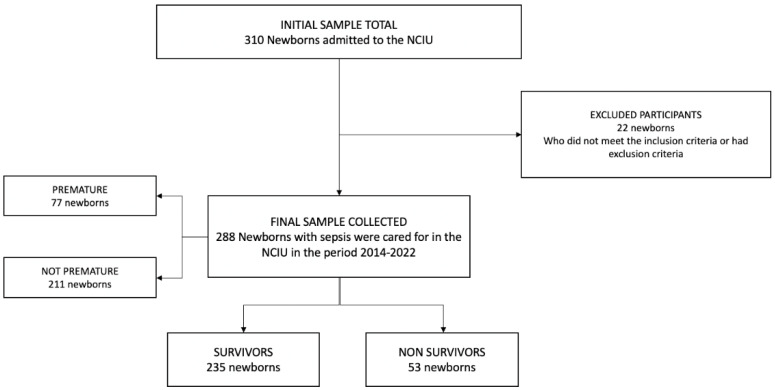
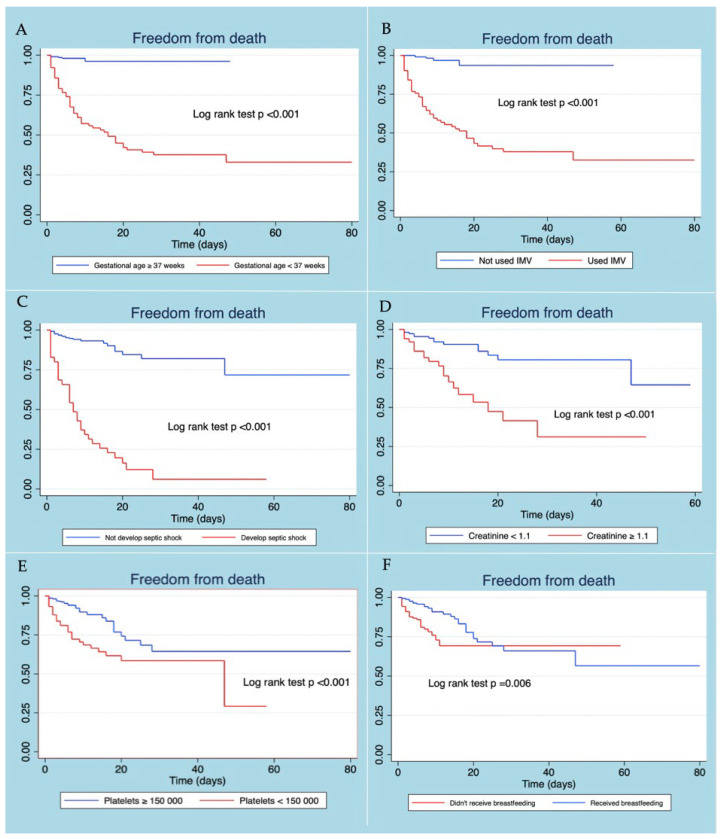
Reducing neonatal mortality is a global challenge. This study’s objective was to determine the predictors of mortality in patients with neonatal sepsis. The study was a retrospective cohort study in a Peruvian hospital from January 2014 to April 2022. Neonates diagnosed with sepsis were included. To find predictors of mortality, we used Cox proportional regression models. We evaluated 288 neonates with sepsis; the median birth weight and hospitalization time were 3270 g and seven days, respectively. During follow-up, 18.4% did not survive, and the most common complications were jaundice (35.42%), respiratory distress syndrome (29.51%), and septic shock (12.5%). The most isolated bacteria were Klebsiella pneumoniae. The risk factors associated with higher mortality were prematurity (aHR = 13.92; 95% CI: 1.71−113.51), platelets <150,000 (aHR = 3.64; 1.22−10.88), creatinine greater than 1.10 (aHR = 3.03; 1.09−8.45), septic shock (aHR = 4.41; 2.23−8.74), and admission to IMV (aHR = 5.61; 1.86−16.88), On the other hand, breastfeeding was associated with a lower risk of death (aHR = 0.25; 0.13−0.48). In conclusion, we report a high incidence of death and identify clinical (prematurity, septic shock, admission to IMV) and laboratory characteristics (elevated creatinine and thrombocytopenia) associated with higher mortality in patients with neonatal sepsis. Breastfeeding was a factor associated with survival in these patients.
降低新生儿死亡率是一项全球性挑战。本研究的目的是确定新生儿败血症患者死亡的预测因素。该研究是一项在秘鲁一家医院进行的回顾性队列研究,时间跨度为2014年1月至2022年4月。纳入了被诊断为败血症的新生儿。为了找出死亡的预测因素,我们使用了Cox比例回归模型。我们评估了288例败血症新生儿;出生体重中位数和住院时间分别为3270克和7天。在随访期间,18.4%的新生儿未能存活,最常见的并发症是黄疸(35.42%)、呼吸窘迫综合征(29.51%)和感染性休克(12.5%)。分离出的最常见细菌是肺炎克雷伯菌。与较高死亡率相关的危险因素包括早产(风险比校正值=13.92;95%置信区间:1.71-113.51)、血小板<150,000(风险比校正值=3.64;1.22-10.88)、肌酐大于1.10(风险比校正值=3.03;1.09-8.45)、感染性休克(风险比校正值=4.41;2.23-8.74)以及入住重症监护病房(风险比校正值=5.61;1.86-16.88)。另一方面,母乳喂养与较低的死亡风险相关(风险比校正值=0.25;0.13-0.48)。总之,我们报告了较高的死亡率,并确定了与新生儿败血症患者较高死亡率相关联的临床特征(早产、感染性休克、入住重症监护病房)和实验室特征(肌酐升高和血小板减少)。母乳喂养是这些患者生存的一个相关因素。