Department of Psychiatry and Psychotherapy, University of Frankfurt, Frankfurt, Germany.
Department of Forensic and Neurodevelopmental Sciences, Institute of Psychiatry, Psychology and Neuroscience, King's College London, London, UK.
Mol Autism. 2022 Nov 10;13(1):43. doi: 10.1186/s13229-022-00520-7.
Difficulties in social communication are a defining clinical feature of autism. However, the underlying neurobiological heterogeneity has impeded targeted therapies and requires new approaches to identifying clinically relevant bio-behavioural subgroups. In the largest autism cohort to date, we comprehensively examined difficulties in facial expression recognition, a key process in social communication, as a bio-behavioural stratification biomarker, and validated them against clinical features and neurofunctional responses.
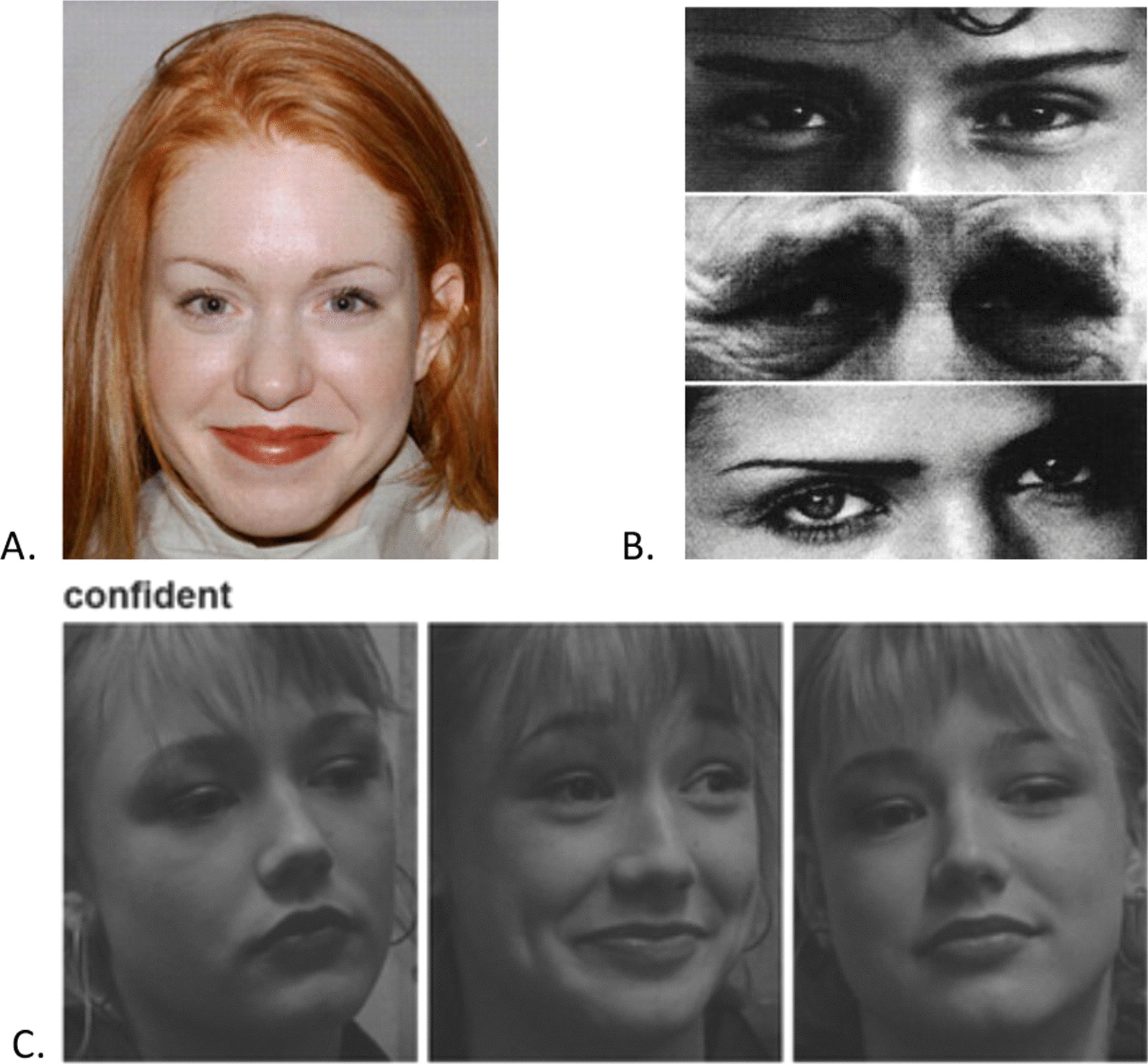
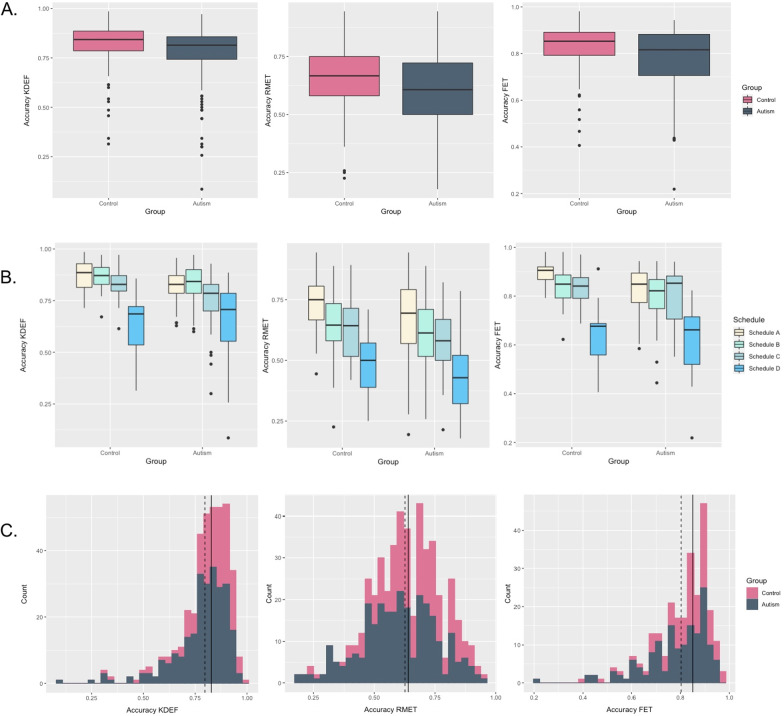
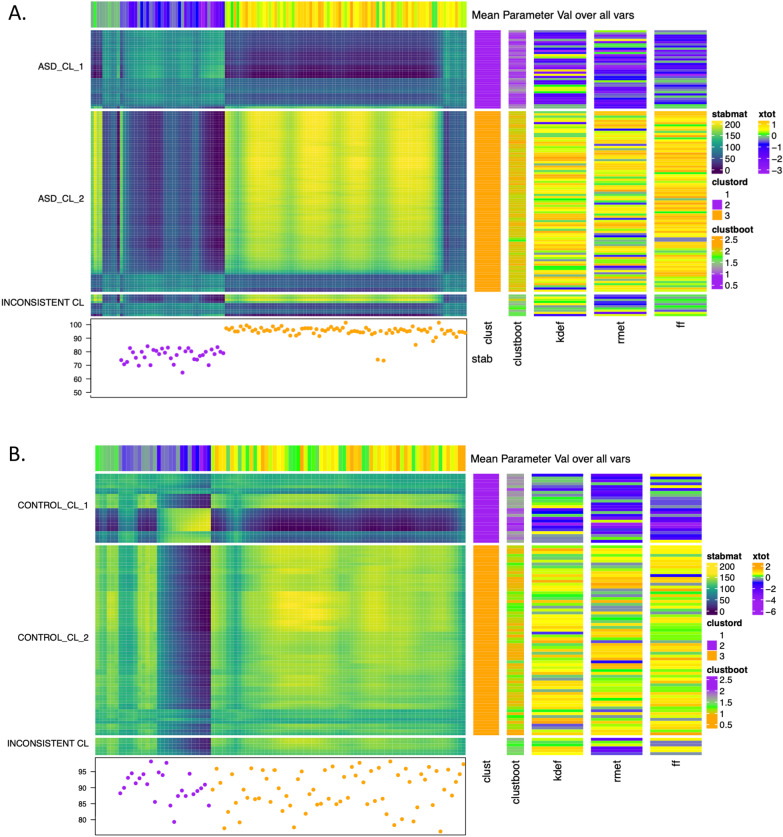
Between 255 and 488 participants aged 6-30 years with autism, typical development and/or mild intellectual disability completed the Karolinska Directed Emotional Faces task, the Reading the Mind in the Eyes Task and/or the Films Expression Task. We first examined mean-group differences on each test. Then, we used a novel intersection approach that compares two centroid and connectivity-based clustering methods to derive subgroups based on the combined performance across the three tasks. Measures and subgroups were then related to clinical features and neurofunctional differences measured using fMRI during a fearful face-matching task.
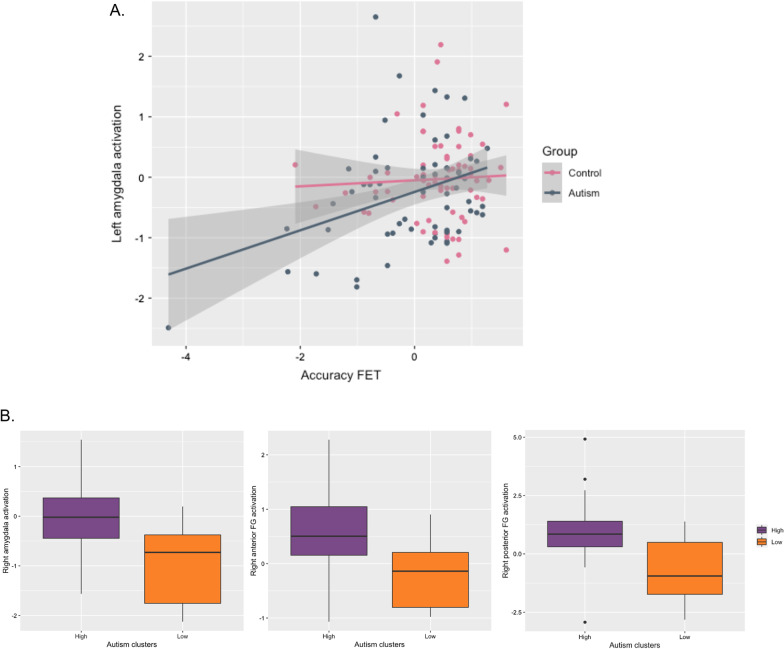
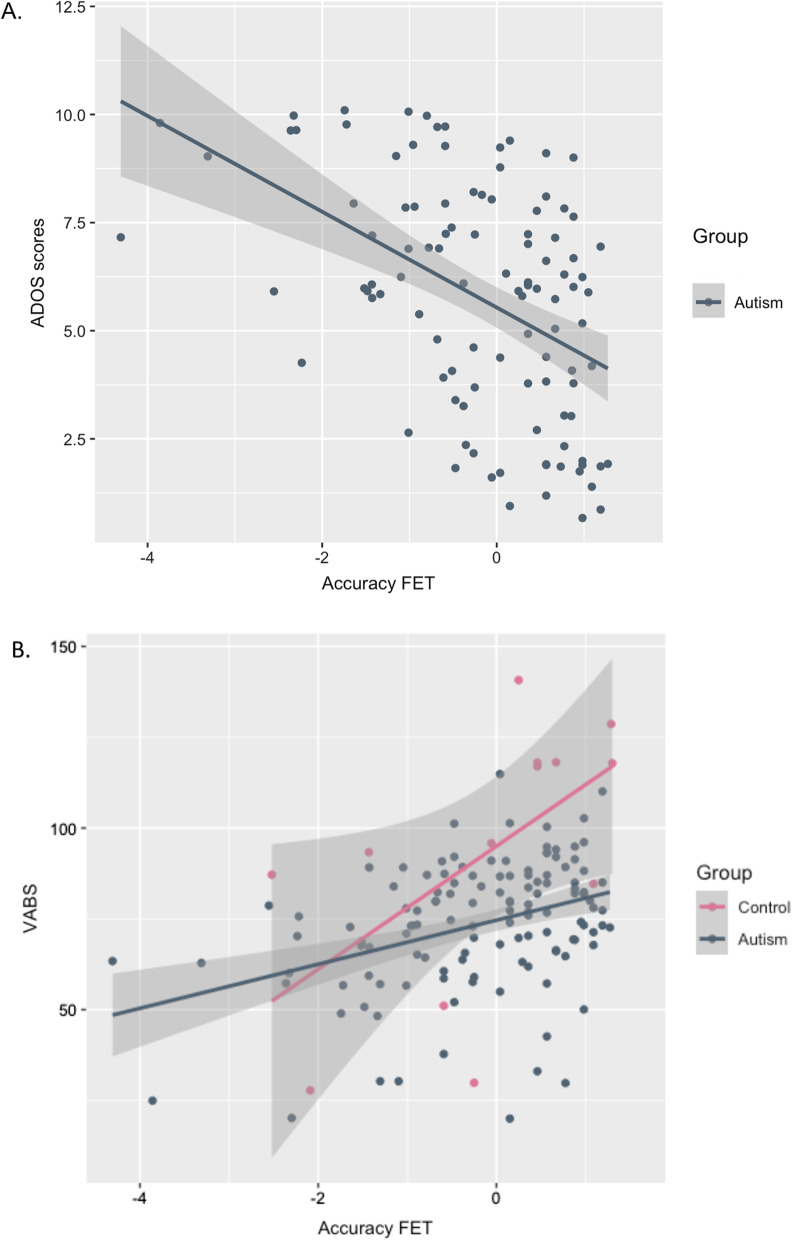
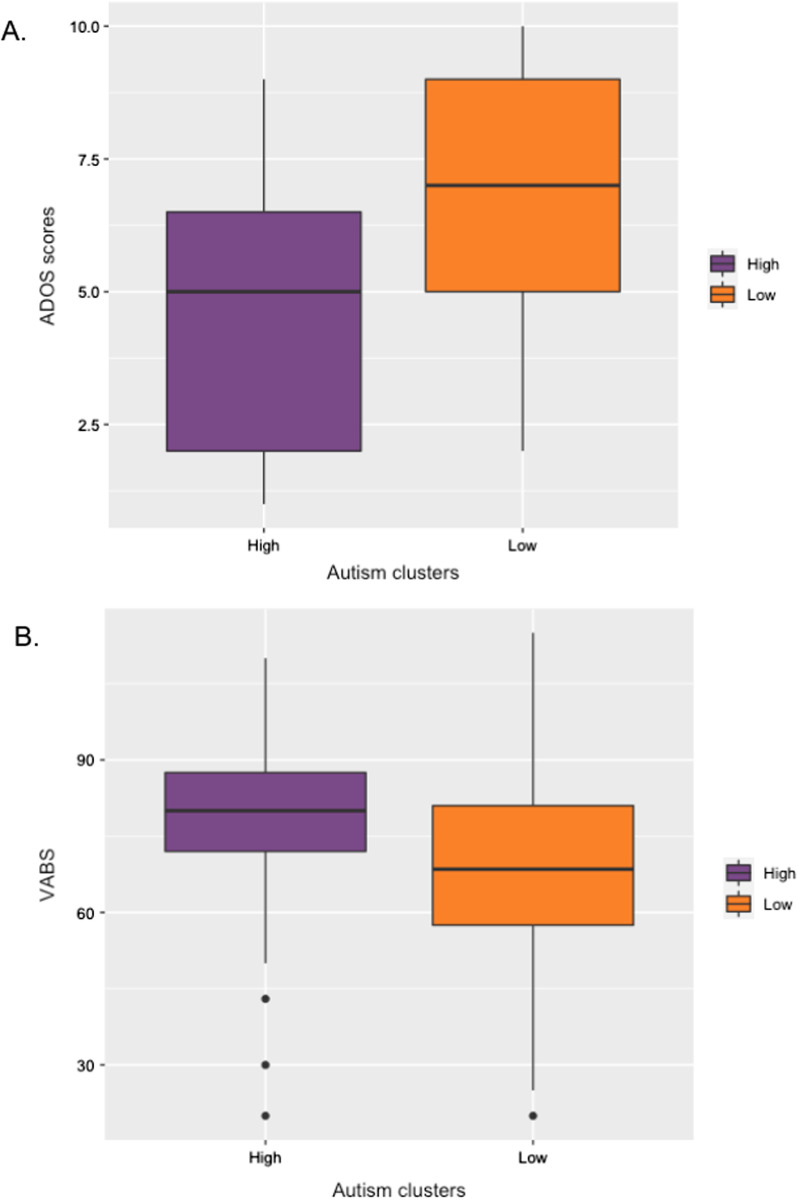
We found significant mean-group differences on each expression recognition test. However, cluster analyses showed that these were driven by a low-performing autistic subgroup (~ 30% of autistic individuals who performed below 2SDs of the neurotypical mean on at least one test), while a larger subgroup (~ 70%) performed within 1SD on at least 2 tests. The low-performing subgroup also had on average significantly more social communication difficulties and lower activation in the amygdala and fusiform gyrus than the high-performing subgroup.
Findings of autism expression recognition subgroups and their characteristics require independent replication. This is currently not possible, as there is no other existing dataset that includes all relevant measures. However, we demonstrated high internal robustness (91.6%) of findings between two clustering methods with fundamentally different assumptions, which is a critical pre-condition for independent replication.
We identified a subgroup of autistic individuals with expression recognition difficulties and showed that this related to clinical and neurobiological characteristics. If replicated, expression recognition may serve as bio-behavioural stratification biomarker and aid in the development of targeted interventions for a subgroup of autistic individuals.
社交沟通困难是自闭症的一个显著临床特征。然而,其潜在的神经生物学异质性阻碍了靶向治疗的发展,需要新的方法来识别具有临床意义的生物行为亚组。在迄今为止最大的自闭症队列中,我们全面检查了面部表情识别的困难,这是社交沟通的一个关键过程,作为生物行为分层生物标志物,并通过临床特征和神经功能反应对其进行了验证。
年龄在 6-30 岁之间的自闭症患者、典型发育者和/或轻度智力障碍者共 255-488 人完成了卡尔斯塔德定向情绪面孔任务、读心眼神任务和/或电影表情任务。我们首先检查了每个测试的平均组间差异。然后,我们使用一种新的交点方法,比较了两种基于质心和连接的聚类方法,根据三个任务的综合表现得出亚组。然后,将测量值和亚组与使用 fMRI 进行恐惧面孔匹配任务时测量的临床特征和神经功能差异相关联。
我们在每个表情识别测试中都发现了显著的平均组间差异。然而,聚类分析表明,这些差异是由一个表现较低的自闭症亚组驱动的(30%的自闭症个体在至少一项测试中表现低于神经典型平均值的 2 个标准差),而一个较大的亚组(70%)在至少两项测试中表现低于 1 个标准差。表现较低的亚组的杏仁核和梭状回的激活也平均显著低于表现较高的亚组。
自闭症表情识别亚组及其特征的发现需要独立验证。这在目前是不可能的,因为没有其他现有的数据集包含所有相关的测量值。然而,我们展示了两种聚类方法之间的高内部稳健性(91.6%),这是独立复制的一个关键前提。
我们确定了一个在表情识别方面存在困难的自闭症个体亚组,并表明这与临床和神经生物学特征有关。如果得到验证,表情识别可能成为生物行为分层的生物标志物,并有助于为自闭症个体的亚组开发靶向干预措施。