Wu Qiaoyan, Zou Chengyu
Interdisciplinary Research Center on Biology and Chemistry, Shanghai Institute of Organic Chemistry, Chinese Academy of Sciences, 100 Haike Rd, Pudong District, Shanghai 201210, China.
Shanghai Key Laboratory of Aging Studies, 100 Haike Rd, Pudong District, Shanghai 201210, China.
Antioxidants (Basel). 2022 Nov 7;11(11):2201. doi: 10.3390/antiox11112201.
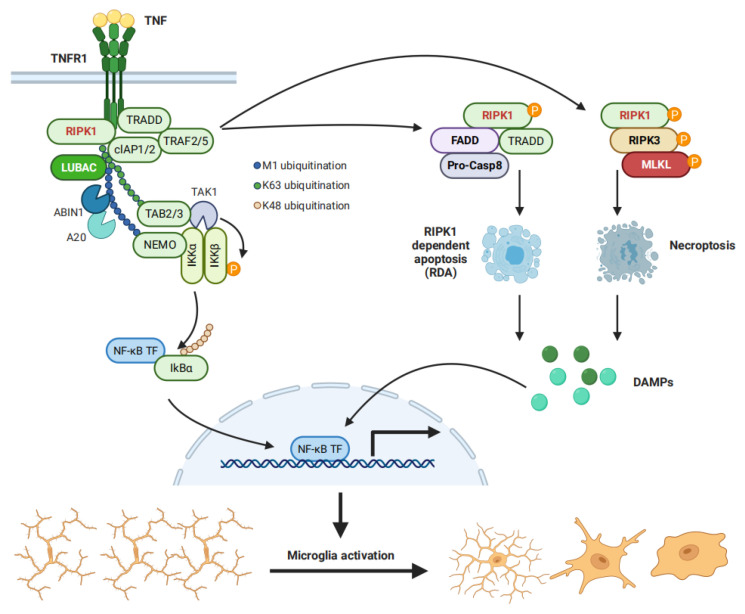
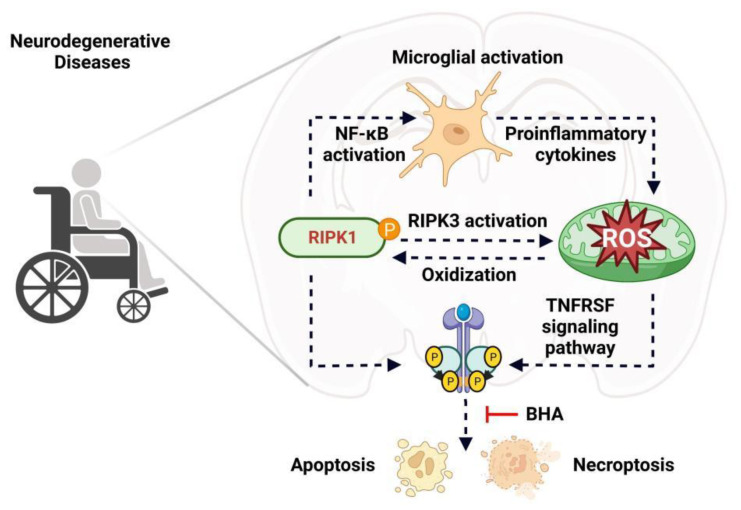
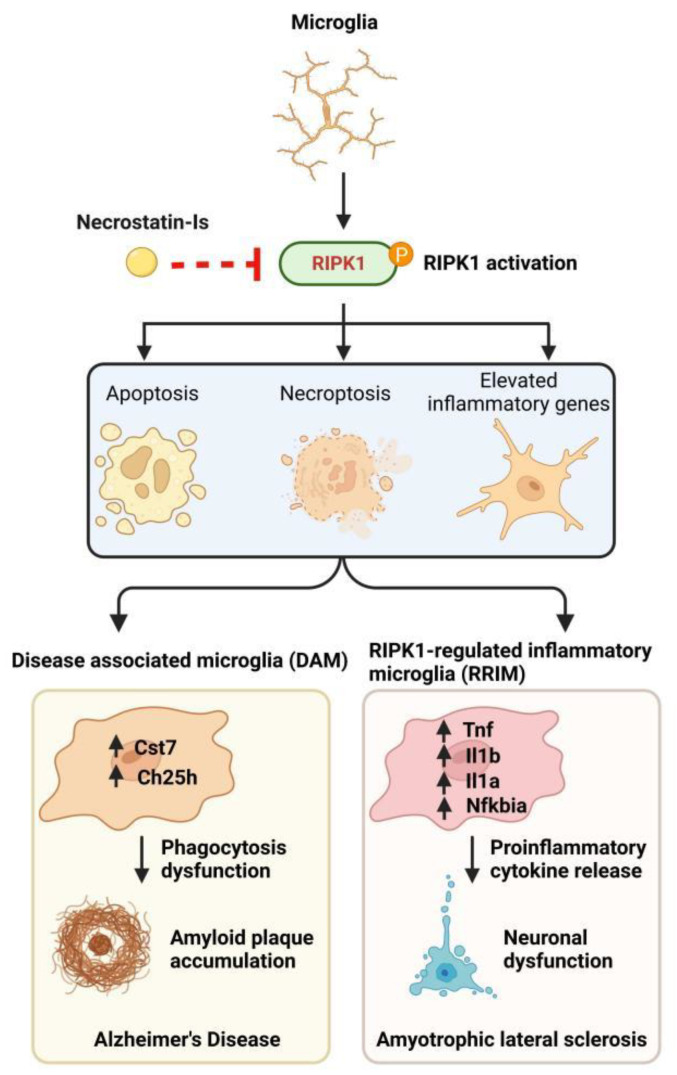
Microglial dysfunction is a major contributor to the pathogenesis of multiple neurodegenerative diseases. The neurotoxicity of microglia associated with oxidative stress largely depends on NF-κB pathway activation, which promotes the production and release of microglial proinflammatory cytokines and chemokines. In this review, we discuss the current literature on the essential role of the NF-κB pathway on microglial activation that exacerbates neurodegeneration, with a particular focus on RIPK1 kinase activity-dependent microglial dysfunction. As upregulated RIPK1 kinase activity is associated with reactive oxygen species (ROS) accumulation in neurodegenerative diseases, we also discuss the current knowledge about the mechanistic links between RIPK1 activation and ROS generation. Given RIPK1 kinase activity and oxidative stress are closely regulated with each other in a vicious cycle, future studies are required to be conducted to fully understand how RIPK1 and ROS collude together to disturb microglial homeostasis that drives neurodegenerative pathogenesis.
小胶质细胞功能障碍是多种神经退行性疾病发病机制的主要促成因素。与氧化应激相关的小胶质细胞神经毒性很大程度上取决于NF-κB信号通路的激活,该通路可促进小胶质细胞促炎细胞因子和趋化因子的产生与释放。在本综述中,我们讨论了当前关于NF-κB信号通路在加剧神经退行性变的小胶质细胞激活中所起关键作用的文献,特别关注依赖于RIPK1激酶活性的小胶质细胞功能障碍。由于在神经退行性疾病中RIPK1激酶活性上调与活性氧(ROS)积累相关,我们还讨论了目前关于RIPK1激活与ROS生成之间机制联系的认识。鉴于RIPK1激酶活性和氧化应激在恶性循环中相互密切调控,未来需要开展研究以全面了解RIPK1和ROS如何共同作用扰乱小胶质细胞稳态,进而驱动神经退行性疾病的发病机制。