Exercise Intervention for Health Research Group (EXINH-RG), Department of Physiotherapy, University of Valencia, 46010 Valencia, Spain.
Department of Nursing and Physiotherapy, Faculty of Health Sciences, University CEU-Cardenal Herrera, CEU Universities, 46115 Valencia, Spain.
Int J Environ Res Public Health. 2022 Oct 30;19(21):14192. doi: 10.3390/ijerph192114192.
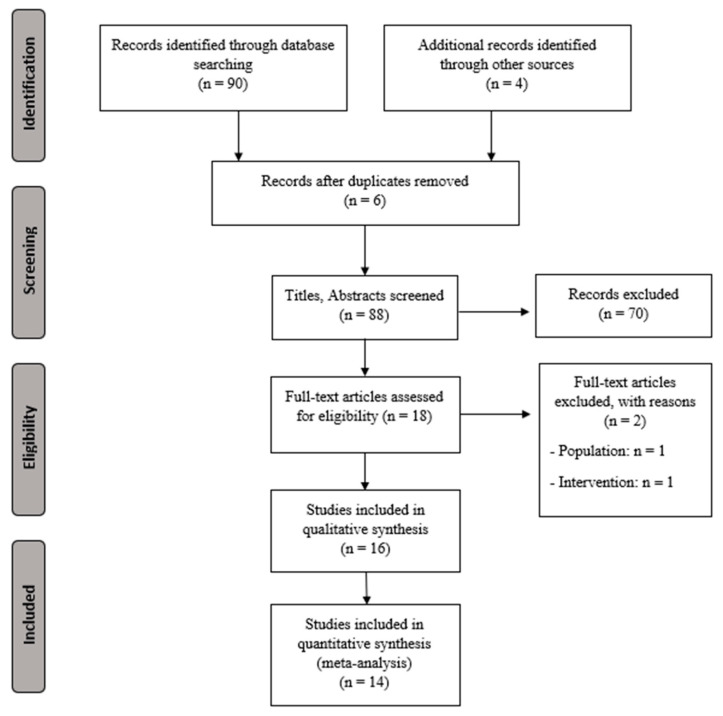
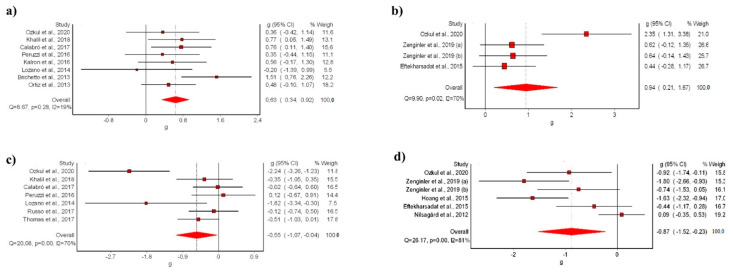
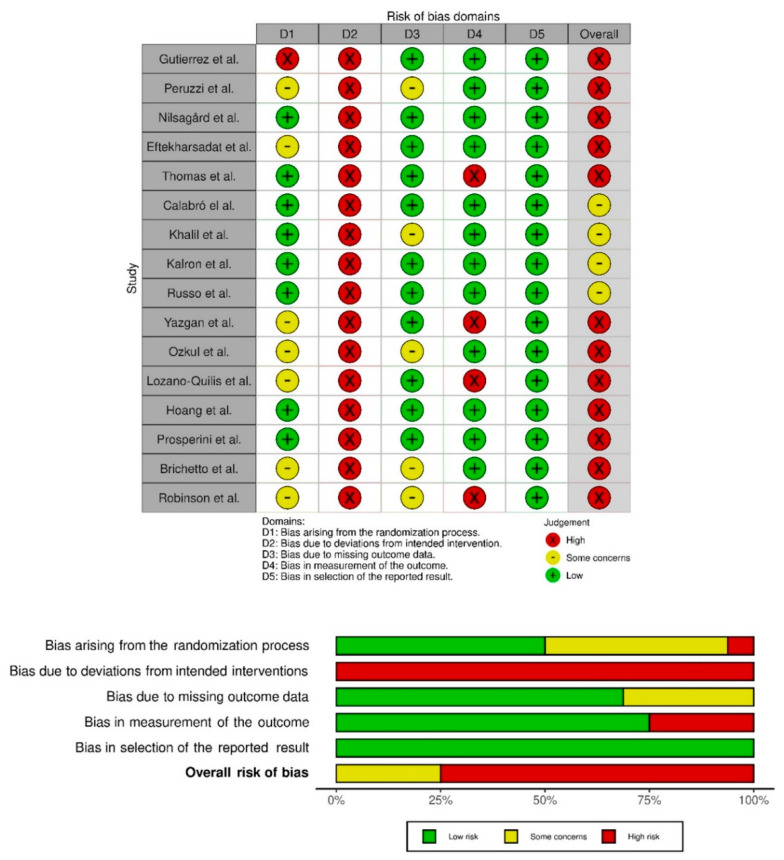
The aim of this study was to systematically review the scientific evidence related to the physiotherapy interventions in neurorehabilitation that utilize virtual reality (VR) for balance training and risk of falls in people with multiple sclerosis (MS). A search was conducted in Medline (PubMed), PEDro, and Google Scholar to identify all the relevant studies. Clinical trials assessing the effects of VR in people with MS were included. Risk of bias was evaluated using the Cochrane Risk of Bias Tool and PEDro scale. Qualitative analysis was performed according to the GRADE. In total, 16 studies (n = 663) were included. The meta-analysis showed statistically significant differences for the VR intervention in comparison with conventional treatment for balance, with a moderate clinical effect in eight studies (SMD: 0.63; 95% CI 0.34-0.92; < 0.05). In addition, the meta-analysis showed statistically significant differences for the VR intervention in comparison with conventional treatment for risk of falls, with a small clinical effect in six studies (SMD: -0.55; 95% CI -1.07-0.04; < 0.05). VR-based treatments are more effective than non-intervention in improving balance and fall risk in people with MS, with a very low certainty of evidence. In addition, they also show to be more effective than conventional rehabilitation, with a very low certainty of evidence.
本研究旨在系统回顾与利用虚拟现实(VR)进行平衡训练和降低多发性硬化症(MS)患者跌倒风险的物理治疗干预相关的科学证据。在 Medline(PubMed)、PEDro 和 Google Scholar 中进行了检索,以确定所有相关研究。纳入评估 VR 对 MS 患者影响的临床试验。使用 Cochrane 偏倚风险工具和 PEDro 量表评估偏倚风险。根据 GRADE 进行定性分析。共纳入 16 项研究(n = 663)。Meta 分析显示,与传统治疗相比,VR 干预在平衡方面具有统计学显著差异,其中八项研究具有中度临床效果(SMD:0.63;95%CI 0.34-0.92;<0.05)。此外,与传统治疗相比,VR 干预在降低跌倒风险方面具有统计学显著差异,其中六项研究具有小的临床效果(SMD:-0.55;95%CI -1.07-0.04;<0.05)。基于 VR 的治疗方法在改善 MS 患者的平衡和跌倒风险方面比非干预更有效,证据确定性非常低。此外,它们也比常规康复更有效,证据确定性非常低。