Korean Medicine (KM) Application Center, Korea Institute of Oriental Medicine, 70 Chemdanro, Dong-gu, Daegu 41062, Korea.
Int J Mol Sci. 2022 Oct 28;23(21):13112. doi: 10.3390/ijms232113112.
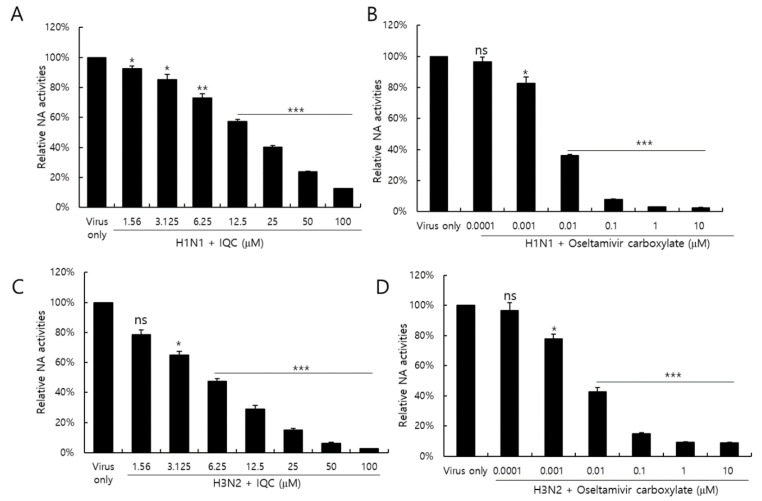
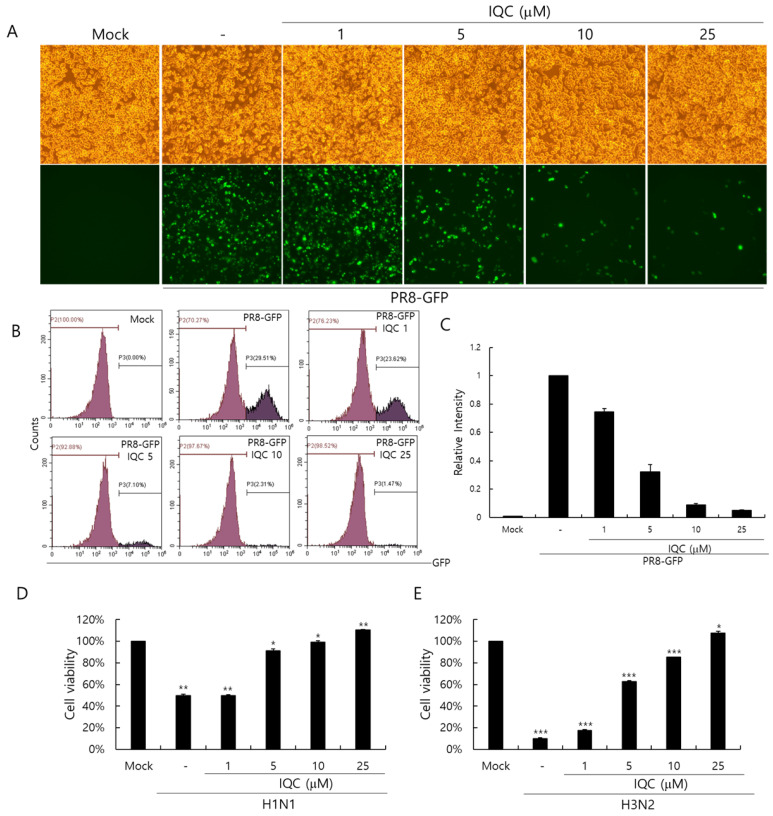
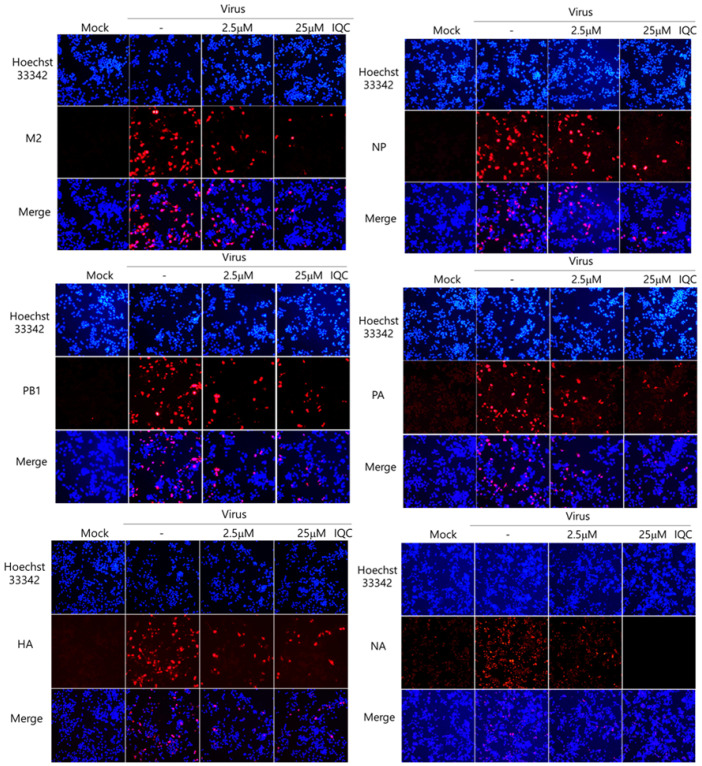
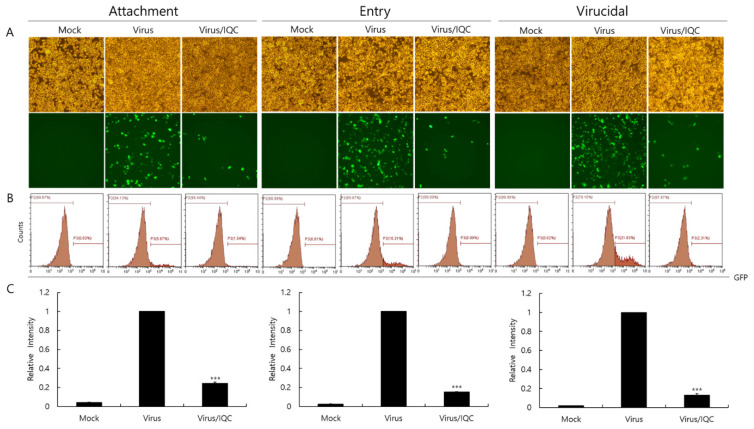
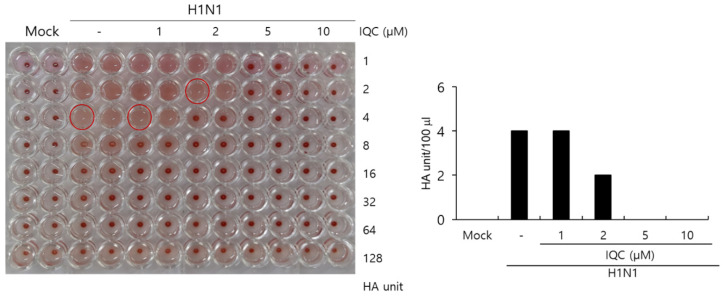
Isoquercitrin (IQC) is a component abundantly present in many plants and is known to have an anti-viral effect against various viruses. In this study, we demonstrate that IQC exhibits strong anti-influenza A virus infection, and its effect is closely related to the suppression of hemagglutinin (HA) and neuraminidase (NA) activities. We used green fluorescent protein-tagged Influenza A/PR/8/34 (H1N1), A/PR/8/34 (H1N1), and HBPV-VR-32 (H3N2) to evaluate the anti-IAV effect of IQC. The fluorescence microscopy and fluorescence-activated cell sorting analysis showed that IQC significantly decreases the levels of GFP expressed by IAV infection, dose-dependently. Consistent with that, IQC inhibited cytopathic effects by H1N1 or H3N2 IAV infection. Immunofluorescence analysis confirmed that IQC represses the IAV protein expression. Time-of-addition assay showed that IQC inhibits viral attachment and entry and exerts a strong virucidal effect during IAV infection. Hemagglutination assay confirmed that IQC affects IAV HA. Further, IQC potently reduced the NA activities of H1N1 and H3N2 IAV. Collectively, IQC prevents IAV infection at multi-stages via virucidal effects, inhibiting attachment, entry and viral release. Our results indicate that IQC could be developed as a potent antiviral drug to protect against influenza viral infection.
异槲皮苷(IQC)是一种在许多植物中大量存在的成分,已知对多种病毒具有抗病毒作用。在这项研究中,我们证明 IQC 对甲型流感病毒感染具有很强的抑制作用,其作用与抑制血凝素(HA)和神经氨酸酶(NA)活性密切相关。我们使用绿色荧光蛋白标记的甲型流感病毒/A/PR/8/34(H1N1)、A/PR/8/34(H1N1)和 HBPV-VR-32(H3N2)来评估 IQC 对 IAV 的抗病毒作用。荧光显微镜和荧光激活细胞分选分析表明,IQC 显著降低了 IAV 感染后 GFP 的表达水平,呈剂量依赖性。与此一致,IQC 抑制了 H1N1 或 H3N2 IAV 感染的细胞病变效应。免疫荧光分析证实 IQC 抑制了 IAV 蛋白的表达。时效添加试验表明,IQC 抑制病毒的附着和进入,并在 IAV 感染过程中发挥强大的杀病毒作用。血凝试验证实 IQC 影响 IAV HA。此外,IQC 强烈降低了 H1N1 和 H3N2 IAV 的 NA 活性。综上所述,IQC 通过杀病毒作用、抑制附着、进入和病毒释放来防止 IAV 感染的多个阶段。我们的结果表明,IQC 可开发为一种有效的抗病毒药物,以预防流感病毒感染。