Chair of Medical and Molecular Genetics Research, Department of Clinical Laboratory Sciences, College of Applied Medical Sciences, King Saud University, Riyadh 12372, Saudi Arabia.
Medicina (Kaunas). 2022 Nov 9;58(11):1617. doi: 10.3390/medicina58111617.
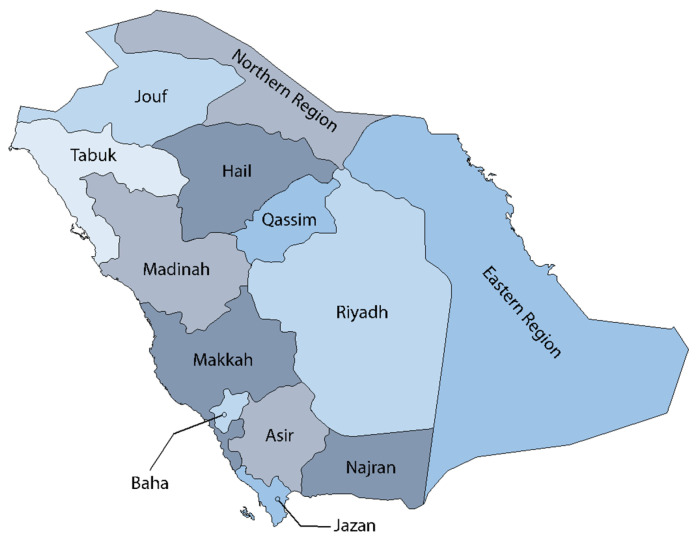
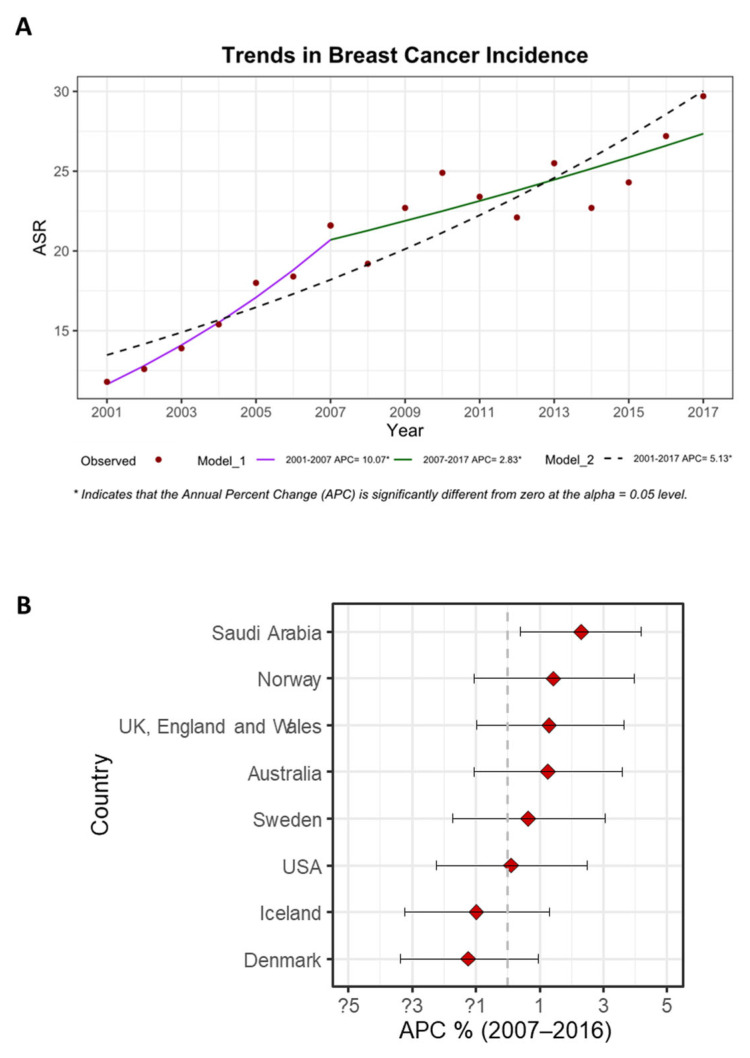
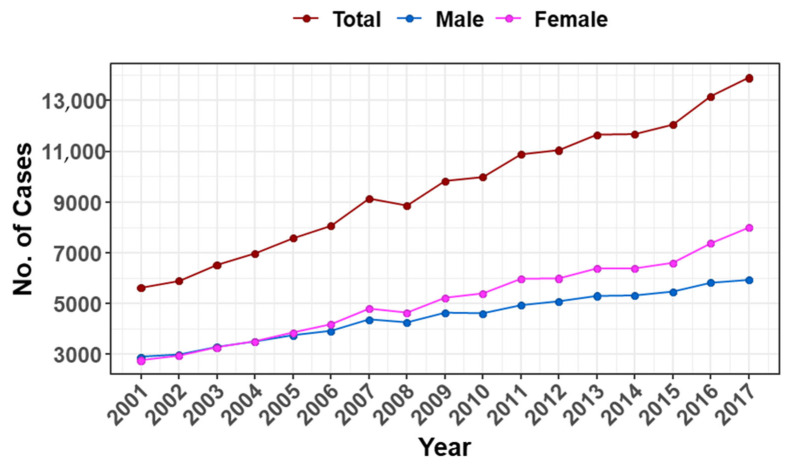
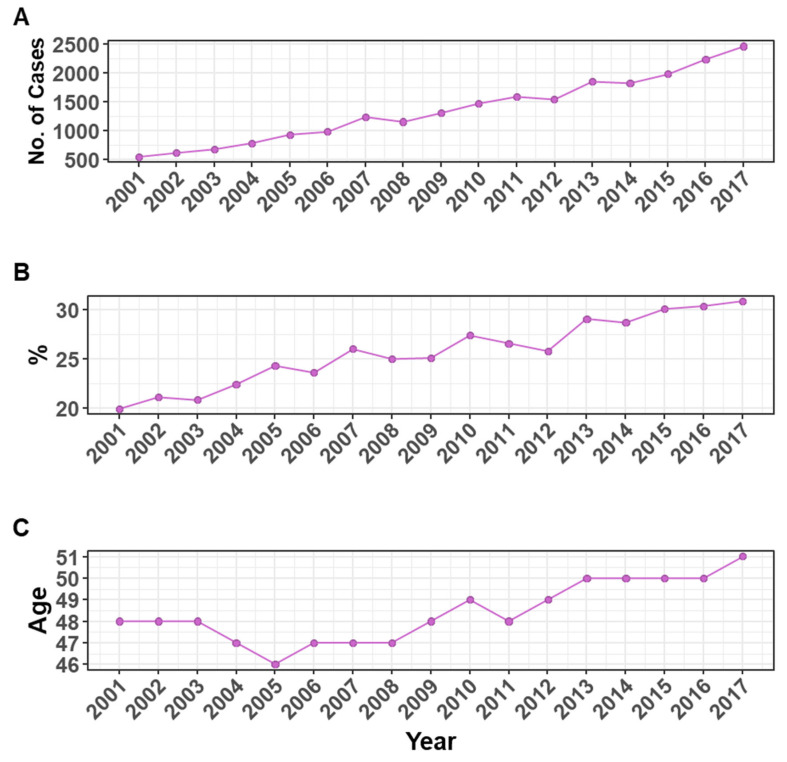
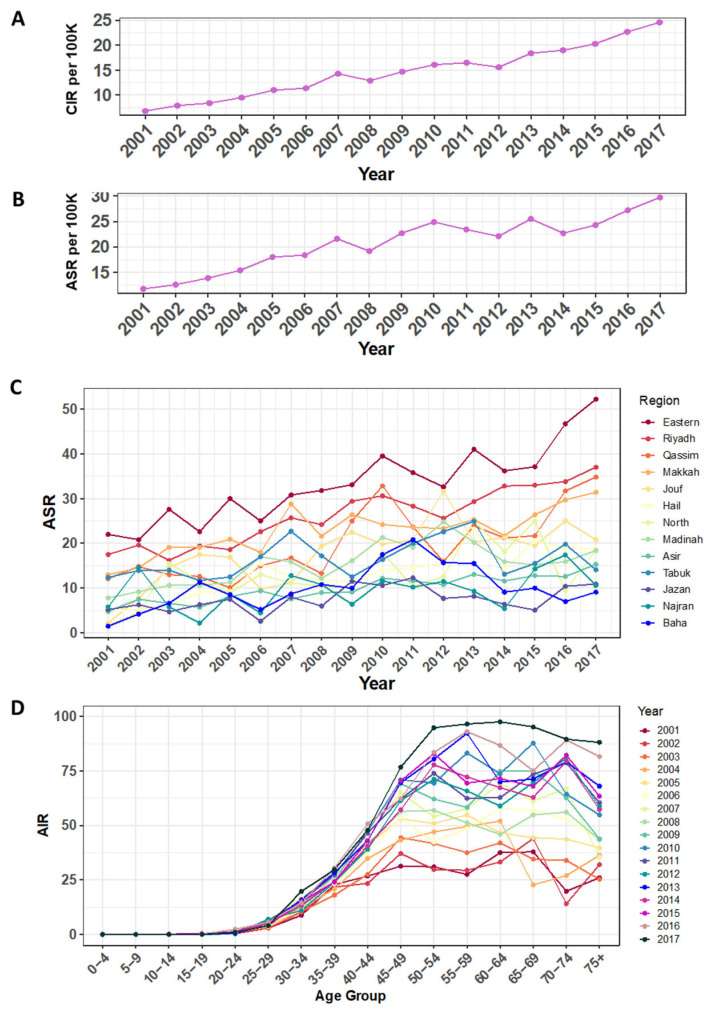
Background and Objectives: Breast cancer is considered the most commonly diagnosed type of cancer among women globally and in Saudi Arabia. This study aimed to assess breast cancer incidence patterns and trends among the Saudi female population. Materials and Methods: Breast cancer incidence parameters were obtained from the Saudi Cancer Registry (SCR). The data were retrospectively analyzed for the period from 2001 to 2017 to investigate changes in incidence rates. Temporal trends were also analyzed through joinpoint regression analysis and were dissected by age groups and administrative regions. Results: During the specified period, breast cancer jumped by 55% to constitute 30.9% of all cancer cases among Saudi females. The median age at diagnosis increased to reach 51 years at the end of that period, with an overall increase of 6.3%. The overall Age-Standardized Incidence Rate (ASR) escalated by 151.7% from 11.8/100,000 to 29.7/100,000 population for that period. The Eastern region noticeably had the highest ASR and peaked at 52.2/100,000 population. The joinpoint analysis of the ASR showed increased trends, with an annual percent change (APC) of 5.13% (p < 0.05, [95% CI 4−6.3]). An age-specific analysis was also performed and showed that the age group 70−74 years had the highest trend (APC 10.2%, [95% CI 7.2−13.4], p < 0.05). Region-specific analysis revealed that the Jouf region had the highest trend among the regions (APC 8.8%, [95% CI 3.7−14.2], p < 0.05). Conclusions: Our analysis indicates increased breast cancer incidence in Saudi Arabia with an alarming pace. With the existing trend, it is expected that Saudi Arabia will continue to display an increase in breast cancer incidence. Long-term preventive measures and more effective screening strategies are warranted to alleviate the burden of the disease.
乳腺癌被认为是全球和沙特阿拉伯女性中最常见的癌症类型。本研究旨在评估沙特女性乳腺癌的发病模式和趋势。
从沙特癌症登记处(SCR)获取乳腺癌发病参数。对 2001 年至 2017 年期间的数据进行回顾性分析,以研究发病率的变化。通过 Joinpoint 回归分析对时间趋势进行分析,并按年龄组和行政区进行细分。
在指定期间,乳腺癌发病率跃升 55%,占沙特女性所有癌症病例的 30.9%。诊断时的中位年龄增至 51 岁,总体增加了 6.3%。同期,总年龄标准化发病率(ASR)从 11.8/10 万上升至 29.7/10 万,增长了 151.7%。东部地区的 ASR 明显最高,达到 52.2/10 万。ASR 的 Joinpoint 分析显示呈上升趋势,年变化百分比(APC)为 5.13%(p<0.05,[95%CI 4-6.3])。还进行了年龄特异性分析,结果显示 70-74 岁年龄组的趋势最高(APC 为 10.2%,[95%CI 7.2-13.4],p<0.05)。区域特异性分析显示,朱夫地区的趋势在各地区中最高(APC 为 8.8%,[95%CI 3.7-14.2],p<0.05)。
我们的分析表明,沙特阿拉伯的乳腺癌发病率呈上升趋势,且上升速度令人担忧。按照现有趋势,预计沙特阿拉伯的乳腺癌发病率将继续上升。需要采取长期的预防措施和更有效的筛查策略来减轻疾病负担。