Department of Biomaterials Science, Osaka University Graduate School of Dentistry, Yamadaoka, Suita 565-0871, Japan.
Department of Advanced Functional Materials Science, Osaka University Graduate School of Dentistry, Yamadaoka, Suita 565-0871, Japan.
Molecules. 2022 Oct 24;27(21):7202. doi: 10.3390/molecules27217202.
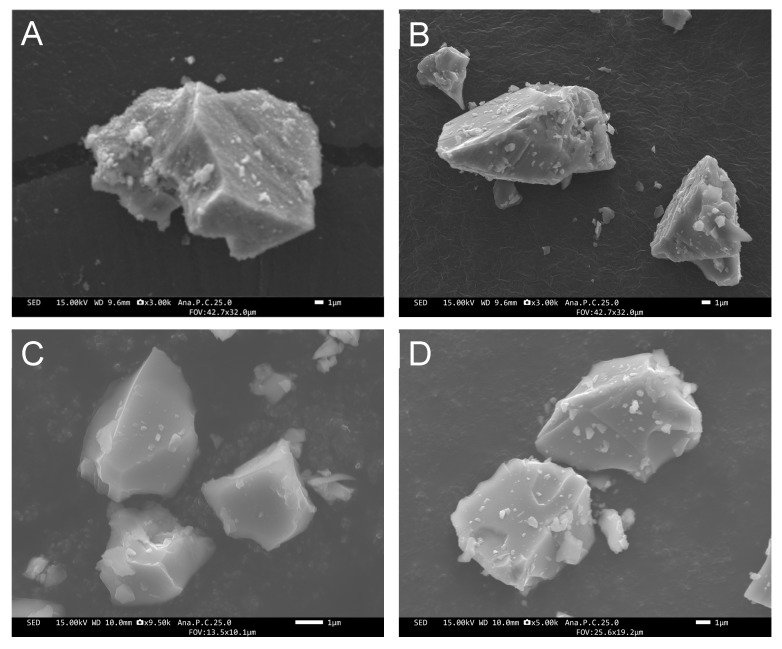
The on-demand release of antibacterial components due to pH variations caused by acidogenic/cariogenic bacteria is a possible design for smart antibacterial restorative materials. This study aimed to fabricate pH-responsive Zn-releasing glass particles and evaluate their solubilities, ion-releasing characteristics, and antibacterial properties in vitro. Three kinds of silicate-based glass particles containing different molar ratios of Zn (PG-1: 25.3; PG-2: 34.6; PG-3: 42.7 mol%) were fabricated. Each particle was immersed in a pH-adjusted medium, and the solubility and concentration of the released ions were determined. To evaluate the antibacterial effect, was cultured in the pH-adjusted medium in the presence of each particle, and the bacterial number was counted. The solubility and concentration of Zn released in the medium increased with a decrease in medium pH. PG-3 with a greater content of Zn demonstrated higher concentrations of released Zn compared with PG-1 and PG-2. PG-2 exhibited bactericidal effects at pH 5.1, whereas PG-3 demonstrated bactericidal effects at pH values of 5.1 and 6.1, indicating that PG-3 was effective at inhibiting even under slightly acidic conditions. The glass particle with 42.7 mol% Zn may be useful for developing smart antibacterial restoratives that contribute to the prevention of diseases such as caries on root surfaces with lower acid resistance.
由于致酸/致龋菌引起的 pH 变化而按需释放抗菌成分是智能抗菌修复材料的一种可能设计。本研究旨在制备 pH 响应型释锌玻璃颗粒,并评估其在体外的溶解度、离子释放特性和抗菌性能。制备了三种含有不同摩尔比 Zn 的硅酸盐基玻璃颗粒(PG-1:25.3;PG-2:34.6;PG-3:42.7mol%)。将每个颗粒浸入 pH 调整的介质中,测定释放离子的溶解度和浓度。为了评估抗菌效果,将 在 pH 调整的介质中与各颗粒一起培养,并计数细菌数量。在介质中释放的 Zn 的溶解度和浓度随介质 pH 值的降低而增加。PG-3 中 Zn 的含量较高,释放的 Zn 浓度也较高,与 PG-1 和 PG-2 相比。PG-2 在 pH 5.1 时具有杀菌作用,而 PG-3 在 pH 值为 5.1 和 6.1 时具有杀菌作用,表明 PG-3 即使在酸性较弱的条件下也能有效抑制 。42.7mol%Zn 的玻璃颗粒可能有助于开发智能抗菌修复材料,有助于预防根面龋等耐酸性较低的疾病。