Xiangya School of Public Health, Central South University, 110 Xiangya Road, Changsha 410078, China.
Nutrients. 2022 Nov 1;14(21):4590. doi: 10.3390/nu14214590.
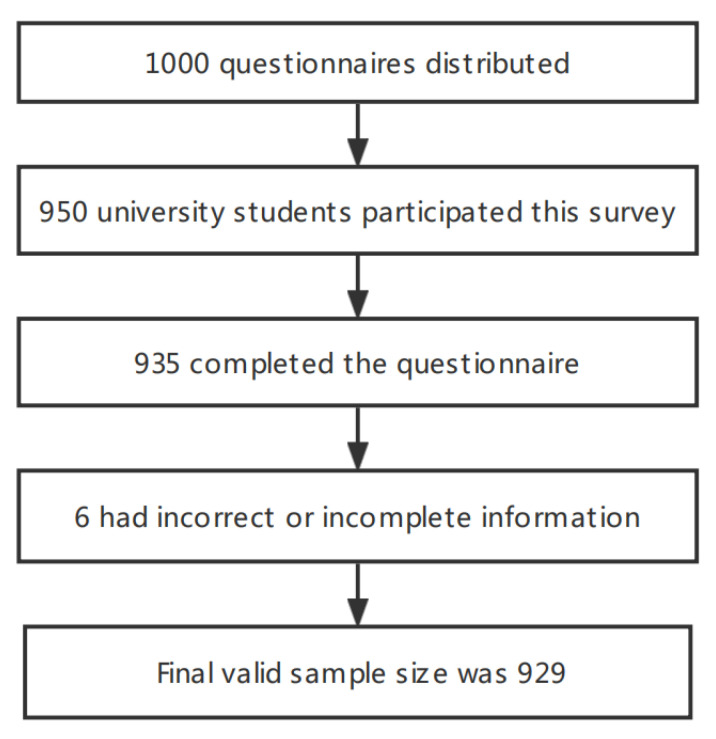
Functional constipation (FC) is prevalent worldwide and is an increasingly prominent problem among university students. However, there is a paucity of research on FC in university students. This study aimed to assess the prevalence of FC among Chinese university students by the Rome III criteria and investigate its associated factors. This cross-sectional study was conducted by online questionnaires among 929 university students at a Chinese university. Food consumption was assessed with the Semi-Quantitative Food Frequency Questionnaire (SQFFQ) and dietary patterns were analyzed using factor analysis. A binary logistic regression model was applied to clarify FC-associated factors. The prevalence of FC among university students was 5.1%. Interestingly, among university students, the prevalence of FC with “complex” dietary pattern was significantly higher than those with “vegetable, fruit, egg and milk-based” and “livestock and aquatic product-based” dietary pattern (9.9% vs. 3.1% vs. 2.8%, p < 0.001). The prevalence of FC was significantly higher among university students with moderate to severe sleep disorders than those with the other sleep status (χ2 = 18.100, p < 0.001). Furthermore, after adjusting the covariates, “complex” dietary pattern (OR = 4.023, p < 0.001), moderate to severe sleep disorders (OR = 3.003, p = 0.006), overeating (OR = 2.502, p = 0.032), long mealtime (>30 min) (OR = 6.001, p = 0.007), and poor defecation habits (OR = 3.069, p = 0.042) were positively associated with FC among university students. Based on the above-associated factors for FC, improving dietary patterns and sleep status and developing good bowel and dietary habits are essential to prevent and alleviate university students’ FC.
功能性便秘(FC)在全球范围内普遍存在,并且在大学生中日益成为一个突出的问题。然而,目前针对大学生 FC 的研究较少。本研究旨在采用罗马 III 标准评估中国大学生 FC 的患病率,并探讨其相关因素。本横断面研究通过在线问卷对一所中国大学的 929 名大学生进行。采用半定量食物频率问卷(SQFFQ)评估食物摄入情况,并通过因子分析对饮食模式进行分析。应用二元逻辑回归模型明确 FC 的相关因素。大学生 FC 的患病率为 5.1%。有趣的是,在大学生中,“复杂”饮食模式的 FC 患病率明显高于“蔬菜、水果、蛋和奶类”和“畜产品和水产类”饮食模式(9.9%比 3.1%和 2.8%,p<0.001)。与其他睡眠状况的大学生相比,中重度睡眠障碍的大学生 FC 患病率明显更高(χ2=18.100,p<0.001)。此外,调整了混杂因素后,“复杂”饮食模式(OR=4.023,p<0.001)、中重度睡眠障碍(OR=3.003,p=0.006)、暴饮暴食(OR=2.502,p=0.032)、较长的进餐时间(>30 min)(OR=6.001,p=0.007)和不良排便习惯(OR=3.069,p=0.042)与大学生 FC 呈正相关。基于上述 FC 的相关因素,改善饮食模式和睡眠状况,培养良好的排便和饮食习惯,对预防和缓解大学生 FC 至关重要。