Cubas Anelise Leal Vieira, Bianchet Ritanara Tayane, Reis Izamara Mariana Aparecida Souza Dos, Gouveia Isabel C
Environmental Science Master's Program, University of Southern Santa Catarina (Unisul), Avenida Pedra Branca, 25, Palhoça 80137270, Brazil.
Environmental Engineering, University of Southern Santa Catarina (Unisul), Avenida Pedra Branca, 25, Palhoça 80137270, Brazil.
Polymers (Basel). 2022 Oct 28;14(21):4576. doi: 10.3390/polym14214576.
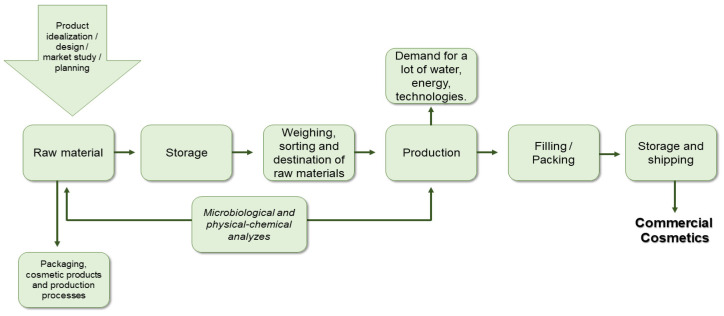
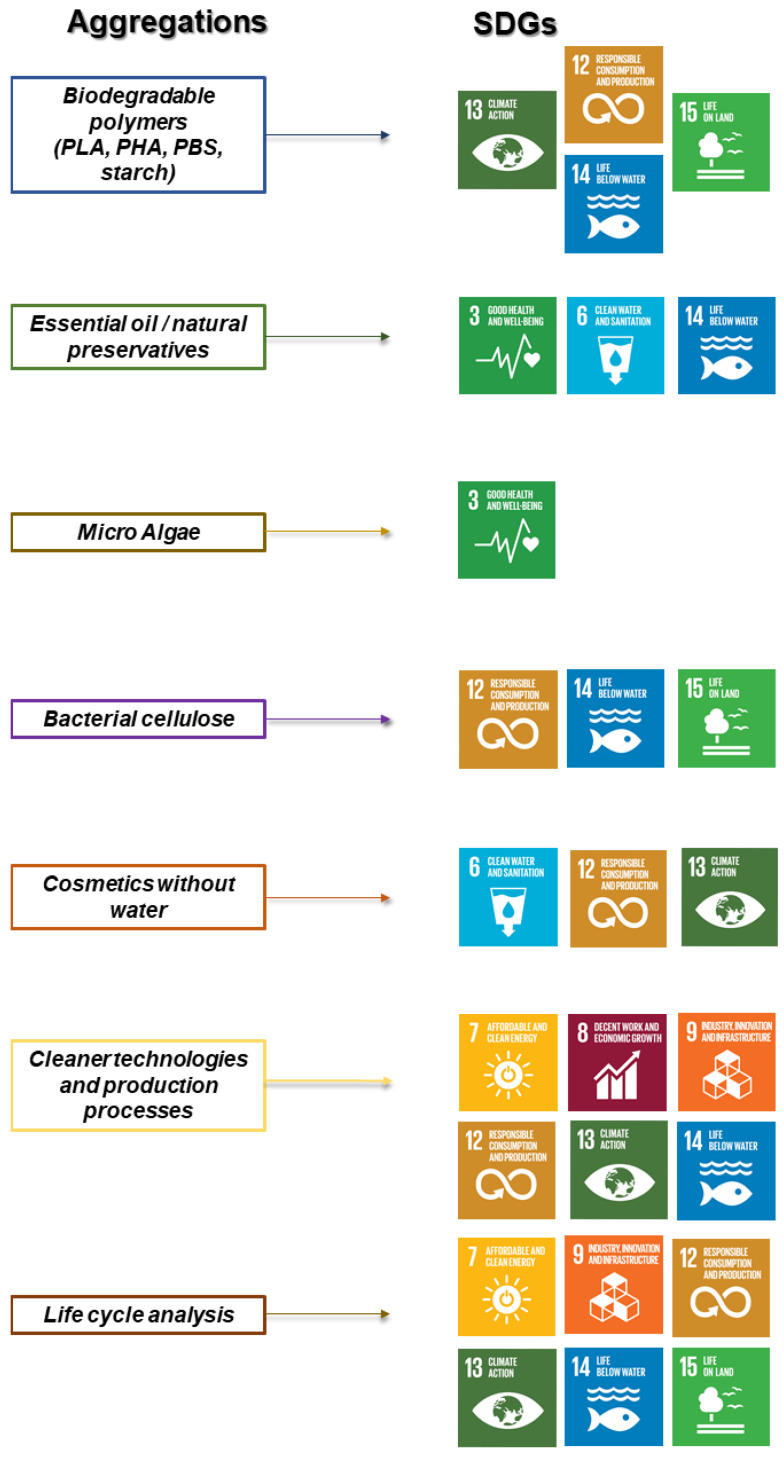
Excessive use of petroleum derivatives in cosmetics, whether in compositions or packaging, predominating the use of plastics, parabens, microplastics and other polymers, has had negative environmental impacts. The cosmetics market has gained prominence in recent years and bioeconomy and circular economy policies are putting pressure on the market to use bio-based and biodegradable materials. In this context, the objective of this review article is to provide an overview of how the aggregation of sustainable actions in the cosmetic industry contributes to the fulfillment of the 2030 Agenda and how this can serve as a guide in building a more resilient and sustainable society. For that, the generation of residues during the production processes was examined and the environmental problems generated by the cosmetic industry were addressed. Then, the role of aggregating sustainable actions and innovations with regard to the achievement of the UN Sustainable Development Goals (SDGs) in the cosmetic industry were evaluated.
在化妆品中过度使用石油衍生物,无论是在成分还是包装方面,以塑料、对羟基苯甲酸酯、微塑料和其他聚合物的使用为主,已经对环境产生了负面影响。近年来,化妆品市场日益突出,生物经济和循环经济政策给市场带来压力,促使其使用生物基和可生物降解材料。在此背景下,这篇综述文章的目的是概述化妆品行业可持续行动的整合如何有助于实现《2030年议程》,以及这如何能够作为构建更具韧性和可持续性社会的指南。为此,研究了生产过程中产生的残留物,并探讨了化妆品行业产生的环境问题。然后,评估了整合可持续行动和创新在化妆品行业实现联合国可持续发展目标(SDGs)方面的作用。