École Centrale Nantes, IMT Atlantique, Nantes Université, CNRS, LS2N, UMR 6004, F-44000 Nantes, France.
Centrale Nantes, Nantes Université, CNRS, LS2N, UMR 6004, F-44000 Nantes, France.
Sensors (Basel). 2022 Oct 29;22(21):8313. doi: 10.3390/s22218313.
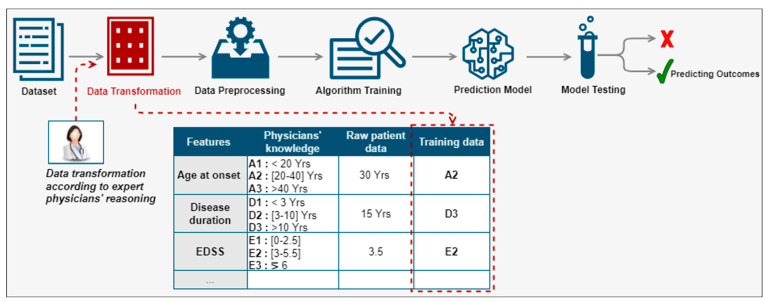
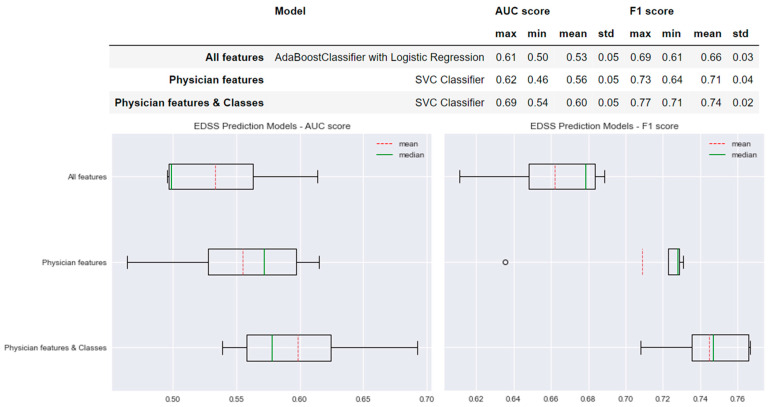
Machine learning (ML) models have proven their potential in acquiring and analyzing large amounts of data to help solve real-world, complex problems. Their use in healthcare is expected to help physicians make diagnoses, prognoses, treatment decisions, and disease outcome predictions. However, ML solutions are not currently deployed in most healthcare systems. One of the main reasons for this is the provenance, transparency, and clinical utility of the training data. Physicians reject ML solutions if they are not at least based on accurate data and do not clearly include the decision-making process used in clinical practice. In this paper, we present a hybrid human-machine intelligence method to create predictive models driven by clinical practice. We promote the use of quality-approved data and the inclusion of physician reasoning in the ML process. Instead of training the ML algorithms on the given data to create predictive models (conventional method), we propose to pre-categorize the data according to the expert physicians' knowledge and experience. Comparing the results of the conventional method of ML learning versus the hybrid physician-algorithm method showed that the models based on the latter can perform better. Physicians' engagement is the most promising condition for the safe and innovative use of ML in healthcare.
机器学习 (ML) 模型已被证明在获取和分析大量数据方面具有潜力,可帮助解决现实世界中的复杂问题。预计它们在医疗保健中的应用将帮助医生做出诊断、预后、治疗决策和疾病结果预测。然而,ML 解决方案目前并未在大多数医疗保健系统中部署。其中一个主要原因是训练数据的出处、透明度和临床实用性。如果 ML 解决方案不是基于准确的数据,并且没有明确包含临床实践中使用的决策过程,医生会拒绝使用它们。在本文中,我们提出了一种混合人机智能方法,以创建由临床实践驱动的预测模型。我们提倡使用经过质量认证的数据,并在 ML 过程中纳入医生的推理。我们不是在给定数据上训练 ML 算法来创建预测模型(常规方法),而是提议根据专家医生的知识和经验对数据进行预分类。比较基于 ML 学习的常规方法和混合医生-算法方法的结果表明,基于后者的模型可以表现得更好。医生的参与是安全和创新地将 ML 应用于医疗保健的最有前途的条件。