Trinity College of Arts & Sciences, Duke University, Durham, NC, United States.
Duke University School of Medicine, Durham, NC, United States.
J Med Internet Res. 2020 Nov 19;22(11):e22421. doi: 10.2196/22421.
Machine learning models have the potential to improve diagnostic accuracy and management of acute conditions. Despite growing efforts to evaluate and validate such models, little is known about how to best translate and implement these products as part of routine clinical care.
This study aims to explore the factors influencing the integration of a machine learning sepsis early warning system (Sepsis Watch) into clinical workflows.
We conducted semistructured interviews with 15 frontline emergency department physicians and rapid response team nurses who participated in the Sepsis Watch quality improvement initiative. Interviews were audio recorded and transcribed. We used a modified grounded theory approach to identify key themes and analyze qualitative data.
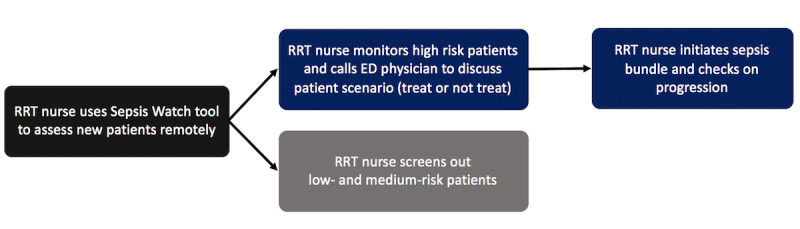
A total of 3 dominant themes emerged: perceived utility and trust, implementation of Sepsis Watch processes, and workforce considerations. Participants described their unfamiliarity with machine learning models. As a result, clinician trust was influenced by the perceived accuracy and utility of the model from personal program experience. Implementation of Sepsis Watch was facilitated by the easy-to-use tablet application and communication strategies that were developed by nurses to share model outputs with physicians. Barriers included the flow of information among clinicians and gaps in knowledge about the model itself and broader workflow processes.
This study generated insights into how frontline clinicians perceived machine learning models and the barriers to integrating them into clinical workflows. These findings can inform future efforts to implement machine learning interventions in real-world settings and maximize the adoption of these interventions.
机器学习模型具有提高急性疾病诊断准确性和管理水平的潜力。尽管越来越多的人致力于评估和验证这些模型,但对于如何将这些产品作为常规临床护理的一部分进行最佳转化和实施,知之甚少。
本研究旨在探讨影响机器学习脓毒症预警系统(Sepsis Watch)整合到临床工作流程中的因素。
我们对半参与 Sepsis Watch 质量改进计划的 15 名一线急诊医生和快速反应小组护士进行了半结构式访谈。访谈进行了录音并转录。我们使用改良的扎根理论方法来确定主要主题并分析定性数据。
共出现 3 个主要主题:感知效用和信任、Sepsis Watch 流程的实施以及劳动力考虑因素。参与者描述了他们对机器学习模型的不熟悉。因此,临床医生的信任受到个人项目经验中模型准确性和实用性的影响。Sepsis Watch 的实施得益于易于使用的平板电脑应用程序和护士开发的沟通策略,这些策略用于与医生共享模型输出。障碍包括临床医生之间的信息流以及对模型本身和更广泛工作流程的知识差距。
本研究深入了解了一线临床医生如何看待机器学习模型,以及将其整合到临床工作流程中的障碍。这些发现可以为未来在实际环境中实施机器学习干预措施以及最大程度地采用这些干预措施提供信息。