Iwaya M, Goldman R, Tipper D J, Feingold B, Strominger J L
J Bacteriol. 1978 Dec;136(3):1143-58. doi: 10.1128/jb.136.3.1143-1158.1978.
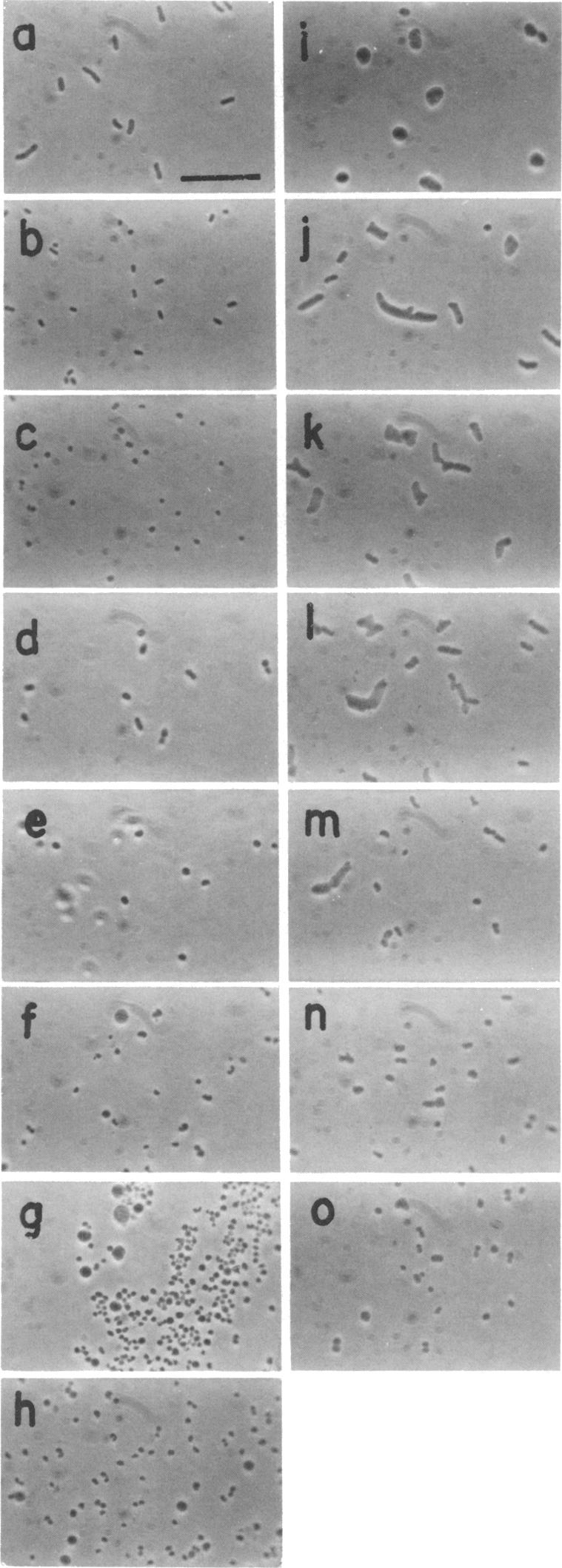
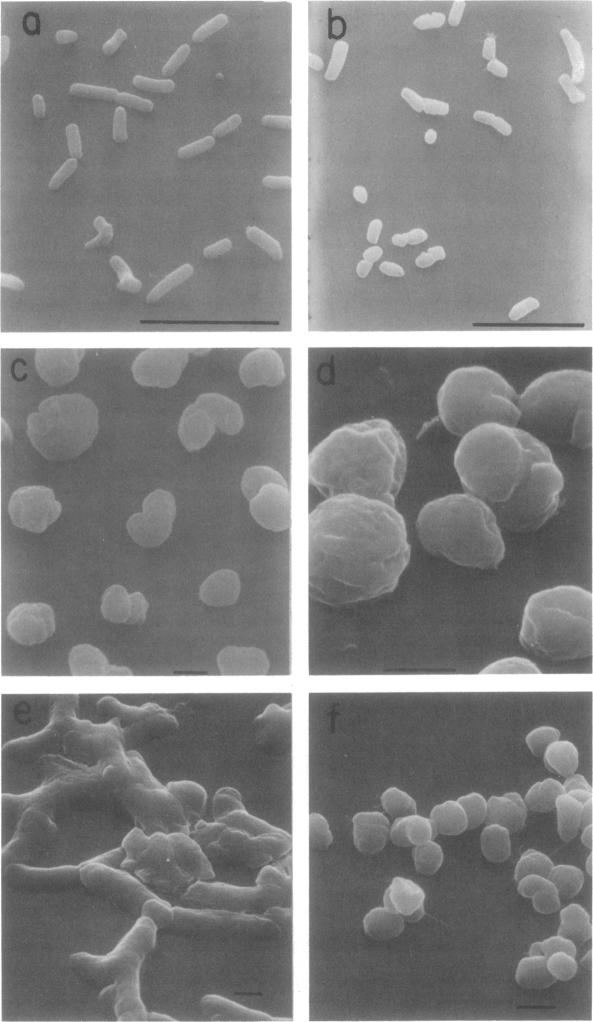
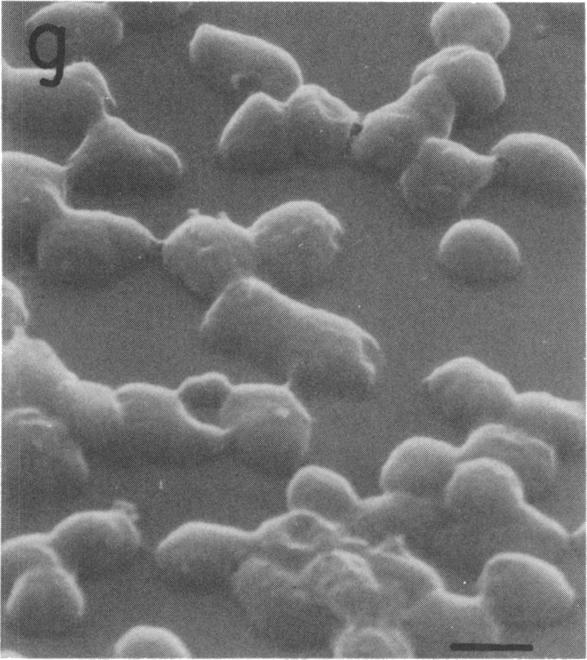
Mutants of Escherichia coli capable of growing in the presence of 10 microgram of mecillinam per ml were selected after intensive mutagenesis. Of these mutants, 1.4% formed normal, rod-shaped cells at 30 degrees C but grew as spherical cells at 42 degrees C. The phenotype of one of these rod(Ts) mutants was 88% cotransducible with lip (14.3 min), and all lip+ rod(Ts) transductants of a lip recipient had the following characteristics: (i) growth was relatively sensitive to mecillinam at 30 degrees C but relatively resistant to mecillinam at 42 degrees C; (ii) penicillin-binding protein 2 was present in membranes of cells grown at 30 degrees C in reduced amounts and was undetectable in the membranes of cells grown at 42 degrees C. The mecillinam resistance, penicillin-binding protein 2 defect, and rod phenotypes all cotransduced with lip with high frequency. Thus the mutation [rodA(Ts)] is most likely in the gene for penicillin-binding protein 2 and causes the organism to grow as a sphere at 42 degrees C, although it grows with normal rodlike morphology at 30 degrees C. At 42 degrees C, cells of this strain were round with many wrinkles on their surfaces, as revealed by scanning electron microscopy. In these round cells, chromosomes were dispersed or distributed peripherally, in contrast to normal rod-shaped cells which had centrally located, more condensed chromosomes. The round cells divided asymmetrically on solid agar, and it seemed that the plane of each successive division was perpendicular to the preceding one. On temperature shift-down in liquid medium many cells with abnormal morphology appeared before normal rod-shaped cells developed. Few abnormal cells were seen when cells were placed on solid medium during temperature shift-down. These pleiotropic effects are presumably caused by one or more mutations in the rodA gene.
经过高强度诱变后,筛选出了能够在每毫升含10微克美西林的环境中生长的大肠杆菌突变体。在这些突变体中,1.4%在30℃时形成正常的杆状细胞,但在42℃时呈球形生长。其中一个杆状(温度敏感型)突变体的表型与lip(14.3分钟处)的共转导率为88%,lip受体的所有lip+杆状(温度敏感型)转导子具有以下特征:(i)在30℃时生长对美西林相对敏感,但在42℃时对美西林相对耐药;(ii)青霉素结合蛋白2在30℃生长的细胞的膜中含量减少,在42℃生长的细胞的膜中无法检测到。美西林耐药性、青霉素结合蛋白2缺陷和杆状表型都与lip高频共转导。因此,[rodA(温度敏感型)]突变很可能存在于青霉素结合蛋白2的基因中,导致该生物体在42℃时呈球形生长,尽管它在30℃时以正常的杆状形态生长。扫描电子显微镜显示,在42℃时,该菌株的细胞呈圆形,表面有许多皱纹。在这些圆形细胞中,染色体分散或分布在周边,这与正常杆状细胞中染色体位于中央且更为浓缩的情况形成对比。圆形细胞在固体琼脂上不对称分裂,似乎每个连续分裂的平面都与前一个平面垂直。在液体培养基中温度下降时,许多形态异常的细胞在正常杆状细胞出现之前就出现了。在温度下降期间将细胞置于固体培养基上时,几乎看不到异常细胞。这些多效性效应可能是由rodA基因中的一个或多个突变引起的。