Lin Chujiao, Yang Qiyuan, Guo Dongsheng, Xie Jun, Yang Yeon-Suk, Chaugule Sachin, DeSouza Ngoc, Oh Won-Taek, Li Rui, Chen Zhihao, John Aijaz A, Qiu Qiang, Zhu Lihua Julie, Greenblatt Matthew B, Ghosh Sankar, Li Shaoguang, Gao Guangping, Haynes Cole, Emerson Charles P, Shim Jae-Hyuck
Department of Medicine/Division of Rheumatology, UMass Chan Medical School, Worcester, MA, USA.
Department of Molecular, Cell and Cancer Biology, UMass Chan Medical School, Worcester, MA, USA.
Nat Commun. 2022 Nov 11;13(1):6869. doi: 10.1038/s41467-022-34694-8.
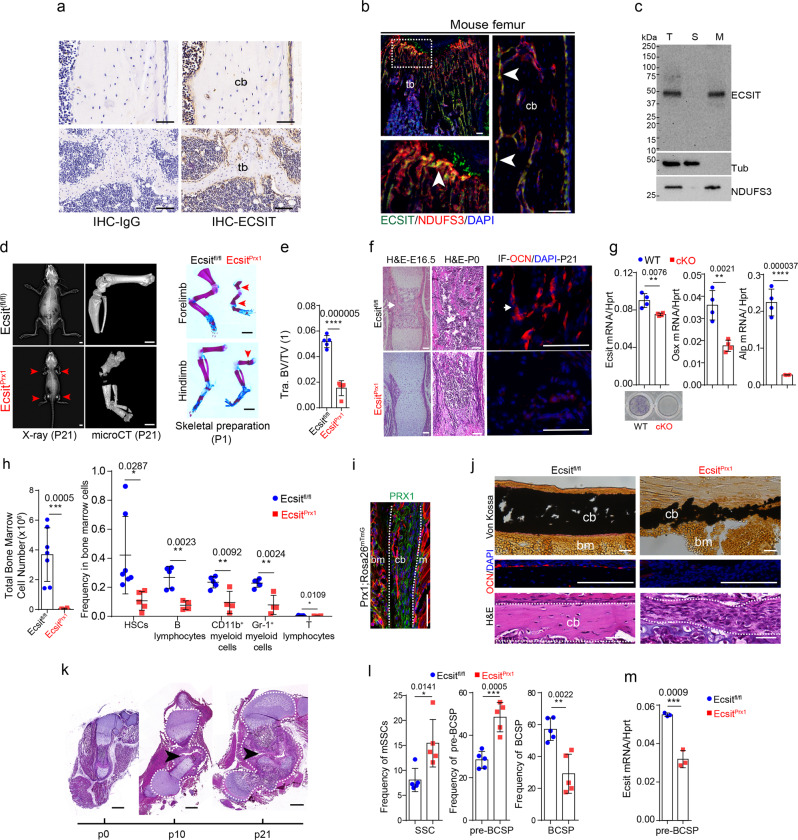
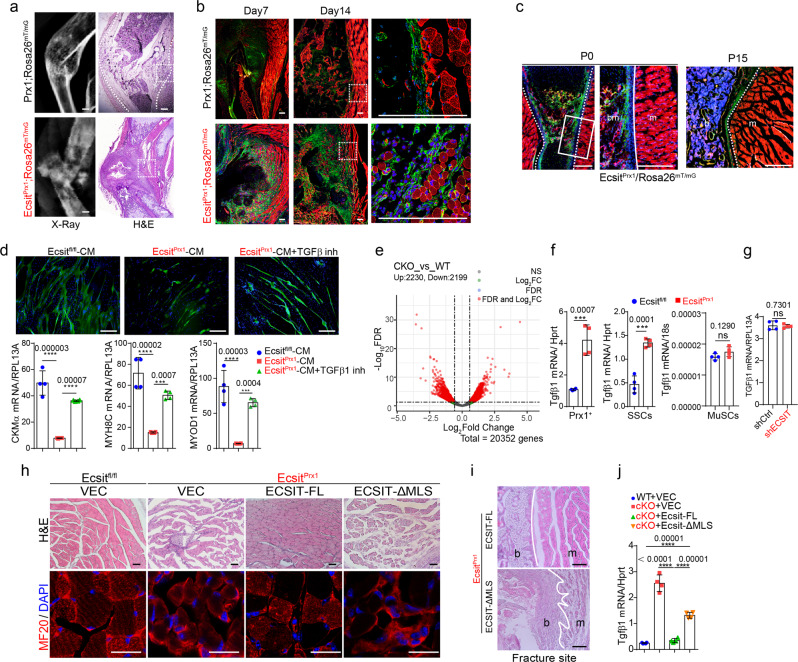
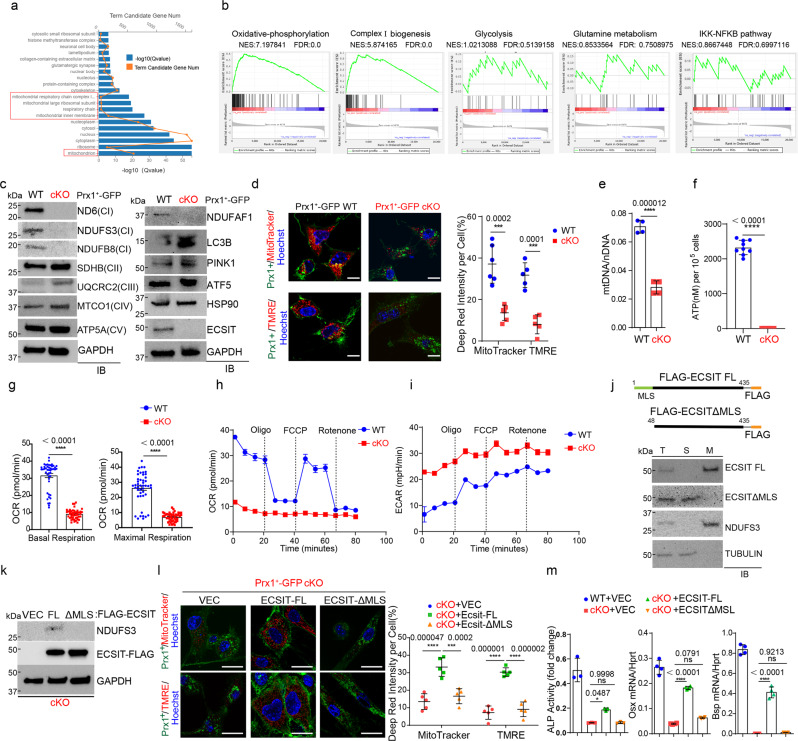
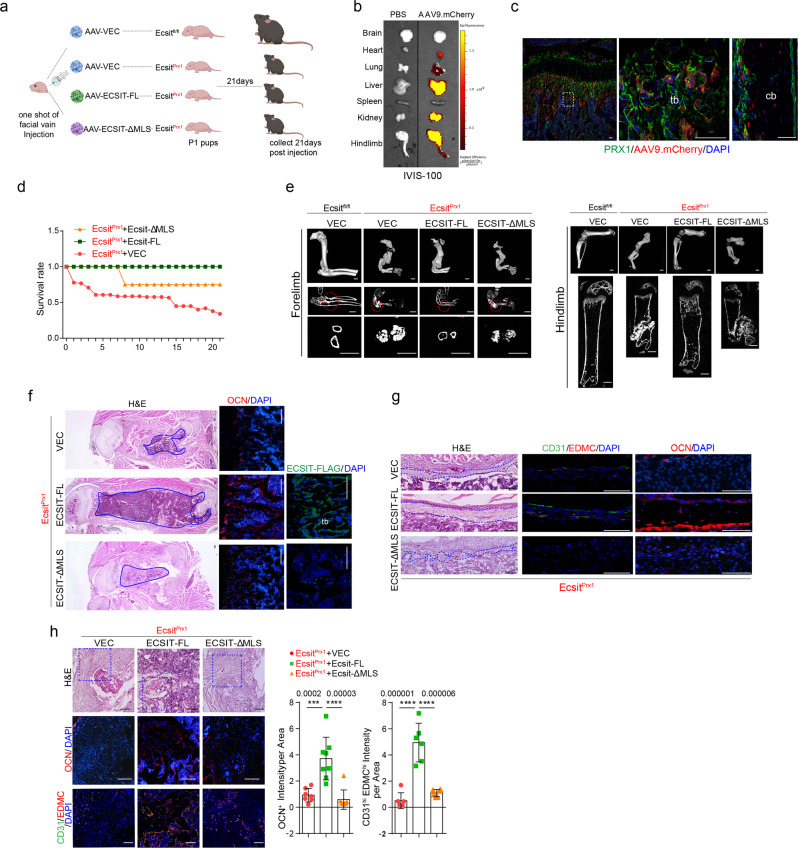
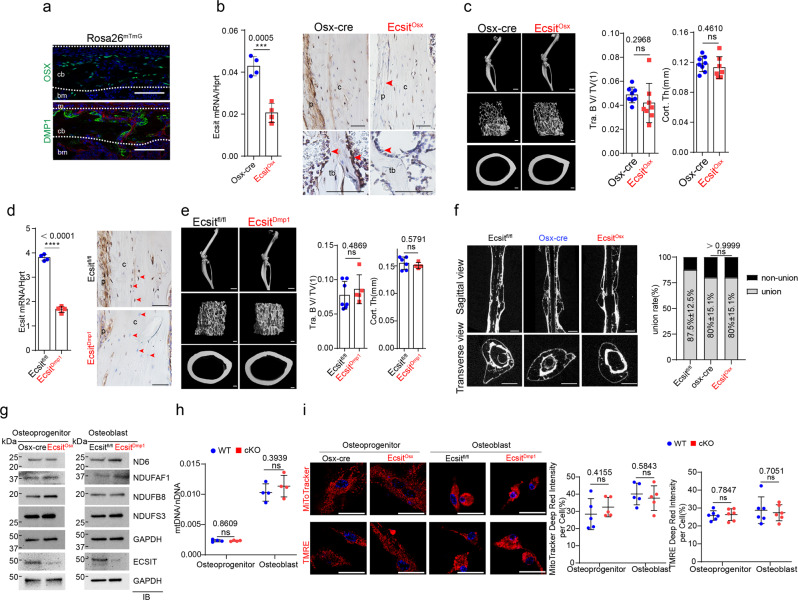
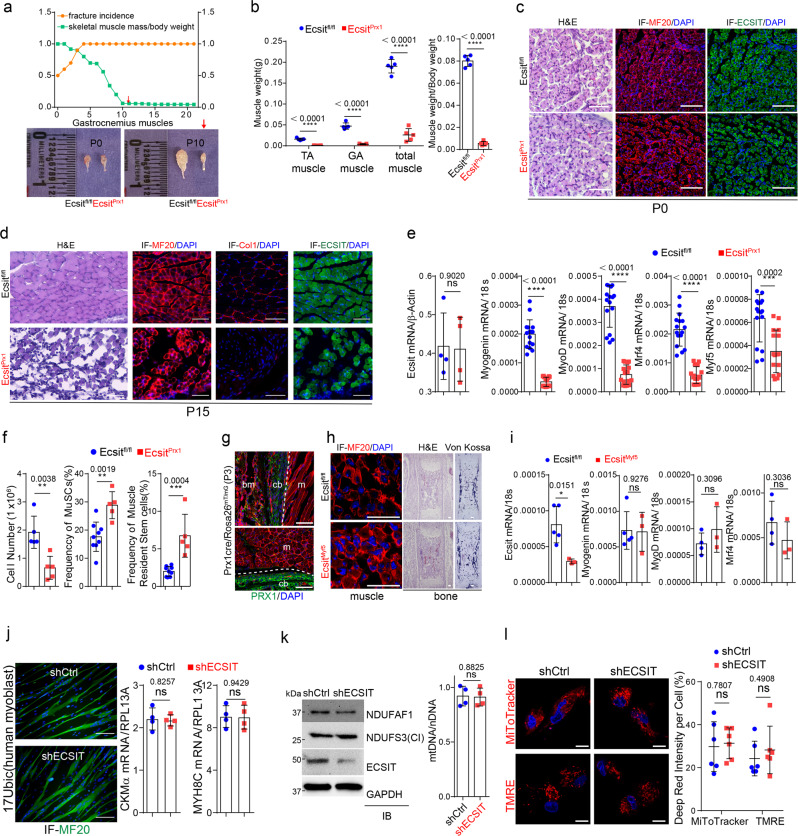
Although skeletal progenitors provide a reservoir for bone-forming osteoblasts, the major energy source for their osteogenesis remains unclear. Here, we demonstrate a requirement for mitochondrial oxidative phosphorylation in the osteogenic commitment and differentiation of skeletal progenitors. Deletion of Evolutionarily Conserved Signaling Intermediate in Toll pathways (ECSIT) in skeletal progenitors hinders bone formation and regeneration, resulting in skeletal deformity, defects in the bone marrow niche and spontaneous fractures followed by persistent nonunion. Upon skeletal fracture, Ecsit-deficient skeletal progenitors migrate to adjacent skeletal muscle causing muscle atrophy. These phenotypes are intrinsic to ECSIT function in skeletal progenitors, as little skeletal abnormalities were observed in mice lacking Ecsit in committed osteoprogenitors or mature osteoblasts. Mechanistically, Ecsit deletion in skeletal progenitors impairs mitochondrial complex assembly and mitochondrial oxidative phosphorylation and elevates glycolysis. ECSIT-associated skeletal phenotypes were reversed by in vivo reconstitution with wild-type ECSIT expression, but not a mutant displaying defective mitochondrial localization. Collectively, these findings identify mitochondrial oxidative phosphorylation as the prominent energy-driving force for osteogenesis of skeletal progenitors, governing musculoskeletal integrity.
尽管骨骼祖细胞为形成骨骼的成骨细胞提供了一个储备库,但其骨生成的主要能量来源仍不清楚。在此,我们证明了线粒体氧化磷酸化在骨骼祖细胞的成骨定向和分化过程中的必要性。骨骼祖细胞中Toll途径进化保守信号中间体(ECSIT)的缺失会阻碍骨形成和再生,导致骨骼畸形、骨髓微环境缺陷以及自发性骨折并伴有持续不愈合。在骨骼骨折时,缺乏Ecsit的骨骼祖细胞迁移至相邻骨骼肌,导致肌肉萎缩。这些表型是骨骼祖细胞中ECSIT功能所固有的,因为在定向骨祖细胞或成熟成骨细胞中缺乏Ecsit的小鼠中几乎未观察到骨骼异常。从机制上讲,骨骼祖细胞中Ecsit的缺失会损害线粒体复合物组装和线粒体氧化磷酸化,并提高糖酵解水平。通过野生型ECSIT表达的体内重建可逆转与ECSIT相关的骨骼表型,但具有缺陷线粒体定位的突变体则无法逆转。总体而言,这些发现确定线粒体氧化磷酸化是骨骼祖细胞骨生成的主要能量驱动力,对肌肉骨骼完整性起关键作用。