School of Biological, Earth, and Environmental Sciences, University of New South Wales, Sydney, New South Wales, Australia.
Centre for Planetary Health and Food Security, Griffith University, Nathan, Queensland, Australia.
Nature. 2023 Jan;613(7943):340-344. doi: 10.1038/s41586-022-05506-2. Epub 2022 Nov 16.
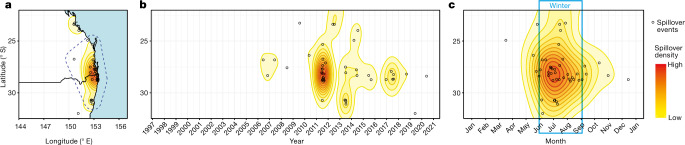
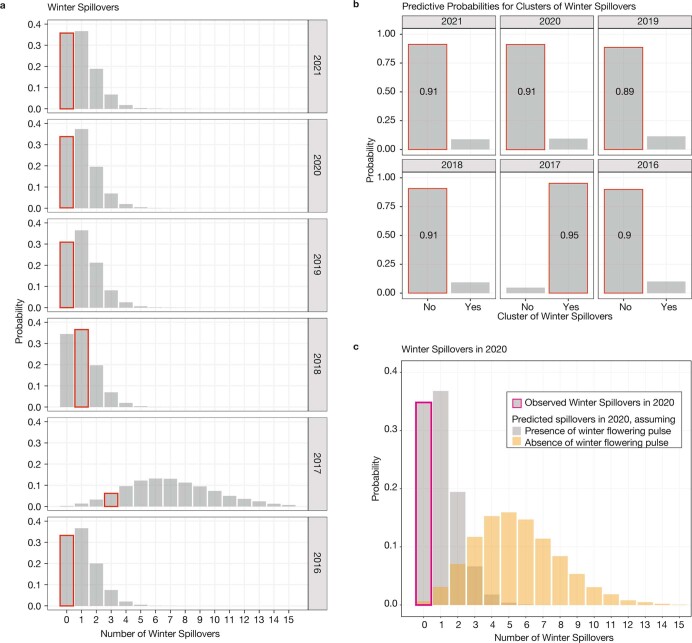
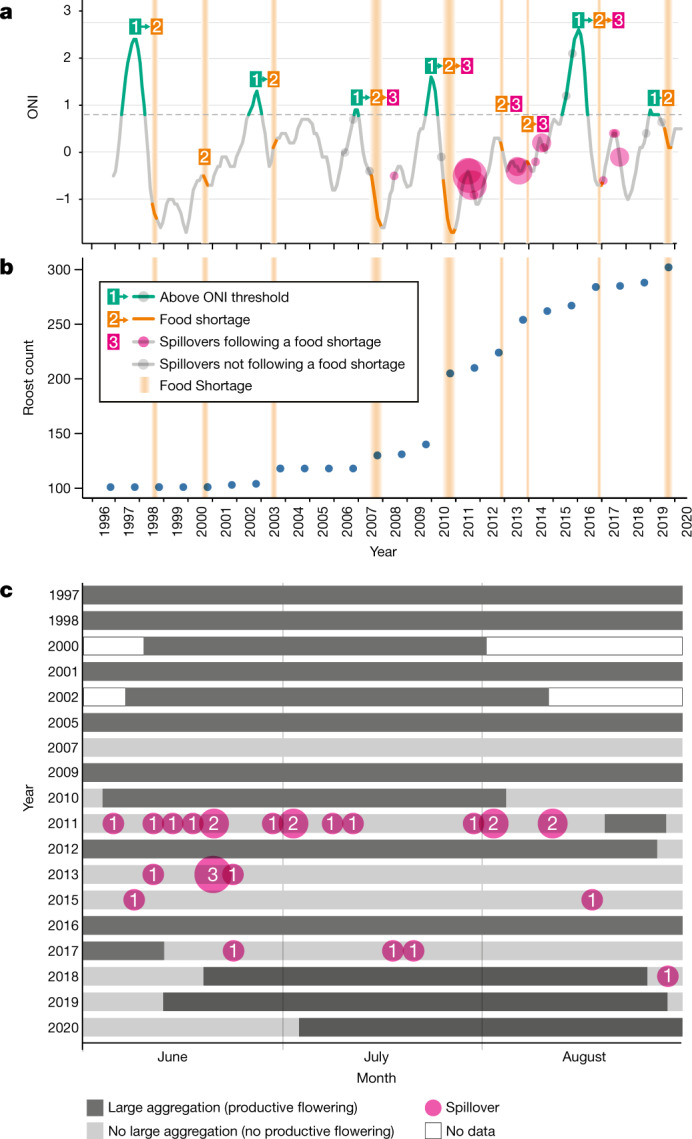
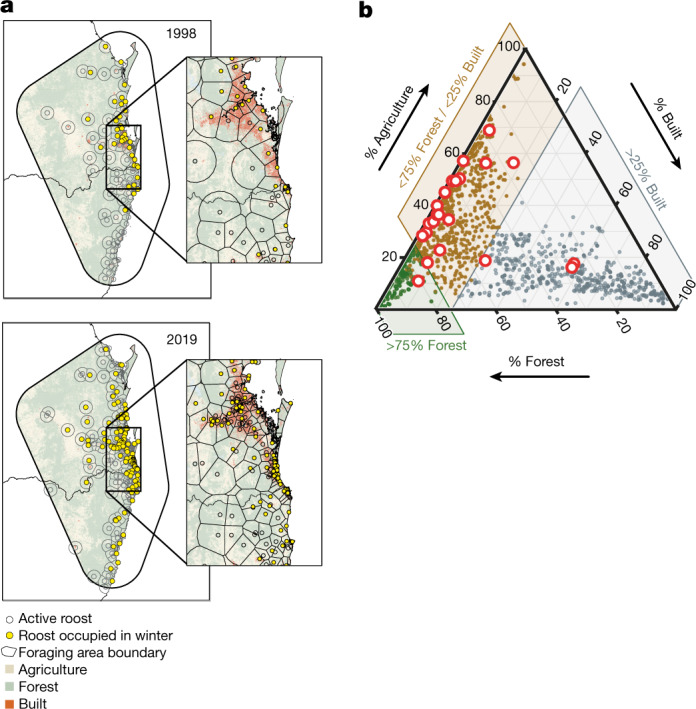
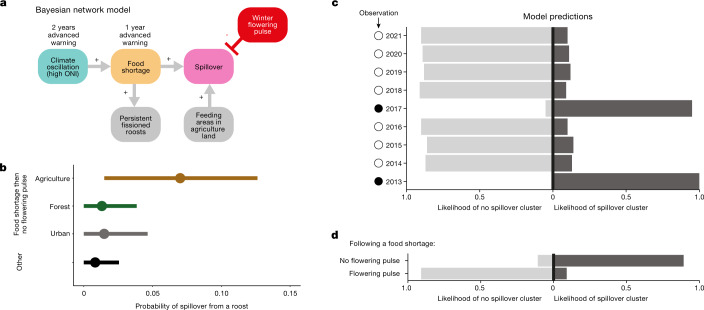
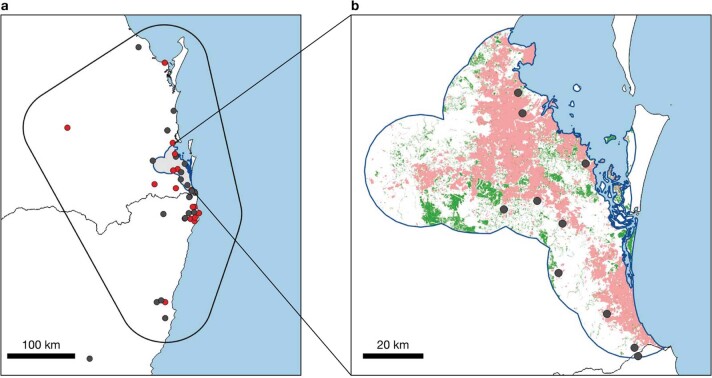
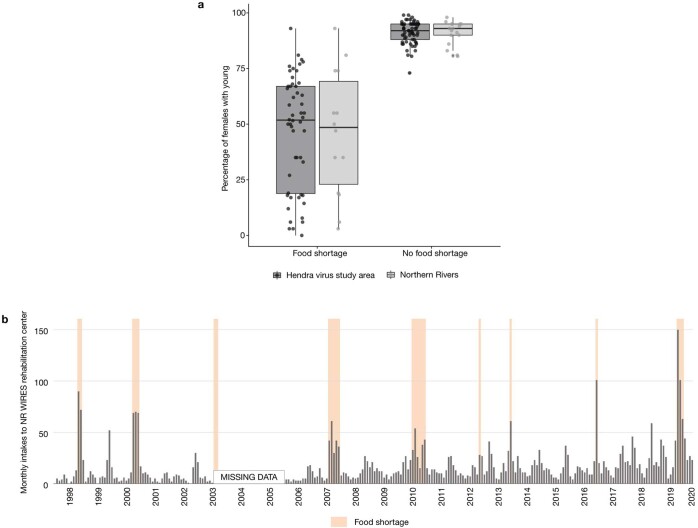
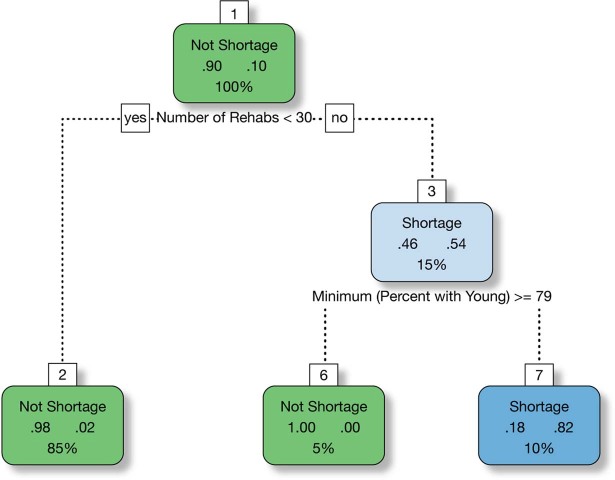
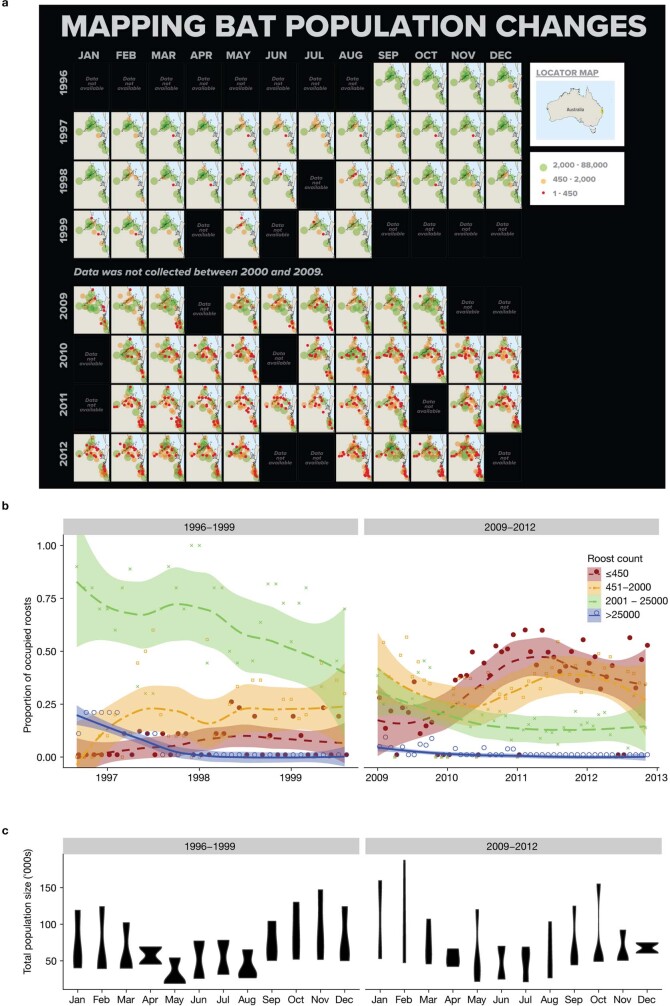
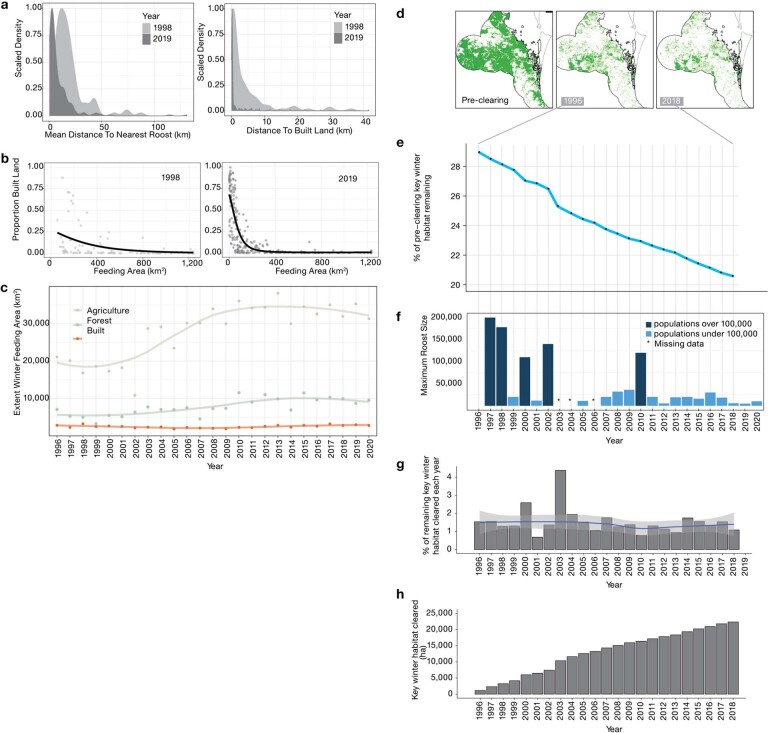
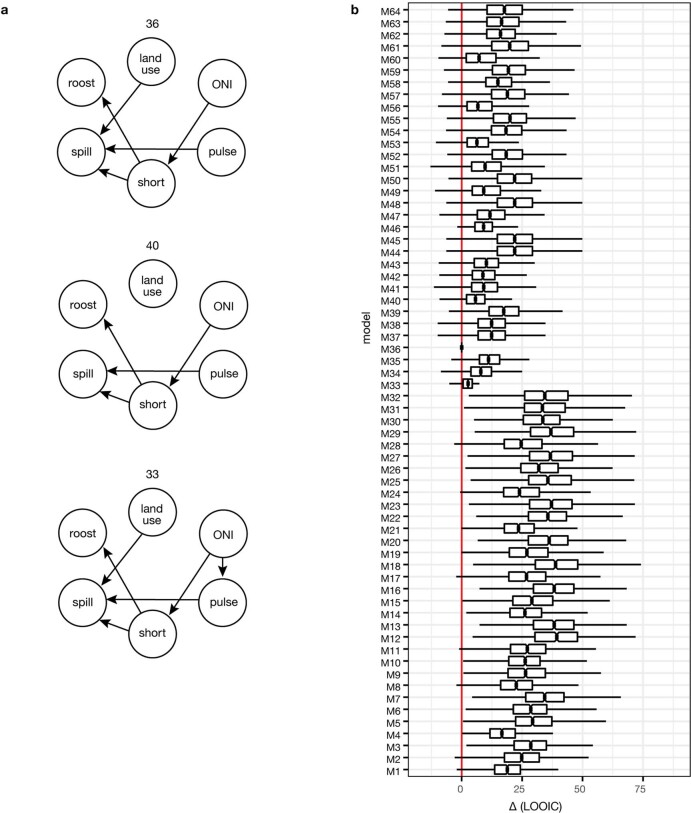
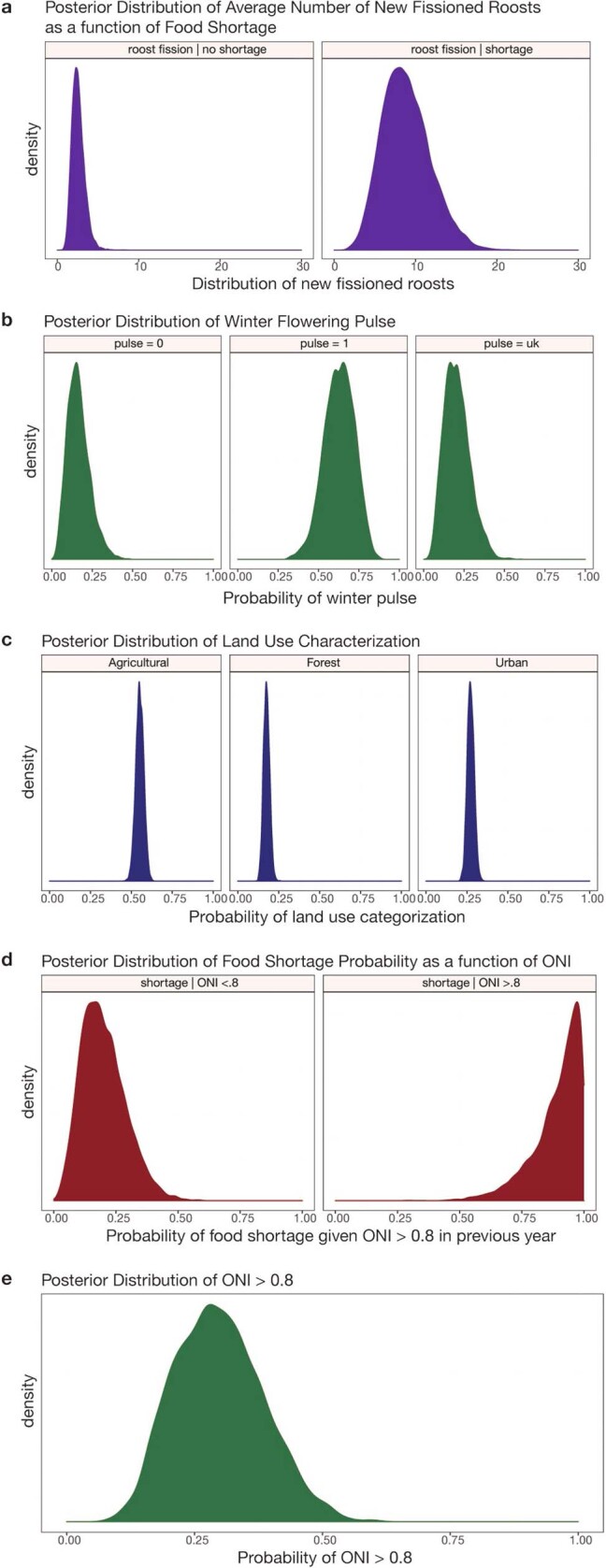
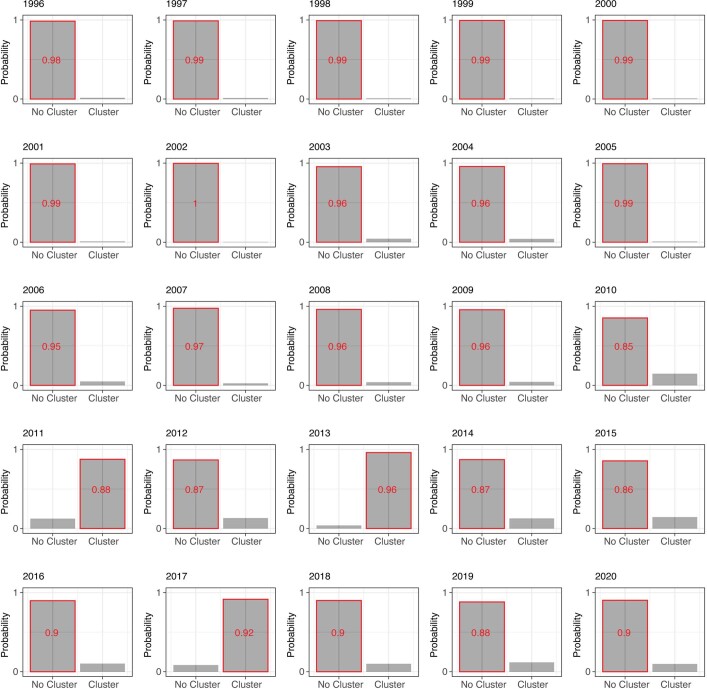
During recent decades, pathogens that originated in bats have become an increasing public health concern. A major challenge is to identify how those pathogens spill over into human populations to generate a pandemic threat. Many correlational studies associate spillover with changes in land use or other anthropogenic stressors, although the mechanisms underlying the observed correlations have not been identified. One limitation is the lack of spatially and temporally explicit data on multiple spillovers, and on the connections among spillovers, reservoir host ecology and behaviour and viral dynamics. We present 25 years of data on land-use change, bat behaviour and spillover of Hendra virus from Pteropodid bats to horses in subtropical Australia. These data show that bats are responding to environmental change by persistently adopting behaviours that were previously transient responses to nutritional stress. Interactions between land-use change and climate now lead to persistent bat residency in agricultural areas, where periodic food shortages drive clusters of spillovers. Pulses of winter flowering of trees in remnant forests appeared to prevent spillover. We developed integrative Bayesian network models based on these phenomena that accurately predicted the presence or absence of clusters of spillovers in each of the 25 years. Our long-term study identifies the mechanistic connections between habitat loss, climate and increased spillover risk. It provides a framework for examining causes of bat virus spillover and for developing ecological countermeasures to prevent pandemics.
在最近几十年,起源于蝙蝠的病原体成为了日益严重的公共卫生关注问题。一个主要的挑战是确定这些病原体如何溢出到人类群体中,从而产生大流行威胁。许多相关性研究将溢出与土地利用变化或其他人为压力源联系起来,尽管尚未确定观察到的相关性背后的机制。一个限制是缺乏关于多种溢出、溢出之间的联系、宿主生态和行为以及病毒动态的空间和时间上明确的数据。我们展示了 25 年来澳大利亚亚热带地区翼手目蝙蝠的土地利用变化、蝙蝠行为和亨德拉病毒溢出到马身上的数据。这些数据表明,蝙蝠通过持续采取以前对营养压力的短暂反应的行为来应对环境变化。土地利用变化和气候之间的相互作用现在导致蝙蝠在农业地区持续居住,那里周期性的食物短缺会引发溢出的集群。残留森林中树木冬季开花的脉冲似乎阻止了溢出。我们基于这些现象开发了综合贝叶斯网络模型,这些模型准确地预测了 25 年来每个年份溢出集群的存在或不存在。我们的长期研究确定了栖息地丧失、气候和增加溢出风险之间的机制联系。它为研究蝙蝠病毒溢出的原因以及制定预防大流行的生态对策提供了一个框架。