Key Laboratory of Zoonosis Research, Ministry of Education, College of Veterinary Medicine, Jilin University, Changchun, 130062, China.
Changchun Veterinary Research Institute, Chinese Academy of Agricultural Sciences, Changchun, 130122, China.
Adv Sci (Weinh). 2023 Jan;10(2):e2205461. doi: 10.1002/advs.202205461. Epub 2022 Nov 17.
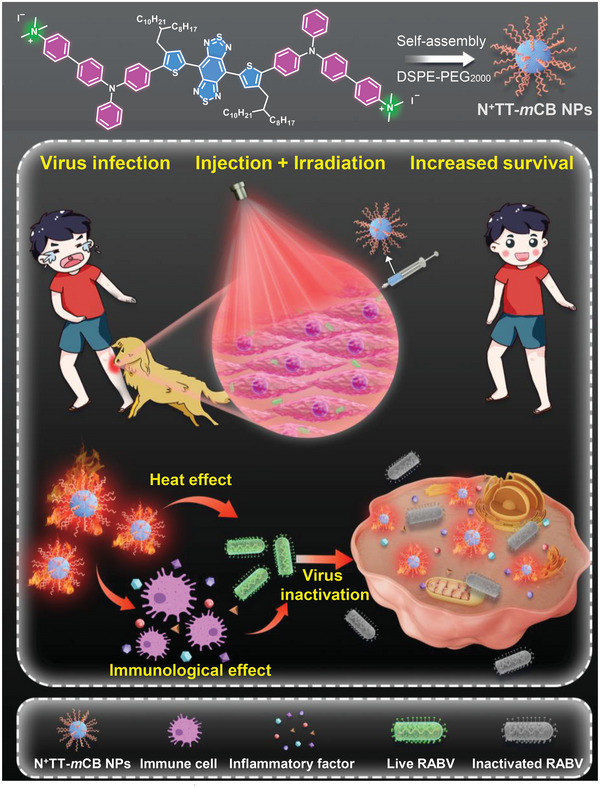
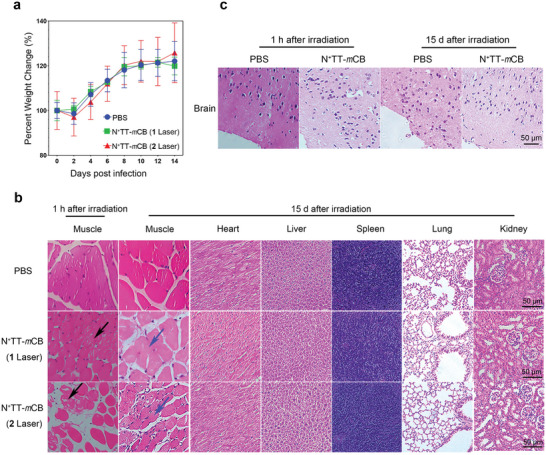
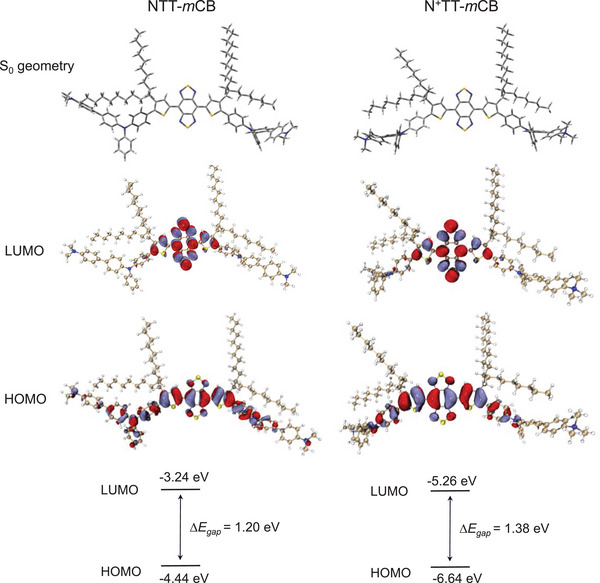
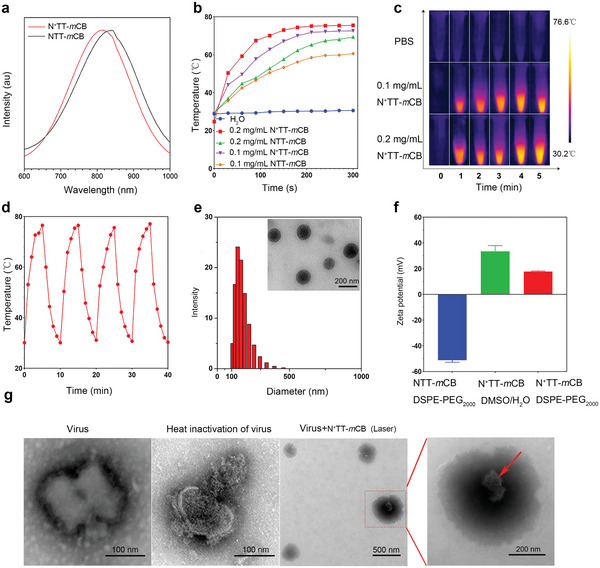
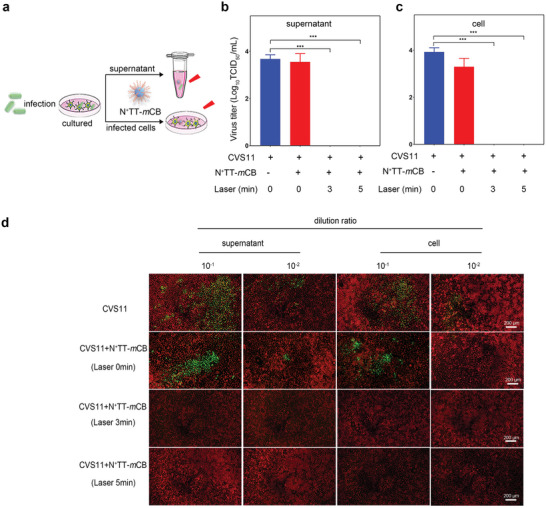
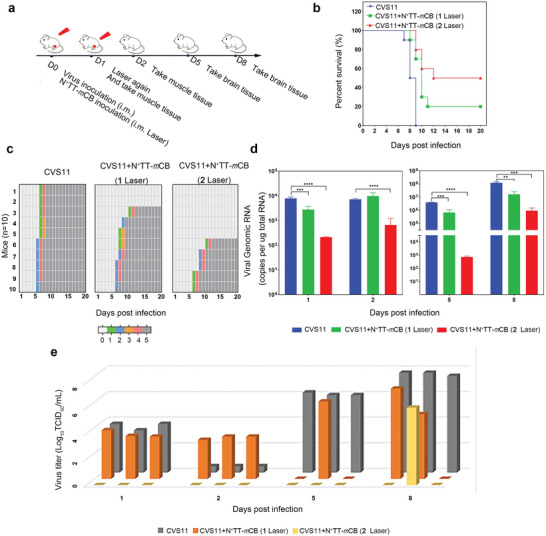
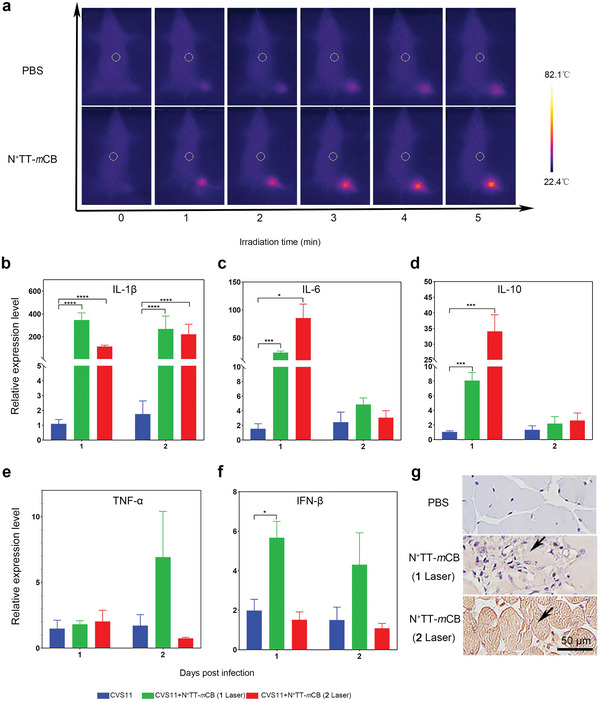
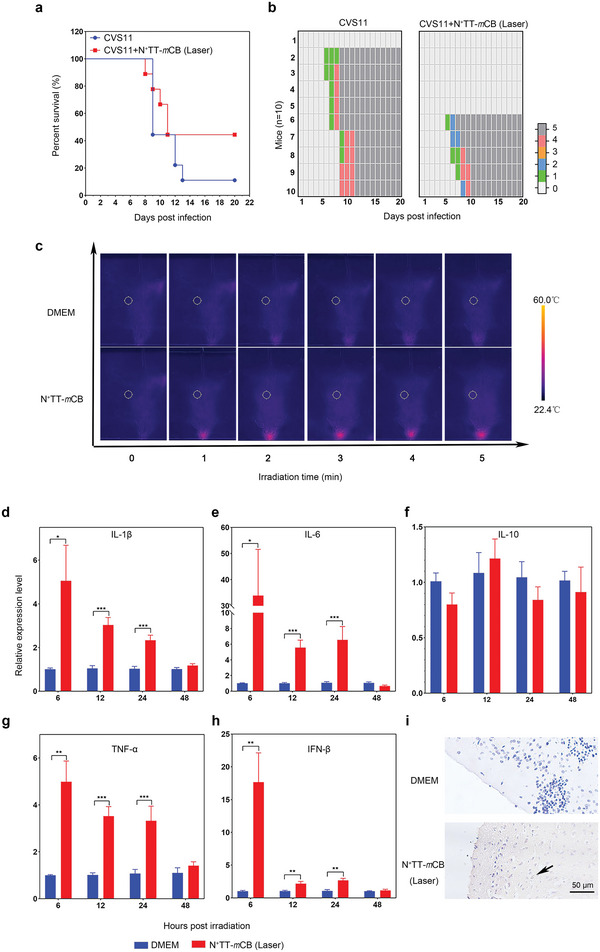
Rabies is a fatal neurological zoonotic disease caused by the rabies virus (RABV), and the approved post-exposure prophylaxis (PEP) procedure remains unavailable in areas with inadequate medical systems. Although strategies have been proposed for PEP and postinfection treatment (PIT), because of the complexity of the treatment procedures and the limited curative outcome, developing an effective treatment strategy remains a holy grail in rabies research. Herein, a facile approach is proposed involving photothermal therapy (PTT) and photothermally triggered immunological effects to realize effective PEP and PIT simultaneously. The designed photothermal agent (N TT-mCB nanoparticles) featured positively charged functional groups and high photo-to-heat efficiency, which are favorable for virus targeting and inactivation. The level of the virus at the site of infection in mice is significantly decreased upon treatment with orthotopic PTT, and the transfer of the virus to the brain is significantly inhibited. Furthermore, the survival ratio of the mice three days postinfection is increased by intracranial injection of N TT-mCB and laser irradiation. Overall, this work provides a platform for the effective treatment of RABV and opens a new avenue for future antiviral studies.
狂犬病是一种由狂犬病病毒(RABV)引起的致命神经人畜共患病,在医疗系统不完善的地区,批准的暴露后预防(PEP)程序仍然不可用。尽管已经提出了针对 PEP 和感染后治疗(PIT)的策略,但由于治疗程序的复杂性和有限的治疗效果,开发有效的治疗策略仍然是狂犬病研究的圣杯。在此,提出了一种简便的方法,涉及光热疗法(PTT)和光热触发的免疫效应,以同时实现有效的 PEP 和 PIT。设计的光热剂(N TT-mCB 纳米颗粒)具有正电荷官能团和高光热效率,有利于病毒靶向和失活。通过原位 PTT 治疗,感染部位的病毒水平显著降低,病毒向大脑的转移也得到显著抑制。此外,通过脑内注射 N TT-mCB 和激光照射,感染后三天的小鼠存活率增加。总的来说,这项工作为 RABV 的有效治疗提供了一个平台,并为未来的抗病毒研究开辟了新途径。