Ying Hongliang, Wang Haitian, Jiang Guangchuan, Tang Han, Li Lingrui, Zhang Jinrui
Department of Orthopedics, China-Japan Union Hospital of Jilin University, Changchun, China.
Key Laboratory of Artificial Micro- and Nano-Structures of Ministry of Education, School of Physics and Technology, Wuhan University, Wuhan, China.
Front Chem. 2022 Nov 1;10:1045612. doi: 10.3389/fchem.2022.1045612. eCollection 2022.
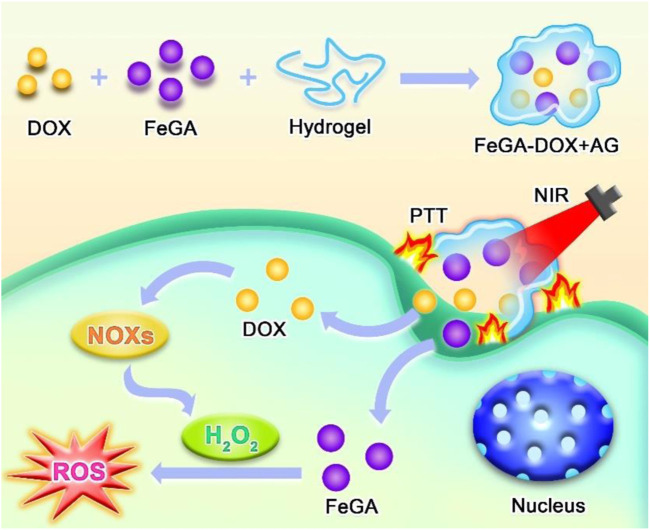
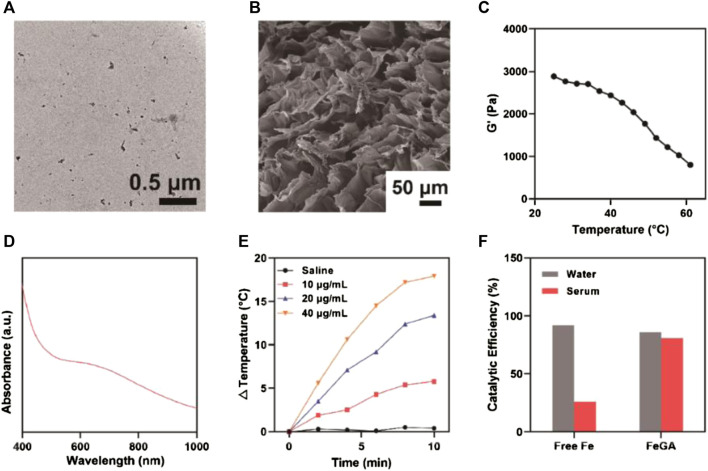
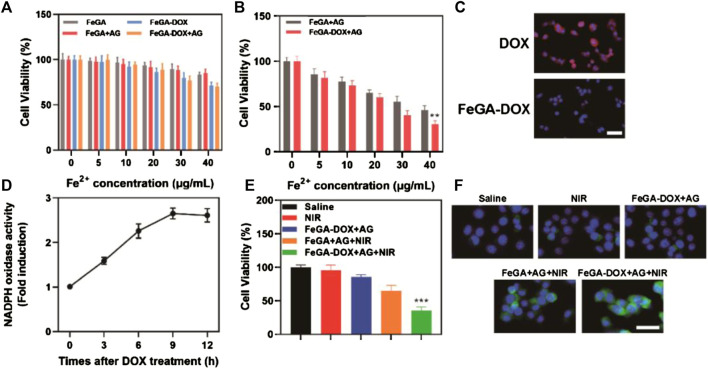
Osteosarcoma is a malignant bone cancer that usually occurs in children and adolescents. Although chemotherapy, radiotherapy and other methods have been used to treat osteosarcoma, these therapeutic regimens fail to cure this disease completely. Herein, doxorubicin-encapsulated iron-gallic acid (FeGA-DOX) nanoparticles (NPs) were fused with agarose hydrogels (AG) for synergistic therapy of osteosarcoma. Under near-infrared laser irradiation, the local temperature of FeGA-DOX NPs was increased. Therefore, tumour cells were killed using photothermal therapy, and AG dissolved to release FeGA-DOX into the cells. Doxorubicin generates hydrogen peroxide, which is then converted to reactive oxygen species (ROS) FeGA-DOX by the Fenton reaction, inducing tumour cell apoptosis. ROS induced by chemodynamic therapy compensates for the incomplete cure of osteosarcoma cells. The AG-encapsulated NPs could mediate synergistic chemodynamic and photothermal therapy with self-sufficient HO, providing a novel therapeutic strategy for osteosarcoma.
骨肉瘤是一种通常发生在儿童和青少年身上的恶性骨癌。尽管已经使用化疗、放疗和其他方法来治疗骨肉瘤,但这些治疗方案无法完全治愈这种疾病。在此,将载有阿霉素的铁-没食子酸(FeGA-DOX)纳米颗粒(NPs)与琼脂糖水凝胶(AG)融合用于骨肉瘤的协同治疗。在近红外激光照射下,FeGA-DOX NPs的局部温度升高。因此,利用光热疗法杀死肿瘤细胞,AG溶解以将FeGA-DOX释放到细胞中。阿霉素产生过氧化氢,然后通过芬顿反应将其转化为活性氧(ROS)FeGA-DOX,诱导肿瘤细胞凋亡。化学动力疗法诱导的ROS弥补了骨肉瘤细胞不完全治愈的问题。AG包裹的NPs可以介导具有自足性HO的协同化学动力和光热疗法,为骨肉瘤提供了一种新的治疗策略。