Wang Fang, Wei Yali, Yan Taozhe, Wang Cuicui, Chao Yinghui, Jia Mingyue, An Lizhe, Sheng Hongmei
Ministry of Education Key Laboratory of Cell Activities and Stress Adaptations, School of Life Sciences, Lanzhou University, Lanzhou, China.
Center for Terrestrial Biodiversity of the South China Sea, Hainan University, Haikou, China.
Front Plant Sci. 2022 Oct 28;13:1002772. doi: 10.3389/fpls.2022.1002772. eCollection 2022.
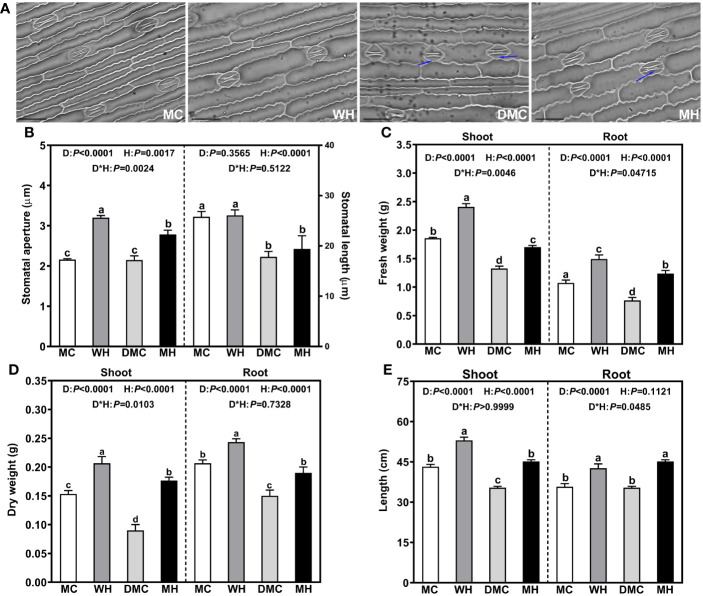
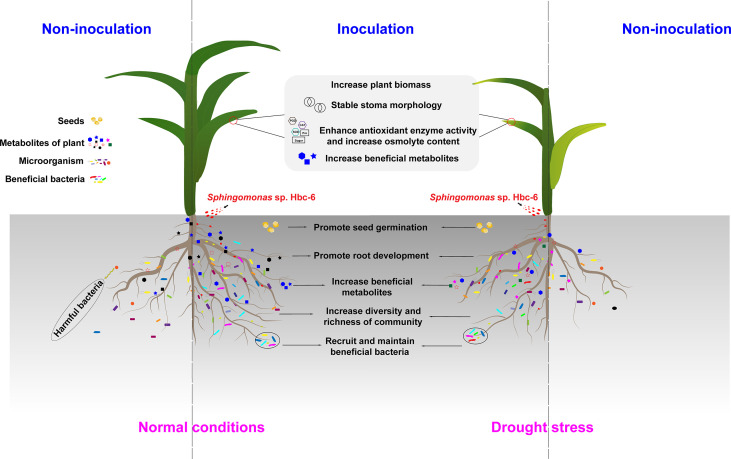
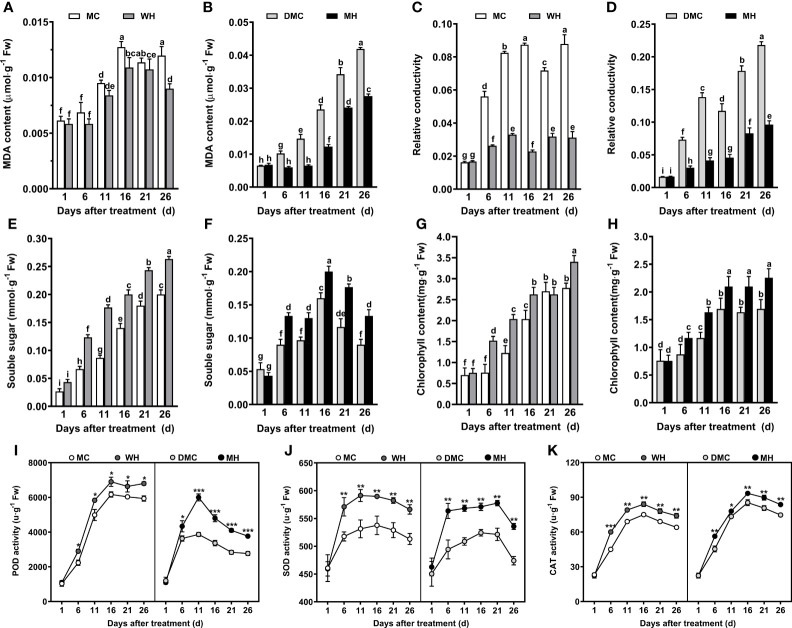
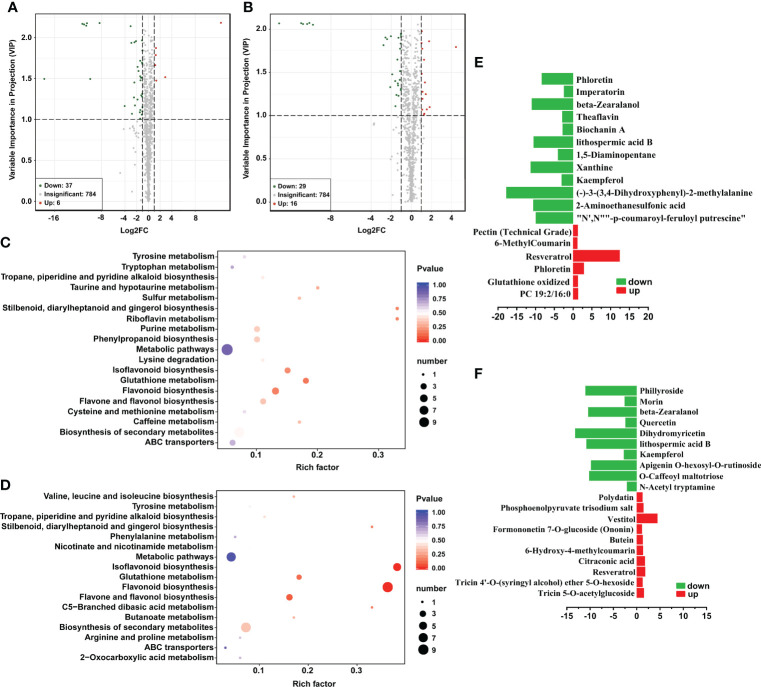
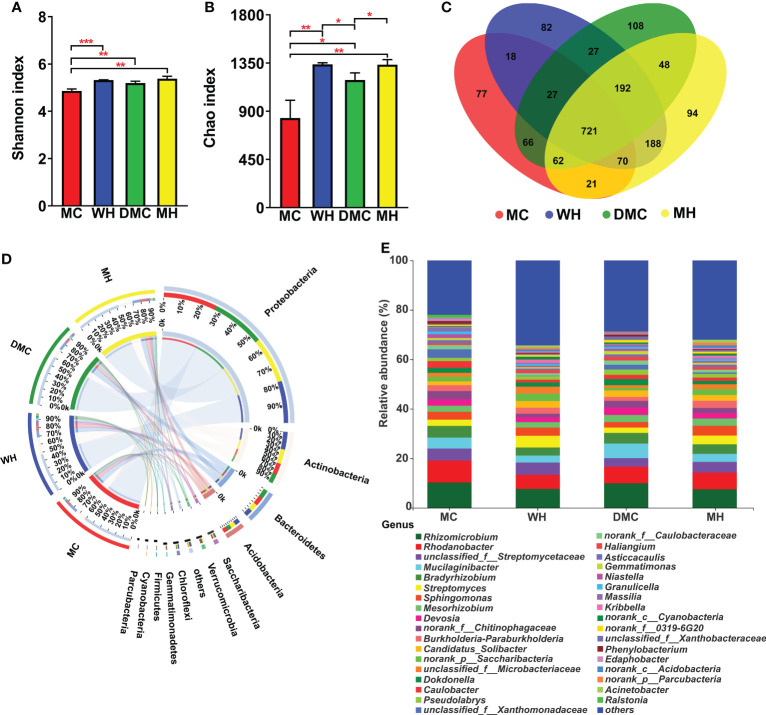
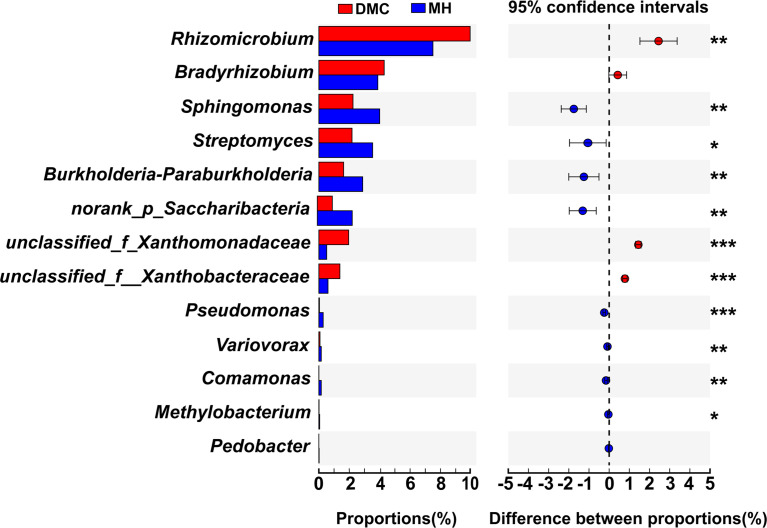
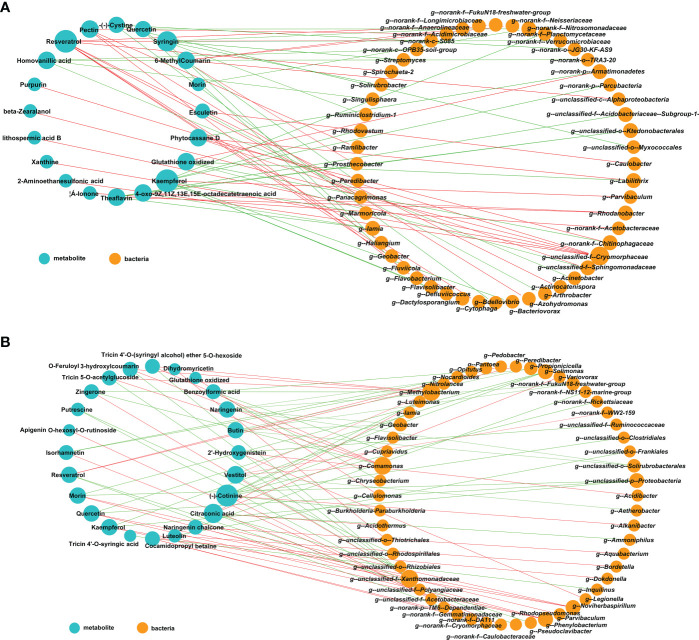
Drought poses a serious threat to plant growth. Plant growth-promoting bacteria (PGPB) have great potential to improve plant nutrition, yield, and drought tolerance. is an important microbiota genus that is extensively distributed in the plant or rhizosphere. However, the knowledge of its plant growth-promoting function in dry regions is extremely limited. In this study, we investigated the effects of PGPB sp. Hbc-6 on maize under normal conditions and drought stress. We found that Hbc-6 increased the biomass of maize under normal conditions and drought stress. For instance, the root fresh weight and shoot dry weight of inoculated maize increased by 39.1% and 34.8% respectively compared with non-inoculated plant, while they increased by 61.3% and 96.3% respectively under drought conditions. Hbc-6 also promoted seed germination, maintained stomatal morphology and increased chlorophyll content so as to enhance photosynthesis of plants. Hbc-6 increased antioxidant enzyme (catalase, superoxide, peroxidase) activities and osmoregulation substances (proline, soluble sugar) and up-regulated the level of beneficial metabolites (resveratrol, etc.). Moreover, Hbc-6 reshaped the maize rhizosphere bacterial community, increased its richness and diversity, and made the rhizosphere bacterial community more complex to resist stress; Hbc-6 could also recruit more potentially rhizosphere beneficial bacteria which might promote plant growth together with Hbc-6 both under normal and drought stress. In short, Hbc-6 increased maize biomass and drought tolerance through the above ways. Our findings lay a foundation for exploring the complex mechanisms of interactions between and plants, and it is important that sp. Hbc-6 can be used as a potential biofertilizer in agricultural production, which will assist finding new solutions for improving the growth and yield of crops in arid areas.
干旱对植物生长构成严重威胁。植物促生细菌(PGPB)在改善植物营养、产量和耐旱性方面具有巨大潜力。[具体细菌名称]是一种重要的微生物菌群,广泛分布于植物或根际。然而,其在干旱地区促进植物生长功能的相关知识极为有限。在本研究中,我们调查了PGPB[具体细菌名称]菌株Hbc - 6在正常条件和干旱胁迫下对玉米的影响。我们发现,Hbc - 6在正常条件和干旱胁迫下均增加了玉米的生物量。例如,接种玉米的根鲜重和地上部干重与未接种植株相比分别增加了39.1%和34.8%,而在干旱条件下分别增加了61.3%和96.3%。Hbc - 6还促进种子萌发,维持气孔形态并增加叶绿素含量,从而增强植物的光合作用。Hbc - 6提高了抗氧化酶(过氧化氢酶、超氧化物歧化酶、过氧化物酶)活性和渗透调节物质(脯氨酸、可溶性糖),并上调了有益代谢物(白藜芦醇等)水平。此外,Hbc - 6重塑了玉米根际细菌群落,增加了其丰富度和多样性,使根际细菌群落更复杂以抵御胁迫;Hbc - 6还能招募更多潜在的根际有益细菌,这些细菌可能在正常和干旱胁迫下与Hbc - 6共同促进植物生长。简而言之,Hbc - 6通过上述方式增加了玉米生物量和耐旱性。我们的研究结果为探索[具体细菌名称]与植物相互作用的复杂机制奠定了基础,重要的是,[具体细菌名称]菌株Hbc - 6可作为农业生产中的潜在生物肥料,这将有助于找到改善干旱地区作物生长和产量的新解决方案。