Dadashzadeh Elnaz, Saghaeian Jazi Marie, Abdolahi Nafiseh, Mohammadi Saeed, Saeidi Mohsen
Stem Cell Research center, Golestan University of Medical Sciences, Gorgan, Iran.
Department of Medical Immunology, Golestan University of Medical Sciences, Gorgan, Iran.
Int J Mol Cell Med. 2022;11(1):31-40. doi: 10.22088/IJMCM.BUMS.11.1.31. Epub 2022 Oct 3.
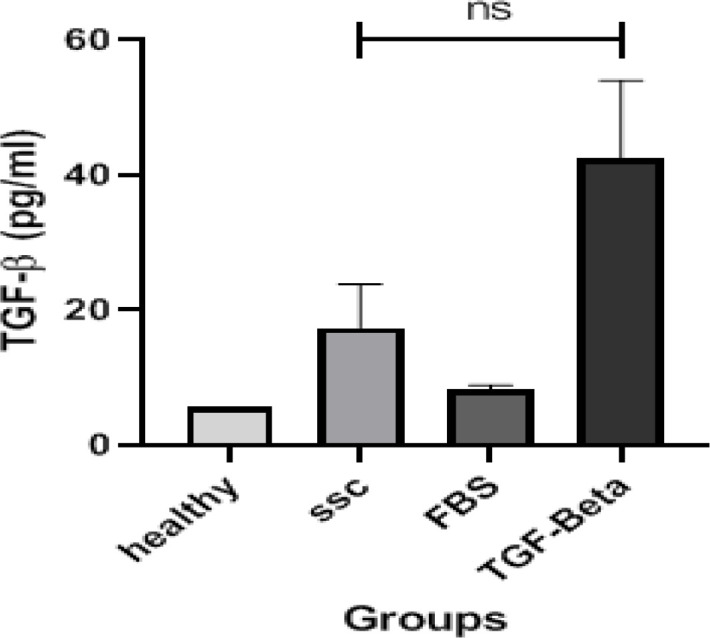
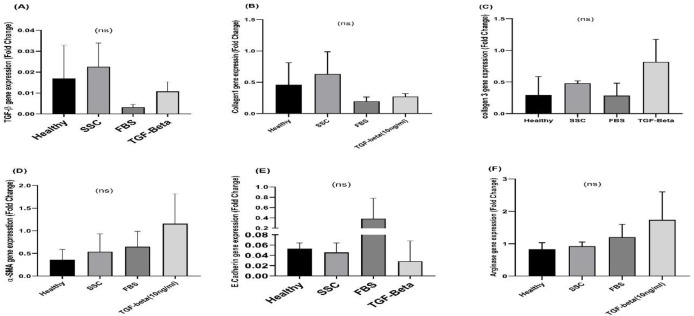
Systemic sclerosis (SSc) is a chronic autoimmune disease The serum from SSc patients contain inflammatory mediators, contributing to SSc pathogenesis and could be used to develop cell culture models. Here, we compared the fibrotic effects of serum samples from SSc patients with on human dermal fibroblasts (HDFs). HDF cells were cultured in four different culture media supplementations; 10% SSc serum, 10% healthy human serum, 10% fetal bovine serum or 10% FBS supplemented with 10 ng/Ml human TGFβ. The collagen content in cell layers was measured by spectrophotometric Picro-Sirius red staining. The mRNA expression of , and , , arginase and E-Cadherin genes were determined by real time RT-PCR. TGF-β1 levels in cell culture supernatants were measured using ELISA. Cell layer collagen content was significantly increased following TGF-β1 treatment, compared with FBS group and SSc serum treatment in comparison with healthy controls. Although not statistically significant, the mRNA expression of α-SMA, and , , and arginase increased upon TGF-β1 treatment in comparison with FBS group, and in SSc serum treatment group in comparison with healthy controls. E-Cadherin decreased following TGF-β1 treatment and SSc serum treatment in comparison with their counterparts. TGF-β1 levels increased in cell culture supernatants of HDF cells exposed to TGF-β1 and SSc serum. An model of SSc serum-induced fibrosis using human HDF cells was evaluated in comparison to the TGF-β1 fibrosis induced model and data suggested that it may be used in documenting the role of pro-fibrotic factors in serum or plasma from SSc patients.
系统性硬化症(SSc)是一种慢性自身免疫性疾病。SSc患者的血清含有炎症介质,这些介质参与了SSc的发病机制,可用于建立细胞培养模型。在此,我们比较了SSc患者血清样本对人皮肤成纤维细胞(HDFs)的纤维化作用。HDF细胞在四种不同的培养基补充物中培养:10%的SSc血清、10%的健康人血清、10%的胎牛血清或补充有10 ng/Ml人转化生长因子β(TGFβ)的10%胎牛血清。通过分光光度法苦味酸天狼星红染色测量细胞层中的胶原蛋白含量。通过实时逆转录聚合酶链反应(RT-PCR)测定α-平滑肌肌动蛋白(α-SMA)、Ⅰ型胶原蛋白(ColⅠ)、Ⅲ型胶原蛋白(ColⅢ)、纤连蛋白(FN)、精氨酸酶和E-钙黏蛋白基因的mRNA表达。使用酶联免疫吸附测定(ELISA)测量细胞培养上清液中的TGF-β1水平。与胎牛血清组相比,TGF-β1处理后细胞层胶原蛋白含量显著增加,与健康对照相比,SSc血清处理后细胞层胶原蛋白含量也显著增加。与胎牛血清组相比,TGF-β1处理后α-SMA、ColⅠ、ColⅢ、FN和精氨酸酶的mRNA表达增加,与健康对照相比,SSc血清处理组中这些基因的mRNA表达也增加,虽然差异无统计学意义。与相应对照组相比,TGF-β1处理和SSc血清处理后E-钙黏蛋白减少。与TGF-β1纤维化诱导模型相比,评估了使用人HDF细胞的SSc血清诱导纤维化的模型,数据表明该模型可用于记录促纤维化因子在SSc患者血清或血浆中的作用。