Pradeep Sasi, Nandini Gopu, Hiranmayi Sunkara, Kumar Goutham, Bijjala Nikhil K, Guduri Spandana
Department of Oral Pathology and Microbiology, Sai Krishna Dental Clinic and Hospital, Khaleelwadi, IND.
Department of Public Health Dentistry, Meghna Institute of Dental Sciences, Nizamabad, IND.
Cureus. 2022 Oct 10;14(10):e30155. doi: 10.7759/cureus.30155. eCollection 2022 Oct.
Toothbrushes may get contaminated by the oral cavity, environment, hands, storage containers, or aerosol contamination. The present study was conducted to assess the microbial contamination of toothbrushes and methods of their decontamination.
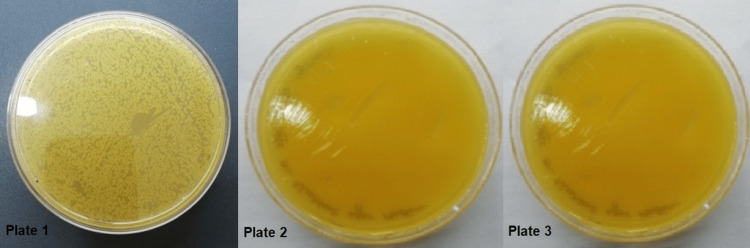
The current study included 160 subjects of both genders. All the subjects were provided with a toothbrush and paste with complete hygiene instructions for the oral cavity. After one month, all the brushes were collected. The samples were categorized into four groups of 40 each. Group I was treated with 0.2% chlorhexidine gluconate, group II with Listerine, group III with Dettol, and group IV with tap water. Finally, these toothbrushes were placed in 5 mL of neutralizer broth and then evaluated to study the efficacy of four disinfectants. All the data were analyzed using the statistical package for social science (SPSS) version 23 software (IBM, Armonk, NY, USA). For all analyses, p < 0.05 was considered to be statistically significant Results: Aerobic bacterial growth before disinfection in Groups I, II, III, and IV was 91.6%, 75.84%, 75%, 81.67%, respectively (p = 0.01). After disinfecting the brushes aerobic bacterial growth was reduced to 34.17%, 30.84%, 24.17% & 74.17% in Groups I, II, III, and IV, respectively (p = 0.002). Klebsiella, Micrococci and Escherichia coli survived the most even after disinfection was done.
Most effective agent for the disinfection of toothbrushes was Dettol followed by Listerine and 0.2% chlorhexidine gluconate. Tap water was found to be ineffective in the decontamination of toothbrushes.
牙刷可能会受到口腔、环境、手部、储存容器或气溶胶污染。本研究旨在评估牙刷的微生物污染情况及其去污方法。
本研究纳入了160名男女受试者。为所有受试者提供了牙刷和牙膏,并给出了完整的口腔卫生指导。一个月后,收集所有牙刷。将样本分为四组,每组40个。第一组用0.2%葡萄糖酸氯己定处理,第二组用利斯特林漱口水处理,第三组用滴露处理,第四组用自来水处理。最后,将这些牙刷置于5 mL中和肉汤中,然后评估四种消毒剂的效果。所有数据均使用社会科学统计软件包(SPSS)23版软件(美国纽约州阿蒙克市IBM公司)进行分析。所有分析中,p < 0.05被认为具有统计学意义。结果:消毒前,第一、二三四组的需氧菌生长率分别为91.6%、75.84%、75%、81.67%(p = 0.01)。消毒后,第一、二、三、四组的需氧菌生长率分别降至34.17%、30.84%、24.17%和74.17%(p = 0.002)。即使消毒后,克雷伯菌、微球菌和大肠杆菌的存活情况最为明显。
消毒牙刷最有效的试剂是滴露,其次是利斯特林漱口水和0.2%葡萄糖酸氯己定。发现自来水对牙刷去污无效。