Department of Cardio-Thoracic Surgery, Heart and Vascular Centre, Maastricht University Medical Centre, Maastricht, Netherlands; Cardiovascular Research Institute Maastricht, Maastricht, Netherlands.
Department of Cardio-Thoracic Surgery, Heart and Vascular Centre, Maastricht University Medical Centre, Maastricht, Netherlands; Cardiovascular Research Institute Maastricht, Maastricht, Netherlands.
Lancet Respir Med. 2023 Feb;11(2):151-162. doi: 10.1016/S2213-2600(22)00403-9. Epub 2022 Nov 16.
Extracorporeal membrane oxygenation (ECMO) has been widely used in patients with COVID-19, but uncertainty remains about the determinants of in-hospital mortality and data on post-discharge outcomes are scarce. The aims of this study were to investigate the variables associated with in-hospital outcomes in patients who received ECMO during the first wave of COVID-19 and to describe the status of patients 6 months after ECMO initiation.
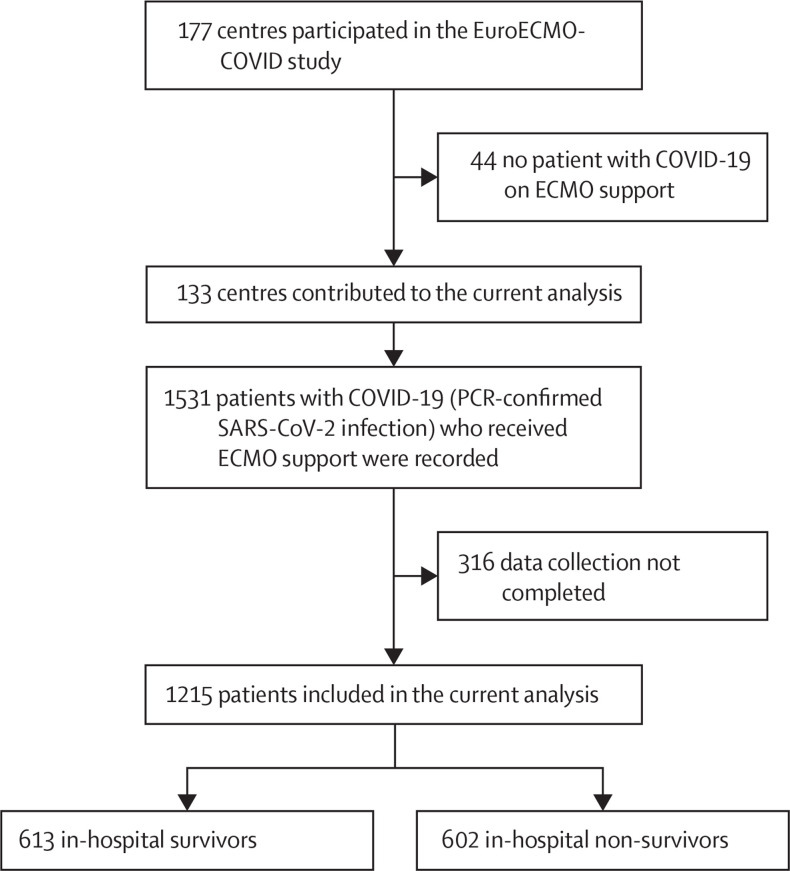
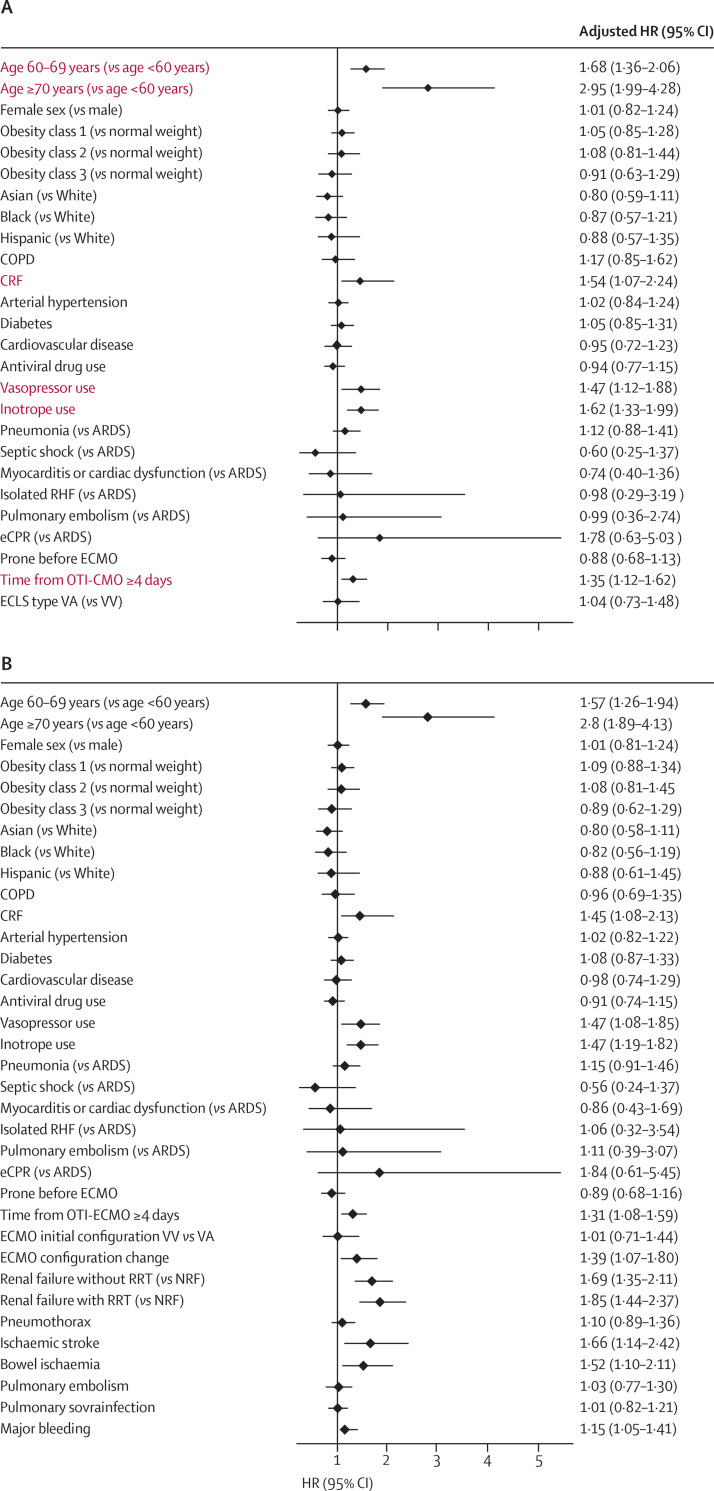
EuroECMO-COVID is a prospective, multicentre, observational study developed by the European Extracorporeal Life Support Organization. This study was based on data from patients aged 16 years or older who received ECMO support for refractory COVID-19 during the first wave of the pandemic-from March 1 to Sept 13, 2020-at 133 centres in 21 countries. In-hospital mortality and mortality 6 months after ECMO initiation were the primary outcomes. Mixed-Cox proportional hazards models were used to investigate associations between patient and management-related variables (eg, patient demographics, comorbidities, pre-ECMO status, and ECMO characteristics and complications) and in-hospital deaths. Survival status at 6 months was established through patient contact or institutional charts review. This study is registered with ClinicalTrials.gov, NCT04366921, and is ongoing.
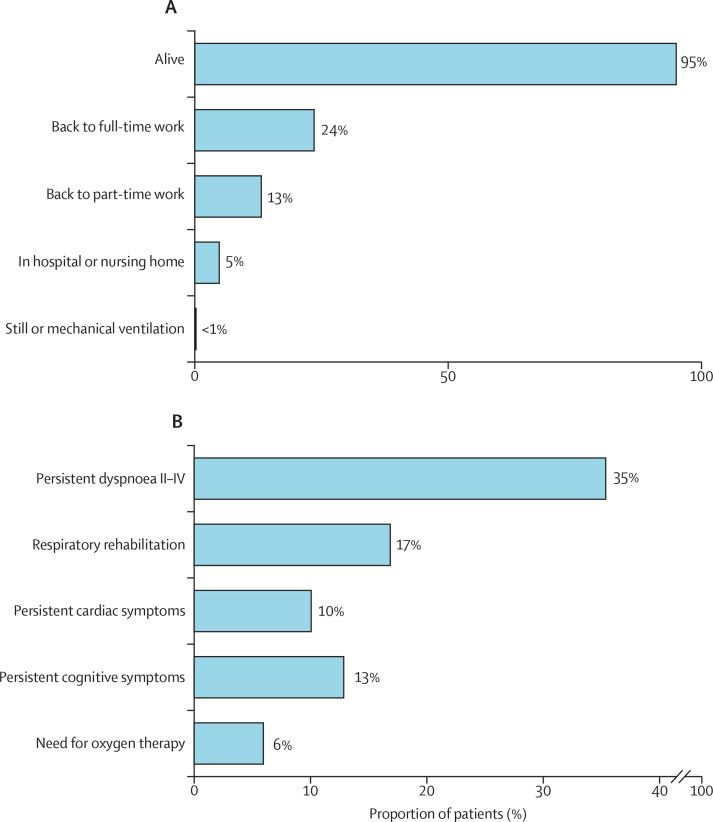
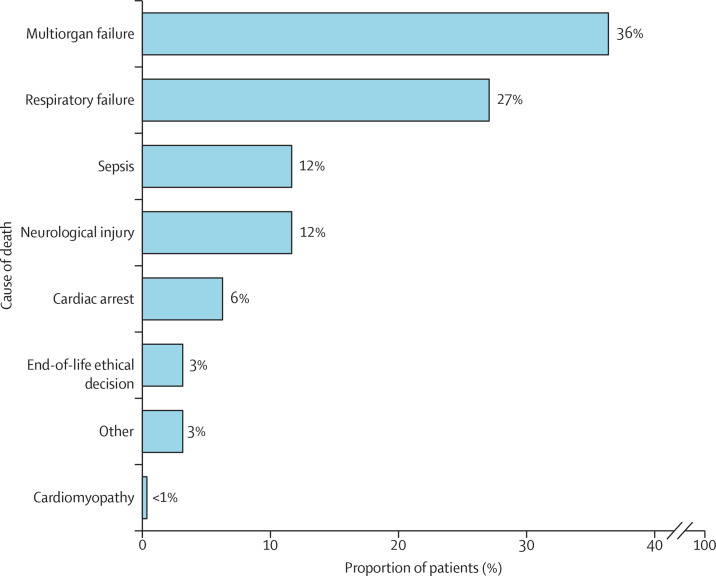
Between March 1 and Sept 13, 2020, 1215 patients (942 [78%] men and 267 [22%] women; median age 53 years [IQR 46-60]) were included in the study. Median ECMO duration was 15 days (IQR 8-27). 602 (50%) of 1215 patients died in hospital, and 852 (74%) patients had at least one complication. Multiorgan failure was the leading cause of death (192 [36%] of 528 patients who died with available data). In mixed-Cox analyses, age of 60 years or older, use of inotropes and vasopressors before ECMO initiation, chronic renal failure, and time from intubation to ECMO initiation of 4 days or more were associated with higher in-hospital mortality. 613 patients did not die in hospital, and 547 (95%) of 577 patients for whom data were available were alive at 6 months. 102 (24%) of 431 patients had returned to full-time work at 6 months, and 57 (13%) of 428 patients had returned to part-time work. At 6 months, respiratory rehabilitation was required in 88 (17%) of 522 patients with available data, and the most common residual symptoms included dyspnoea (185 [35%] of 523 patients) and cardiac (52 [10%] of 514 patients) or neurocognitive (66 [13%] of 512 patients) symptoms.
Patient's age, timing of cannulation (<4 days vs ≥4 days from intubation), and use of inotropes and vasopressors are essential factors to consider when analysing the outcomes of patients receiving ECMO for COVID-19. Despite post-discharge survival being favourable, persisting long-term symptoms suggest that dedicated post-ECMO follow-up programmes are required.
None.
体外膜肺氧合(ECMO)已广泛应用于 COVID-19 患者,但患者院内死亡率的决定因素仍存在不确定性,且关于出院后结局的数据也很少。本研究旨在探讨 COVID-19 大流行第一波期间接受 ECMO 治疗的患者的院内结局相关变量,并描述 ECMO 启动后 6 个月患者的状况。
EuroECMO-COVID 是由欧洲体外生命支持组织开展的一项前瞻性、多中心、观察性研究。本研究基于 2020 年 3 月 1 日至 9 月 13 日期间,在 21 个国家的 133 个中心,16 岁及以上因难治性 COVID-19 而接受 ECMO 支持的患者的数据。院内死亡率和 ECMO 启动后 6 个月死亡率为主要结局。采用混合 Cox 比例风险模型调查患者和管理相关变量(如患者特征、合并症、ECMO 前状态和 ECMO 特征和并发症)与院内死亡的关系。通过患者联系或机构图表回顾确定 6 个月时的生存状态。本研究在 ClinicalTrials.gov 注册,编号为 NCT04366921,正在进行中。
2020 年 3 月 1 日至 9 月 13 日期间,纳入 1215 例患者(942 例[78%]为男性,267 例[22%]为女性;中位年龄 53 岁[四分位距 46-60])。中位 ECMO 持续时间为 15 天(四分位距 8-27)。1215 例患者中,602 例(50%)院内死亡,852 例(74%)患者至少发生 1 种并发症。多器官衰竭是导致死亡的主要原因(528 例有可用数据的死亡患者中,192 例[36%])。在多变量 Cox 分析中,年龄≥60 岁、ECMO 启动前使用正性肌力药和血管加压药、慢性肾衰竭和气管插管至 ECMO 启动时间≥4 天与较高的院内死亡率相关。613 例患者院内未死亡,577 例有可用数据的患者中,547 例(95%)存活至 6 个月。431 例患者中有 102 例(24%)在 6 个月时恢复全职工作,428 例患者中有 57 例(13%)恢复兼职工作。在 522 例有可用数据的患者中,88 例(17%)在 6 个月时需要呼吸康复,最常见的残留症状包括呼吸困难(523 例患者中有 185 例[35%])和心脏(514 例患者中有 52 例[10%])或神经认知(512 例患者中有 66 例[13%])症状。
患者年龄、置管时间(气管插管至置管时间<4 天 vs ≥4 天)和正性肌力药和血管加压药的使用是分析 COVID-19 患者接受 ECMO 治疗结局的重要因素。尽管出院后生存状况良好,但持续存在的长期症状表明需要专门的 ECMO 后随访计划。
无。