Sagrera Caroline E, Magner Johnette, Temple Jazzlynn, Lawrence Robert, Magner Timothy J, Avila-Quintero Victor J, McPherson Pamela, Alderman Laura Lane, Bhuiyan Mohammad Alfrad Nobel, Patterson James C, Murnane Kevin S
Department of Psychiatry and Behavioral Medicine, School of Medicine, Louisiana State University Health Shreveport, Shreveport, LA, United States.
Louisiana Addiction Research Center, Shreveport, LA, United States.
Front Psychiatry. 2022 Nov 3;13:1001336. doi: 10.3389/fpsyt.2022.1001336. eCollection 2022.
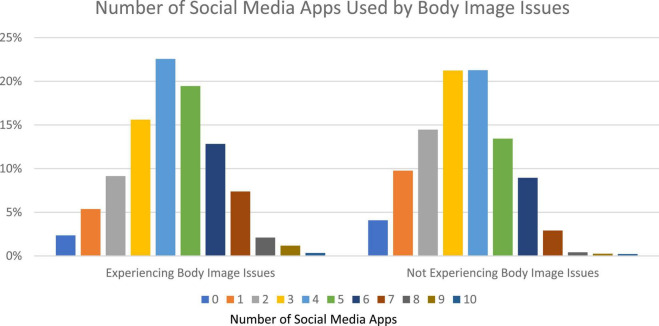
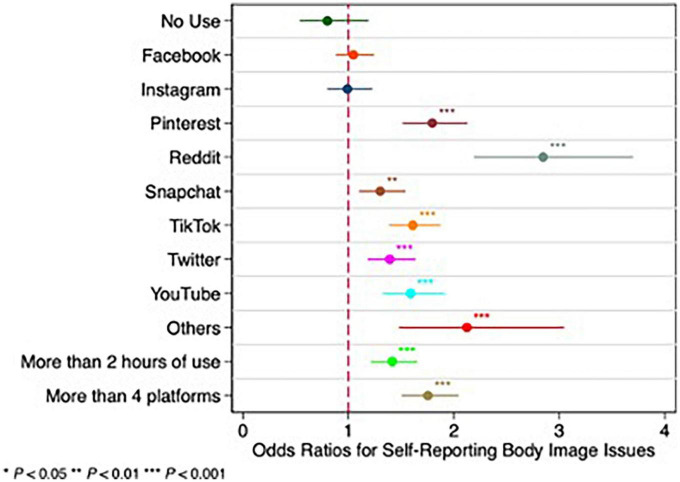
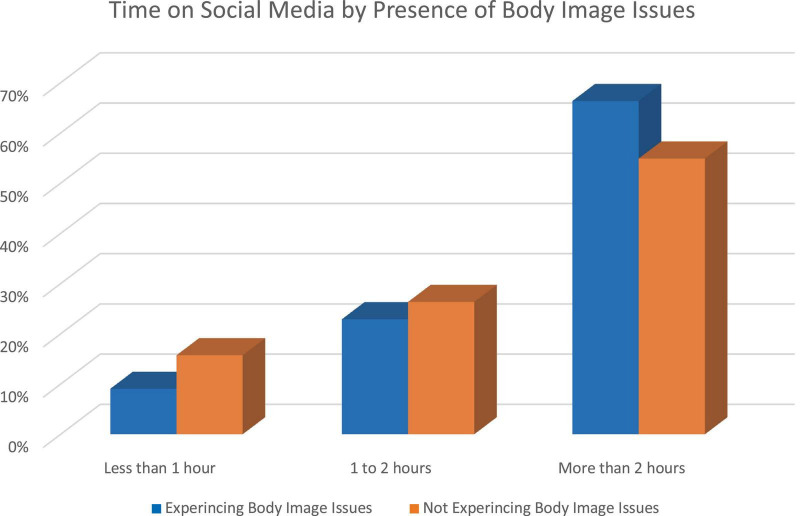
Widespread concern has been expressed regarding unrealistic body image and adolescent eating disorder promoting content on social media (SM) platforms. Numerous research studies have examined the impact of SM on body image as well as social vulnerability on negative mental health outcomes. Despite this, few previous studies have examined the impact of SM on body image specifically in vulnerable, underserved, or predominantly minority communities. This study examines the impact of SM on body image issues (BII) in adolescents in a public school system where greater than 50% of the students live in impoverished households. In late 2019, high school student leaders in Northwest Louisiana developed a survey alongside Step Forward, a collective impact initiative. Questions investigated adolescent SM use and mental health in Caddo Parish, namely BII. Teachers within Caddo Parish Public School System administered the survey. Out of the 11,248 total high school students in the school system, nearly 50% were sampled for a sample size of 5,070. Hypotheses included: (1) females were more likely to use SM than males, (2) increasing time spent on SM would correlate with females reporting BII, with males remaining largely unaffected, and (3) highly visual social media (HVSM) platforms would be associated with greater reports of BII than non-HVSM platforms. Results showed females were more likely to use SM ( < 0.001) and report BII ( < 0.001) compared to males, while both sexes reported BII with increasing time spent on SM ( < 0.001). A diversity of platforms were associated with increased BII among SM users compared to non-users ( < 0.001): Pinterest, Reddit, Snapchat, TikTok, Twitter, and YouTube. This conclusion is tempered by the omission of race as a variable in the study design, the use of self-report, and the use of an unvalidated instrument. These findings suggest that the harmful association between SM use and BII may transcend culture and socioeconomic status for a broadly deleterious effect on adolescent mental wellbeing.
社交媒体(SM)平台上不切实际的身体形象以及宣扬青少年饮食失调的内容引发了广泛关注。众多研究探讨了SM对身体形象的影响以及社交易感性对负面心理健康结果的影响。尽管如此,此前很少有研究专门考察SM对弱势群体、服务不足群体或主要为少数族裔社区的身体形象的影响。本研究考察了SM对一所公立学校系统中青少年身体形象问题(BII)的影响,该学校系统中超过50%的学生生活在贫困家庭。2019年末,路易斯安那州西北部的高中生领袖与“向前一步”(一项集体影响倡议)共同开展了一项调查。问题涉及卡多教区青少年的SM使用情况和心理健康,即BII。卡多教区公立学校系统的教师负责管理该调查。在该学校系统的11248名高中生中,抽取了近50%作为样本,样本量为5070。假设包括:(1)女性比男性更有可能使用SM;(2)女性在SM上花费时间的增加与报告BII相关,而男性基本不受影响;(3)高度可视化的社交媒体(HVSM)平台比非HVSM平台与更多的BII报告相关。结果显示,与男性相比,女性更有可能使用SM(<0.001)并报告BII(<0.001),而随着在SM上花费时间的增加,两性都报告了BII(<0.001)。与非用户相比,多种平台与SM用户中BII的增加相关(<0.001):Pinterest、Reddit、Snapchat、TikTok、Twitter和YouTube。本研究设计中未将种族作为变量、采用自我报告以及使用未经验证的工具,这使得该结论受到影响。这些发现表明,SM使用与BII之间的有害关联可能超越文化和社会经济地位,对青少年心理健康产生广泛的有害影响。