Guerini Andrea Emanuele, Noale Marianna, Mortellaro Gianluca, Lisi Roberto, Bruni Alessio, Santini Roberto, Muto Paolo, Ferrera Giuseppe, Cossali Gianluca, Morelli Vittorio, Magrini Stefano Maria, Spiazzi Luigi, Buglione Michela
Department of Radiation Oncology, University of Brescia and Spedali Civili Hospital, Brescia, Italy.
National Research Council, Neuroscience Institute, Padova, Italy.
Front Oncol. 2022 Nov 2;12:951220. doi: 10.3389/fonc.2022.951220. eCollection 2022.
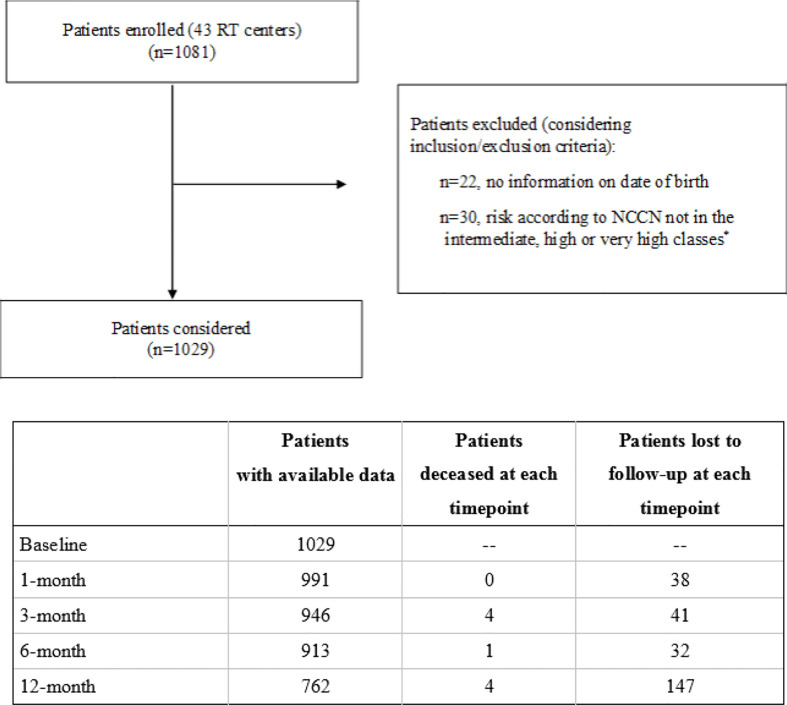
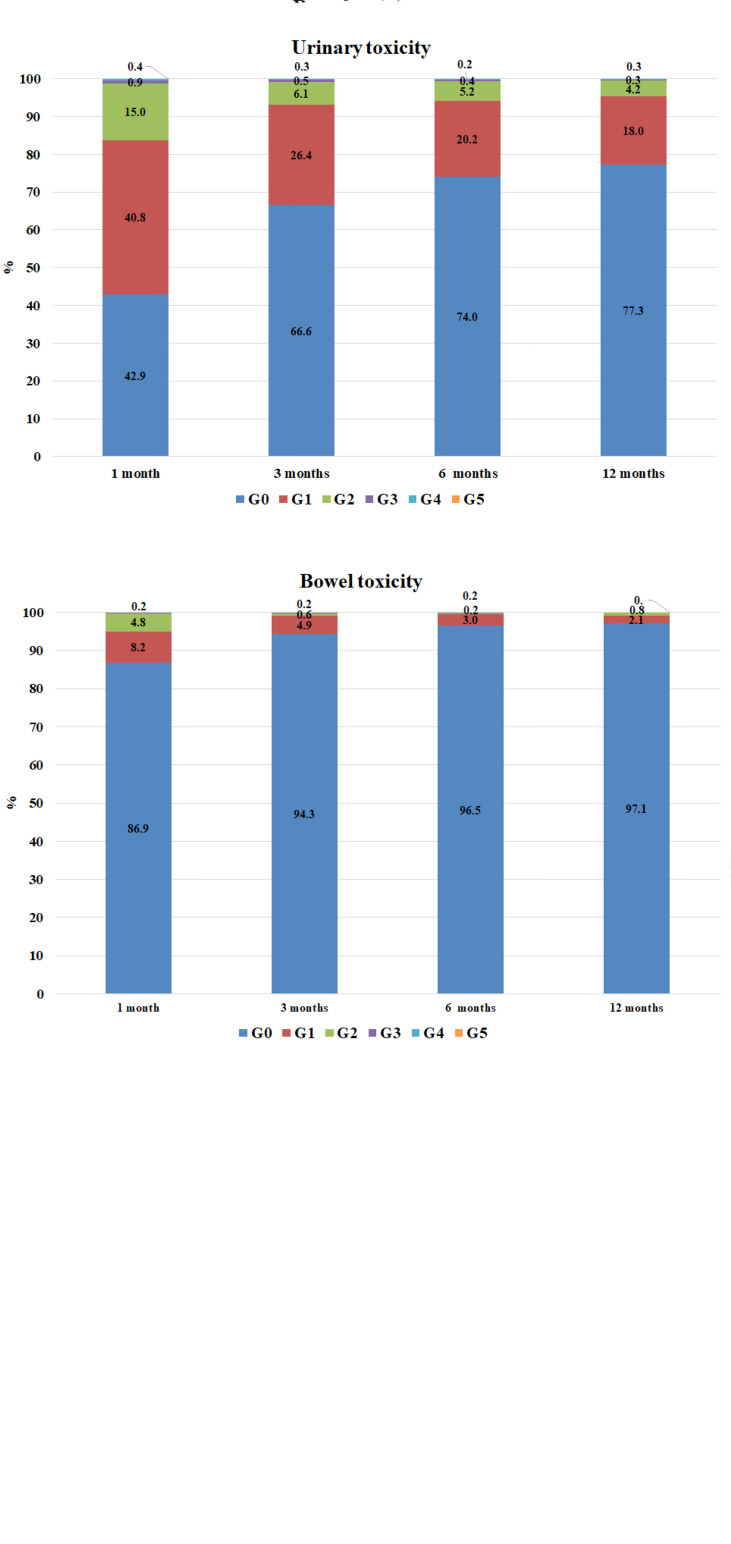
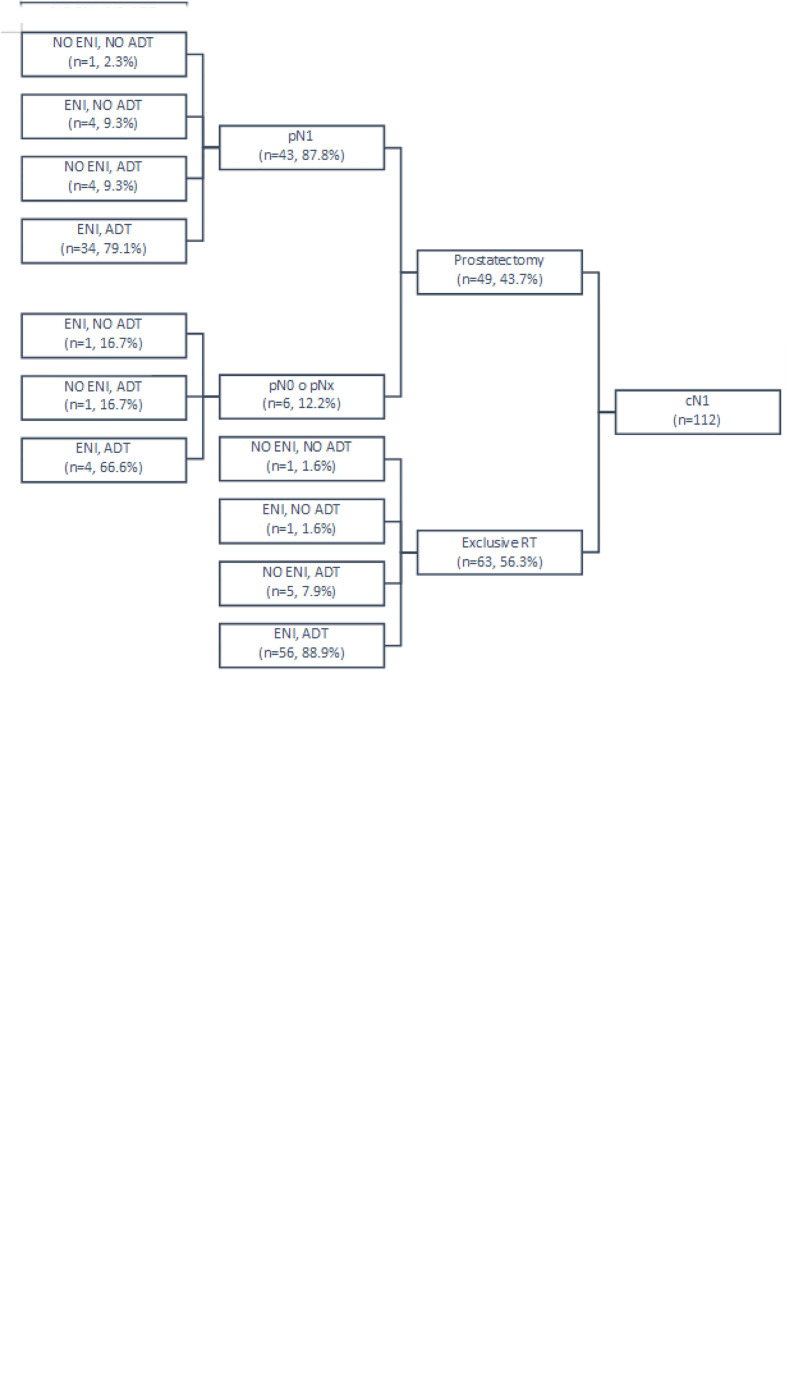
Although radiotherapy plays a fundamental role in the management of intermediate/high/very high-risk non-metastatic prostatic cancer (IHR-nmPca), there is still no consensus on the optimal treatment strategy in this setting. Remarkably, the role of elective nodal irradiation (ENI) is still highly controversial. The PROspective multicenter observational study on Elective Pelvic nodes Irradiation (PRO-EPI) was designed to provide "real life" data regarding the patterns of care for IHR-nmPca. Forty-three Italian Radiation Oncology centers participated in the PROspective multicenter observational study on Elective Pelvic nodes Irradiation (PRO-EPI) project, with 1029 patients enrolled. In this preliminary analysis, we longitudinally evaluated the impact of Elective Nodal Irradiation (ENI) and radiotherapy features on toxicity and quality of life (QoL). Six months follow-up data were available for 913 patients and 12 months data for 762 patients. Elective Nodal Irradiation was given to 506 patients (48.9%). Volumetric Intensity-Modulated Radiation Therapy (IMRT) was adopted in more than 77% of patients and Image-Guided Radiation Therapy (IGRT) in 84.4%. Androgen deprivation therapy (ADT) was administered to the majority of patients (68.3%), and it was associated to ENI in 408 cases (81.1%). Toxicity was mostly mild and reversible and IGRT resulted in a significant reduction of rectal toxicity, although a non-significant trend toward increased urinary toxicity was observed. No statistically significant differences in QoL and toxicity were seen in patients treated with or without ENI. The adoption of IGRT is widespread and increasing and could reduce treatment toxicity. ENI is not yet the standard treatment, but it is performed in a growing fraction of cases and not resulting into an increase in toxicity or in a deterioration of QoL. Further analyses are needed to clarify the long-term toxicity profile and the impact of ENI on survival.
尽管放射治疗在中危/高危/极高危非转移性前列腺癌(IHR-nmPca)的治疗中起着基础性作用,但在这种情况下的最佳治疗策略仍未达成共识。值得注意的是,选择性淋巴结照射(ENI)的作用仍极具争议。前列腺癌选择性盆腔淋巴结照射前瞻性多中心观察研究(PRO-EPI)旨在提供有关IHR-nmPca治疗模式的“真实世界”数据。43个意大利放射肿瘤中心参与了前列腺癌选择性盆腔淋巴结照射前瞻性多中心观察研究(PRO-EPI)项目,共纳入1029例患者。在这项初步分析中,我们纵向评估了选择性淋巴结照射(ENI)和放射治疗特征对毒性和生活质量(QoL)的影响。913例患者有6个月的随访数据,762例患者有12个月的数据。506例患者(48.9%)接受了选择性淋巴结照射。超过77%的患者采用了容积调强放射治疗(IMRT),84.4%的患者采用了图像引导放射治疗(IGRT)。大多数患者(68.3%)接受了雄激素剥夺治疗(ADT),其中408例(81.1%)与ENI相关。毒性大多为轻度且可逆,IGRT可显著降低直肠毒性,尽管观察到有增加泌尿毒性的非显著趋势。接受或未接受ENI治疗的患者在生活质量和毒性方面未见统计学显著差异。IGRT的应用广泛且呈增加趋势,可降低治疗毒性。ENI尚未成为标准治疗方法,但在越来越多的病例中实施,且不会导致毒性增加或生活质量恶化。需要进一步分析以阐明长期毒性特征以及ENI对生存的影响。