Department of Chemistry and NIS Centre of Excellence, University of Turin, via Giuria 9, 10125 Torino, Italy.
Felix Bloch Institute for Solid State Physics, Leipzig University, Linnéstr. 5, 04103 Leipzig, Germany.
Acc Chem Res. 2022 Dec 20;55(24):3706-3715. doi: 10.1021/acs.accounts.2c00606. Epub 2022 Nov 28.
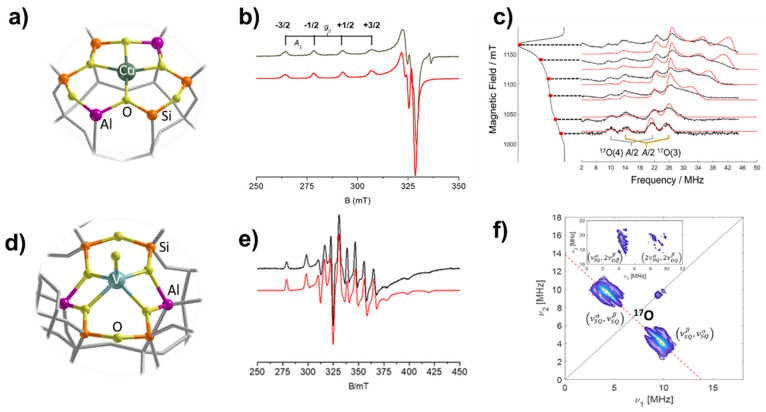
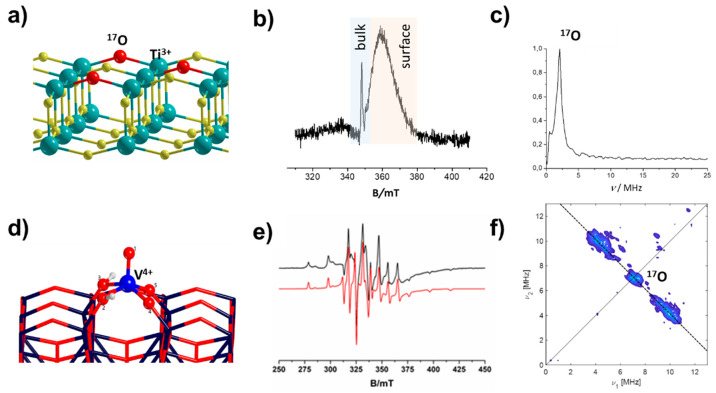
ConspectusEven in the gas phase single atoms possess catalytic properties, which can be crucially enhanced and modulated by the chemical interaction with a solid support. This effect, known as electronic metal-support interaction, encompasses charge transfer, orbital overlap, coordination structure, etc., in other words, all the crucial features of the chemical bond. These very features are the object of this Account, with specific reference to open-shell (paramagnetic) single metal atoms or ions on oxide supports. Such atomically dispersed species are part of the emerging class of heterogeneous catalysts known as single-atom catalysts (SACs). In these materials, atomic dispersion ensures maximum atom utilization and uniform active sites, whereby the nature of the chemical interaction between the metal and the oxide surface modulates the catalytic activity of the metal active site by tuning the energy of the frontier orbitals. A comprehensive set of examples includes fourth period metal atoms and ions in zeolites on insulating (e.g., MgO) or reducible (e.g., TiO) oxides and are among the most relevant catalysts for a wealth of key processes of industrial and environmental relevance, from the abatement of NO to the selective oxidation of hydrocarbons and the conversion of methane to methanol.There exist several spectroscopic techniques able to inform on the geometric and electronic structure of isolated single metal ion sites, but either they yield information averaged over the bulk or they lack description of the intimate features of chemical bonding, which include covalency, ionicity, electron and spin delocalization. All of these can be recovered at once by measuring the magnetic interactions between open-shell metals and the surrounding nuclei with Electron Paramagnetic Resonance (EPR) spectroscopy. In the case of oxides, this entails the synthesis of O isotopically enriched materials. We have established O EPR as a unique source of information about the local binding environment around oxygen of magnetic atoms or ions on different oxidic supports to rationalize structure-property relationships. Here, we will describe strategies for O surface enrichments and approaches to monitor the state of charge and spin delocalization of atoms or ions from K to Zn dispersed on oxide surfaces characterized by different chemical properties (i.e., basicity or reducibility). Emphasis is placed on chemical insight at the atomic-scale level achieved by O EPR, which is a crucial step in understanding the structure-property relationships of single metal atom catalysts and in enabling efficient design of future materials for a range of end uses.
简介即使在气相中,单个原子也具有催化性质,这些性质可以通过与固体载体的化学相互作用得到极大地增强和调节。这种效应称为电子金属-载体相互作用,包括电荷转移、轨道重叠、配位结构等,换句话说,就是化学键的所有关键特征。这些正是本文的研究对象,特别提到了氧化物载体上的开壳(顺磁)单金属原子或离子。这些原子分散的物种是新兴的多相催化剂类别之一,称为单原子催化剂(SACs)的一部分。在这些材料中,原子分散确保了最大的原子利用率和均匀的活性位点,通过调节金属与氧化物表面之间的化学相互作用来改变金属活性位的能量,从而调节催化活性。一整套实例包括第四周期金属原子和离子在沸石中,沸石负载在绝缘(例如 MgO)或可还原(例如 TiO)氧化物上,是许多工业和环境相关关键过程的最相关催化剂,从消除 NO 到烃类的选择性氧化和甲烷转化为甲醇。有几种光谱技术可以提供关于孤立单金属离子位点的几何和电子结构的信息,但它们要么提供的是对整体的信息,要么缺乏对化学键的密切特征的描述,这些特征包括共价键、离子键、电子和自旋离域。所有这些都可以通过电子顺磁共振(EPR)光谱测量开壳金属与周围核之间的磁相互作用来一次获得。在氧化物的情况下,这需要合成 O 同位素富集材料。我们已经将 O EPR 确立为一种独特的信息来源,可以了解不同氧化载体上磁性原子或离子周围氧的局部结合环境,以合理化结构-性质关系。在这里,我们将描述 O 表面富集的策略和方法,以监测电荷和自旋离域的状态,从 K 到 Zn 原子或离子分散在具有不同化学性质(即碱性或可还原性)的氧化物表面上。重点是通过 O EPR 获得原子级别的化学洞察力,这是理解单金属原子催化剂结构-性质关系和实现一系列最终用途的未来材料高效设计的关键步骤。