Zhang Min, Sun Xiao, Miao Yujing, Li Minhui, Huang Linfang
A Key Laboratory of Chinese Medicine Resources Conservation, State Administration of Traditional Chinese Medicine of the People's Republic of China, Institute of Medicinal Plant Development, Chinese Academy of Medical Sciences & Peking Union Medical College, Beijing, 100193, China.
College of Pharmacy, Baotou Medical College, Baotou, 014040, China.
Sci Rep. 2022 Nov 28;12(1):20469. doi: 10.1038/s41598-022-24309-z.
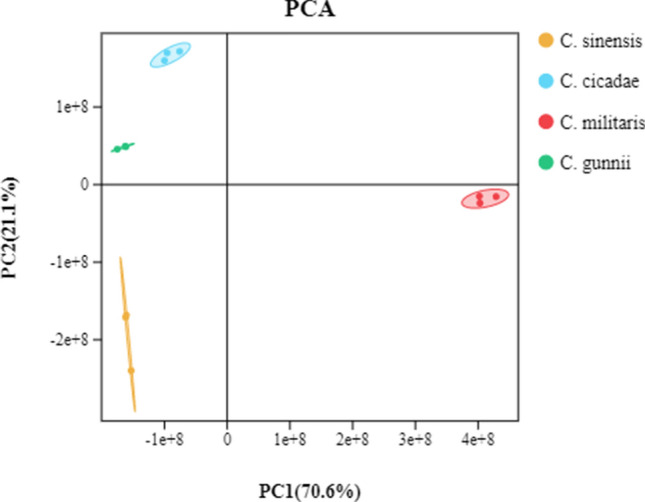
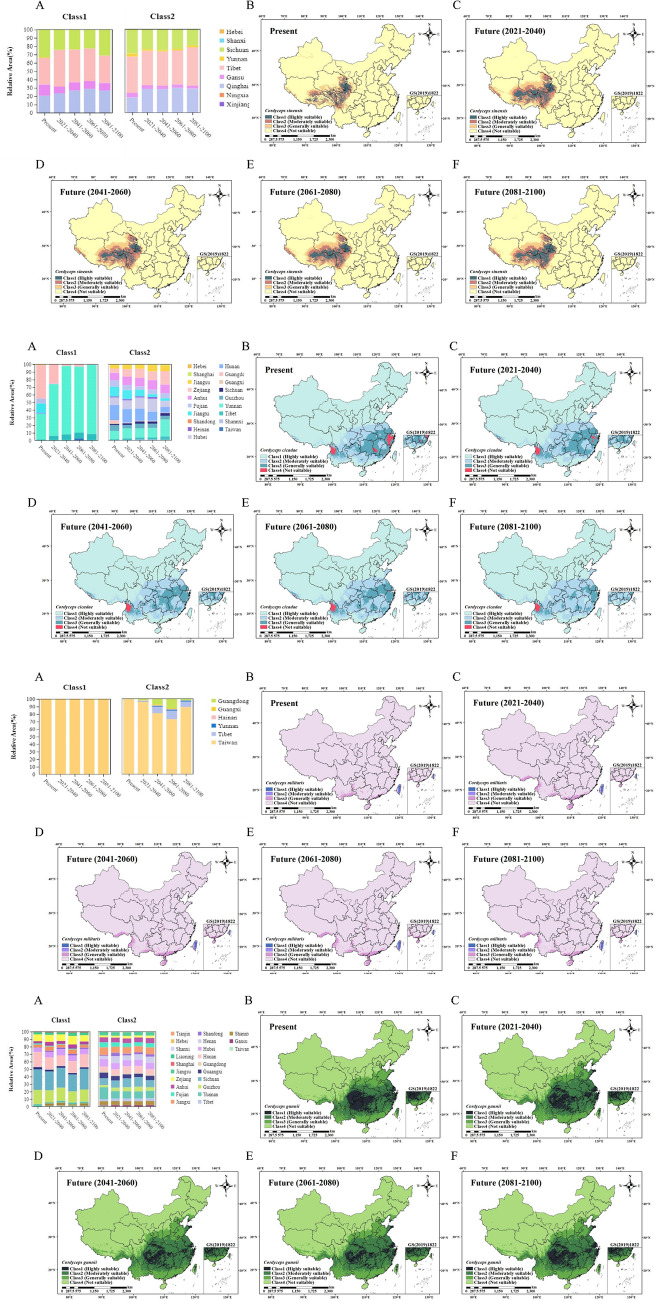
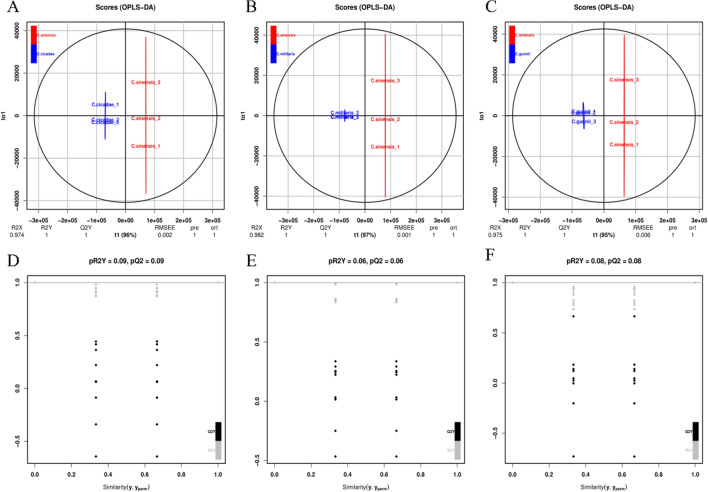
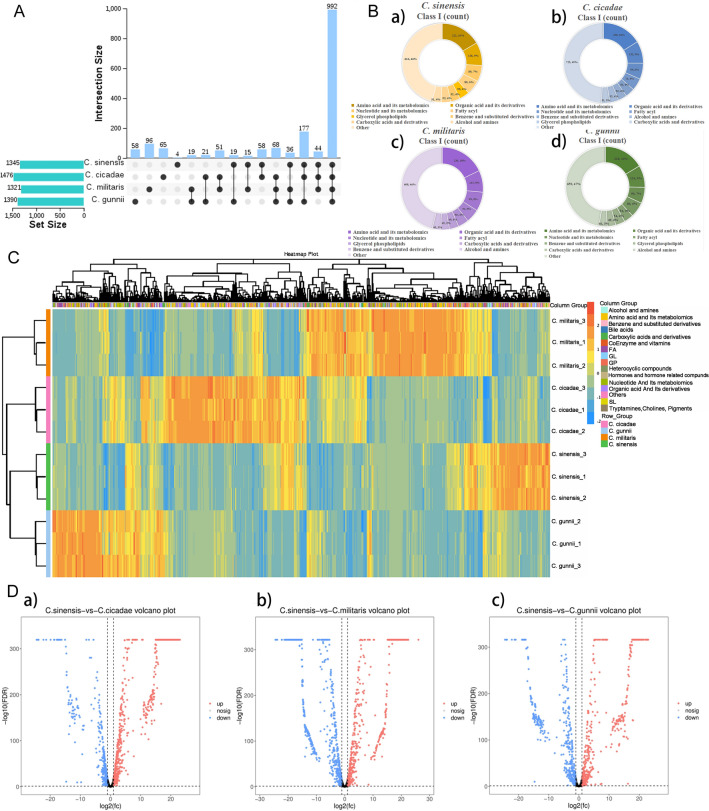
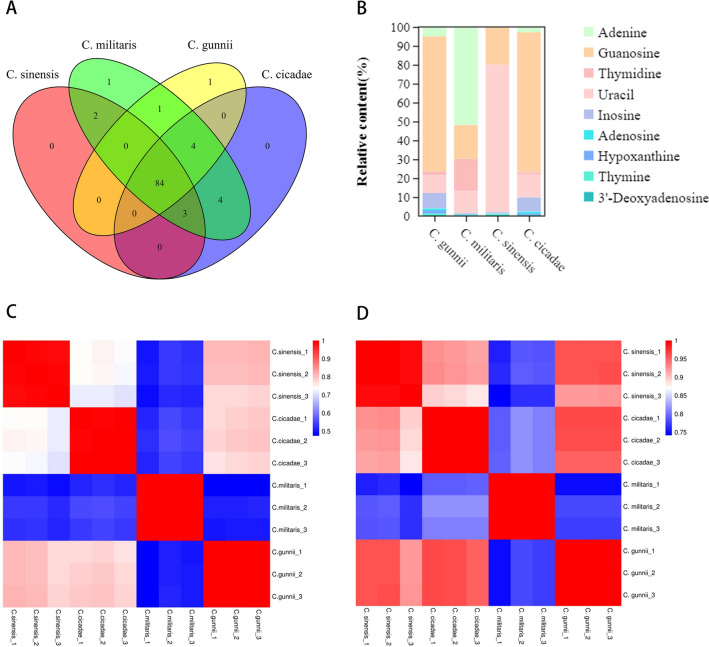
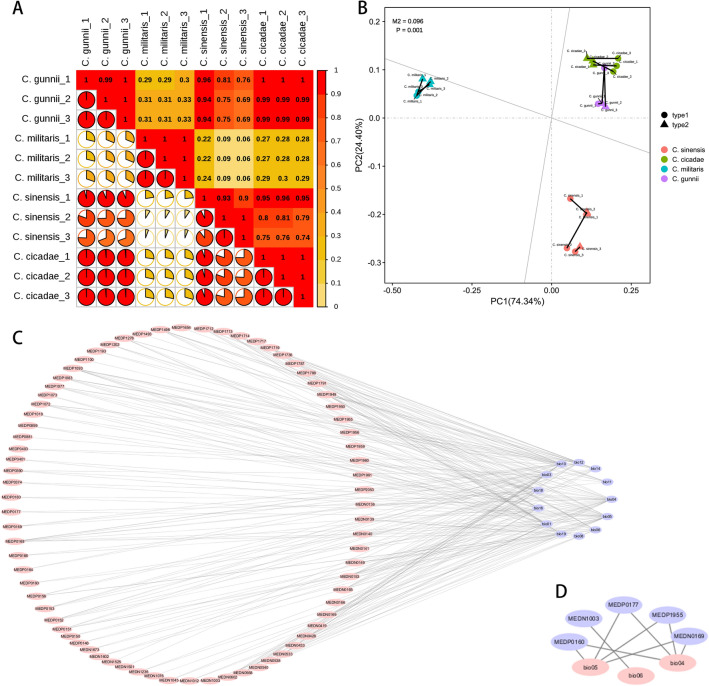
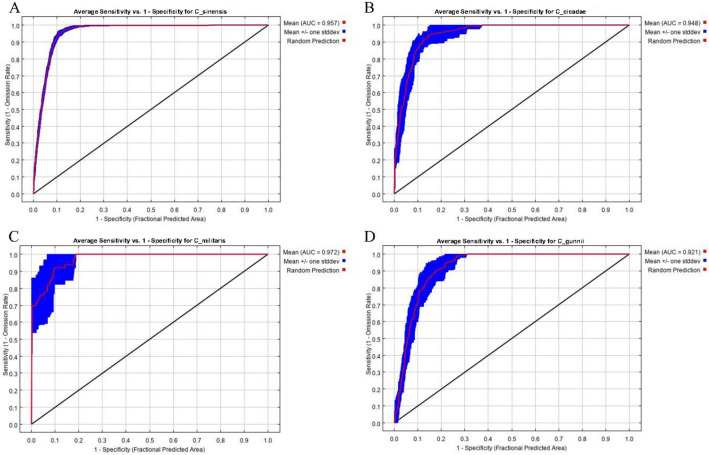
Cordyceps sinensis is a second-class nationally-protected medicinal fungus and functional food. Cordyceps sinensis resources are endangered, and finding new medicinal materials is a fast and economical way to meet the current demonstrated demand, which can effectively solve the shortage of C. sinensis resources. In this study, the metabolite characteristics of Cordyceps were comprehensively revealed by LC-QTOF-MS technology. The maxent model can be used to predict the habitat suitability distribution of Cordyceps and screen out the main climatic factors affecting its distribution. The correlation model between climate factors and chemical components was established by Pearson correlation analysis. Finally, based on the analysis of climate factors and metabolites, we will analyze the high correlation species with C. sinensis, and develop them as possible alternative species of C. sinensis in the future. The results showed that the suitable area of Cordyceps cicadae demonstrated a downward trend, while that of C. sinensis, Cordyceps militaris and Cordyceps gunnii demonstrated an upwards trend. The suitable areas all shifted to the northwest. The temperature seasonality and max temperature of the warmest month are the maximum climatic factors affecting nucleosides. Compared with C. sinensis, the metabolic spectrum similarities of C. cicadae, C. militaris, and C. gunnii were 94.42%, 80.82%, and 91.00%, respectively. Cordyceps sinensis, C. cicadae, and C. gunnii were correlated well for compounds and climate factors. This study will explore whether C. cicadae, C. militaris and C. gunnii can be used as substitutes for C. sinensis. Our results may provide a reference for resource conservation and sustainable utilization of endangered C. sinensis.
冬虫夏草是国家二级保护药用真菌和功能性食品。冬虫夏草资源濒危,寻找新的药用材料是满足当前已证实需求的快速且经济的途径,可有效解决冬虫夏草资源短缺问题。本研究采用液相色谱-四极杆飞行时间质谱技术全面揭示了虫草的代谢产物特征。最大熵模型可用于预测虫草的栖息地适宜性分布,并筛选出影响其分布的主要气候因子。通过皮尔逊相关分析建立了气候因子与化学成分之间的相关模型。最后,基于气候因子和代谢产物的分析,我们将分析与冬虫夏草具有高度相关性的物种,并在未来将它们开发为冬虫夏草可能的替代物种。结果表明,蝉花的适宜面积呈下降趋势,而冬虫夏草、蛹虫草和古尼虫草的适宜面积呈上升趋势。适宜区域均向西北方向转移。温度季节性和最暖月的最高温度是影响核苷的最大气候因子。与冬虫夏草相比,蝉花、蛹虫草和古尼虫草的代谢谱相似度分别为94.42%、80.82%和91.00%。冬虫夏草、蝉花和古尼虫草在化合物和气候因子方面相关性良好。本研究将探索蝉花、蛹虫草和古尼虫草是否可作为冬虫夏草的替代品。我们的结果可能为濒危冬虫夏草的资源保护和可持续利用提供参考。