Parsons-Smith Renée L, Barkase Sherry, Lovell Geoff P, Vleck Veronica, Terry Peter C
School of Psychology and Counselling, University of Southern Queensland, Toowoomba, QLD, Australia.
School of Health and Behavioural Sciences, University of the Sunshine Coast, Sippy Downs, QLD, Australia.
Front Psychol. 2022 Nov 14;13:925992. doi: 10.3389/fpsyg.2022.925992. eCollection 2022.
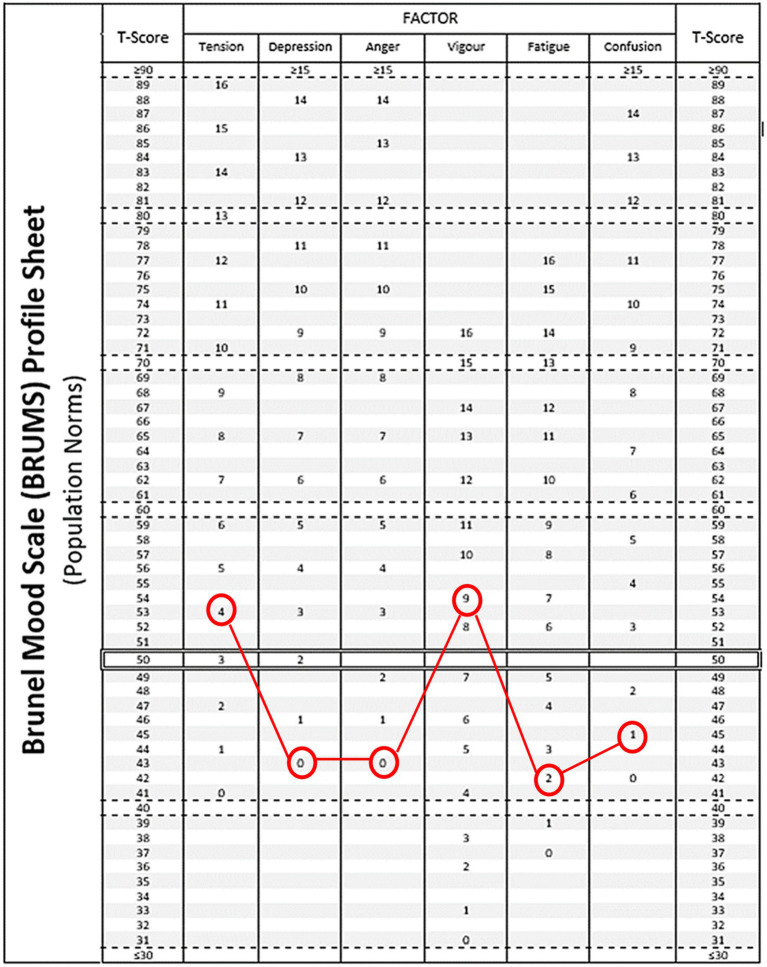
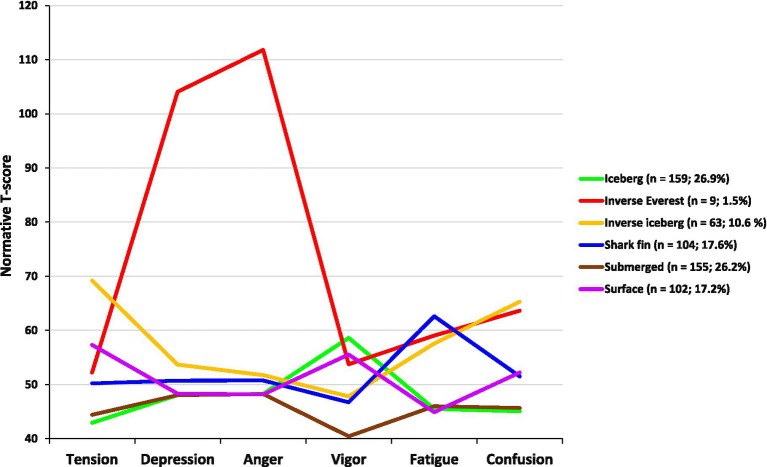
Moods have been shown to be predictive of athletic performance and a reflection of mental health status. The aims of our study were (a) to compare pre-race mood scores of triathletes with population norms; (b) to compare pre-race mood scores of triathletes grouped by gender and age bands; (c) to explore whether six distinct mood profile clusters reported in the literature were evident among triathletes and their respective prevalence; (d) to determine if pre-race mood scores predicted triathlon performance; and (e) to interpret our findings in terms of the risk of mental health issues for triathletes. Participants were 592 age-group triathletes (also referred to as recreational or amateur triathletes) who completed the Brunel Mood Scale pre-race and recorded their time goal for the race. Mean mood scores deviated significantly from population norms, with Tension and Vigor scores at the 55th and 54th percentile, respectively, and Depression, Anger, Fatigue, and Confusion scores between the 42nd and 46th percentile. Females reported higher Tension scores than males ( < 0.001), and those in the 18-25 years and 26-35 years age bands reported higher Tension scores than those in the 46-55 years age band ( < 0.008). Using k-means cluster analysis, six distinct mood profiles were identified, the distribution of which approximated the general population, except for a low prevalence of very negative profiles. Mean scores for Depression and Anger were exceptionally low and only 1.5% of triathletes, compared to the normal prevalence of ~5%, reported an "inverse Everest" profile, which is associated with elevated risk of psychopathology. Mood scores did not predict triathlon performance, assessed by finish time as a percentage of time goal. Results showed an association between triathlon participation and psychological well-being. Findings will inform future investigations of mood responses among triathletes and provide a relevant point of reference for applied practitioners who work with triathletes.
情绪已被证明可预测运动表现,并反映心理健康状况。我们研究的目的是:(a)将铁人三项运动员的赛前情绪得分与总体标准进行比较;(b)比较按性别和年龄组划分的铁人三项运动员的赛前情绪得分;(c)探讨文献中报道的六种不同情绪特征集群在铁人三项运动员中是否明显及其各自的患病率;(d)确定赛前情绪得分是否能预测铁人三项比赛成绩;(e)根据铁人三项运动员心理健康问题的风险来解释我们的研究结果。参与者为592名年龄组铁人三项运动员(也称为业余铁人三项运动员),他们在赛前完成了布鲁内尔情绪量表,并记录了比赛的时间目标。平均情绪得分与总体标准有显著差异,紧张和活力得分分别处于第55和第54百分位,抑郁、愤怒、疲劳和困惑得分在第42至46百分位之间。女性报告的紧张得分高于男性(<0.001),18 - 25岁和26 - 35岁年龄组的人报告的紧张得分高于46 - 55岁年龄组的人(<0.008)。使用k均值聚类分析,确定了六种不同的情绪特征,其分布与总体人群相似,但非常消极特征的患病率较低。抑郁和愤怒的平均得分极低,只有1.5%的铁人三项运动员报告有“反向珠穆朗玛峰”特征,而正常患病率约为5%,该特征与精神病理学风险升高有关。情绪得分不能预测铁人三项比赛成绩,比赛成绩以完成时间占时间目标的百分比来评估。结果显示铁人三项运动参与与心理健康之间存在关联。研究结果将为未来对铁人三项运动员情绪反应的调查提供信息,并为与铁人三项运动员合作的应用从业者提供相关参考点。