Tang Zhengyan, Wang Ye, Liu Jingmin, Liu Yujie
Division of Sports Science and Physical Education, Tsinghua University, Beijing, China.
Lang Ping Research Center for Sports Culture and Policy, Beijing Normal University, Beijing, China.
Front Psychiatry. 2022 Nov 17;13:1051551. doi: 10.3389/fpsyt.2022.1051551. eCollection 2022.
Exercise has beneficial effects on mood and anxiety symptoms. However, the impact of aquatic exercise on mood and anxiety symptoms has not been clearly confirmed. Therefore, this study aimed to synthesize and systematically analyze evidence available on boosting mental health through aquatic exercise.
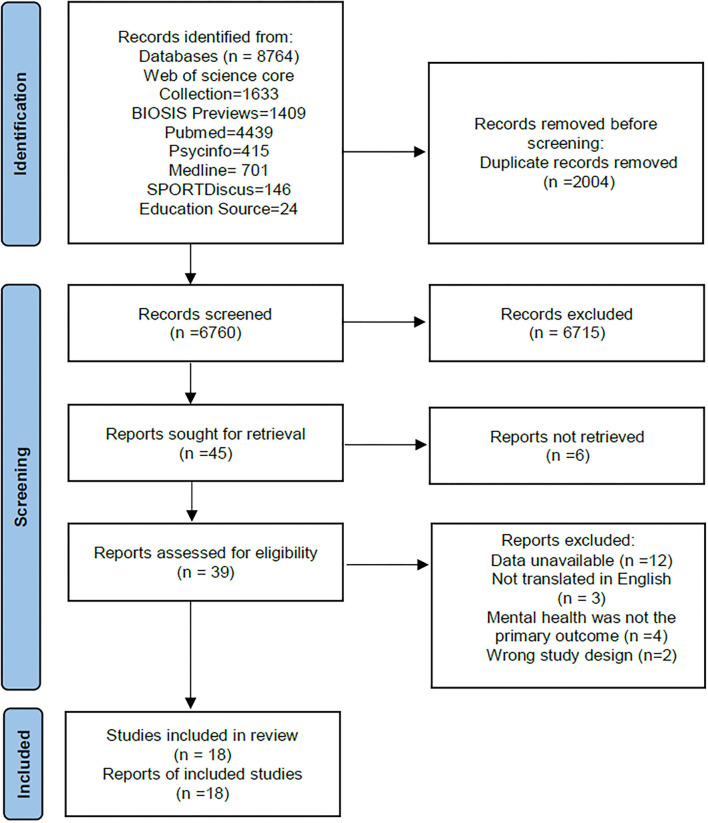
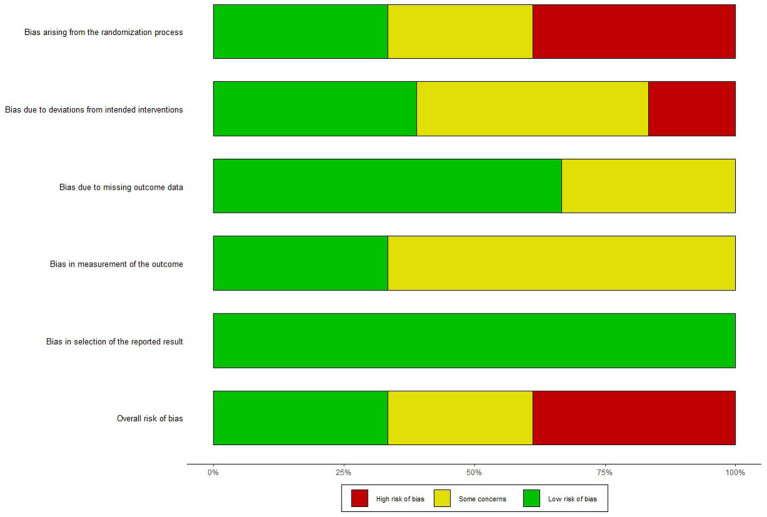
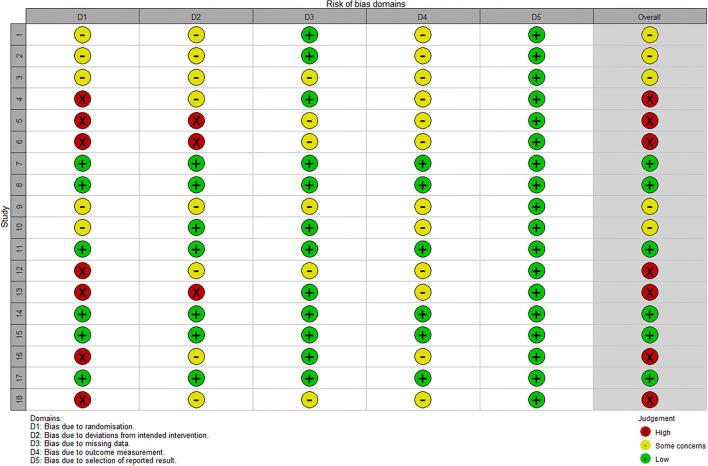
A systematic review and meta-analysis were conducted under the PRISMA 2020 guidelines. PubMed, BIOSIS Previews, PsycINFO, Medline, SPORTDiscus, Education Source, and Web of Science Core Collection (WoSCC) were searched in May 2022. The research included the influence of aquatic exercises on mood and anxiety symptoms. After assessing trial quality and completing data extraction, a meta-analysis was carried out through R software. The results were presented as a standardized mean difference (SMD) and the corresponding 95% confidence interval.
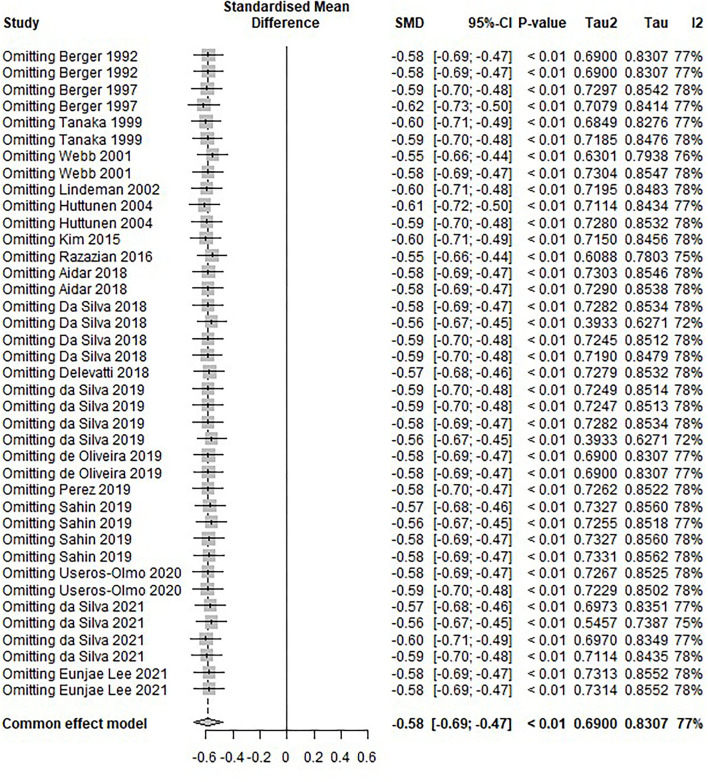
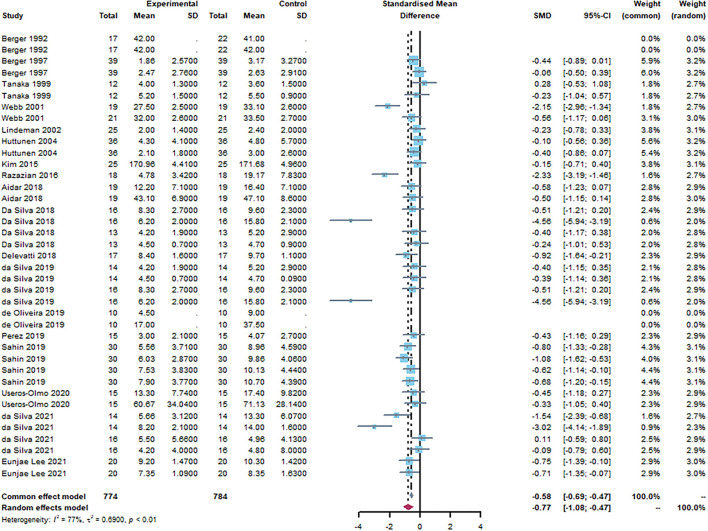
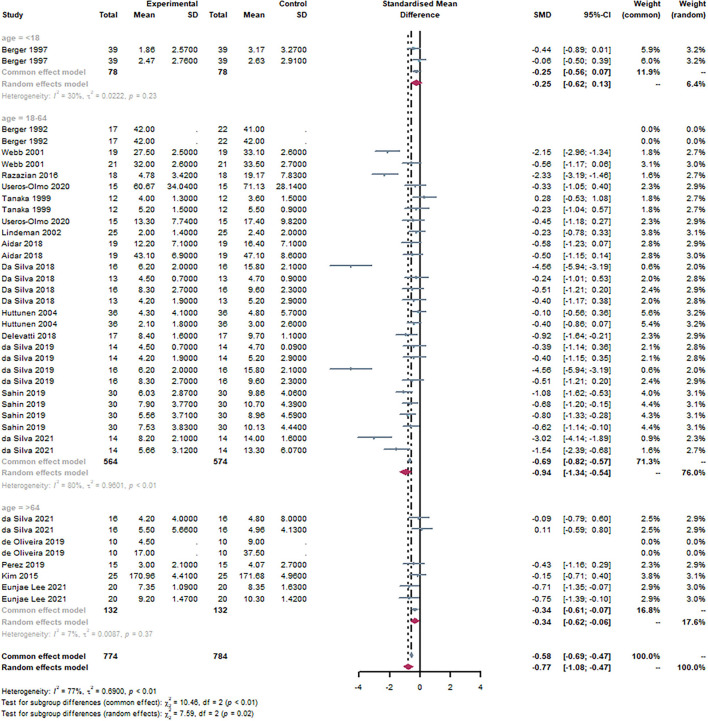
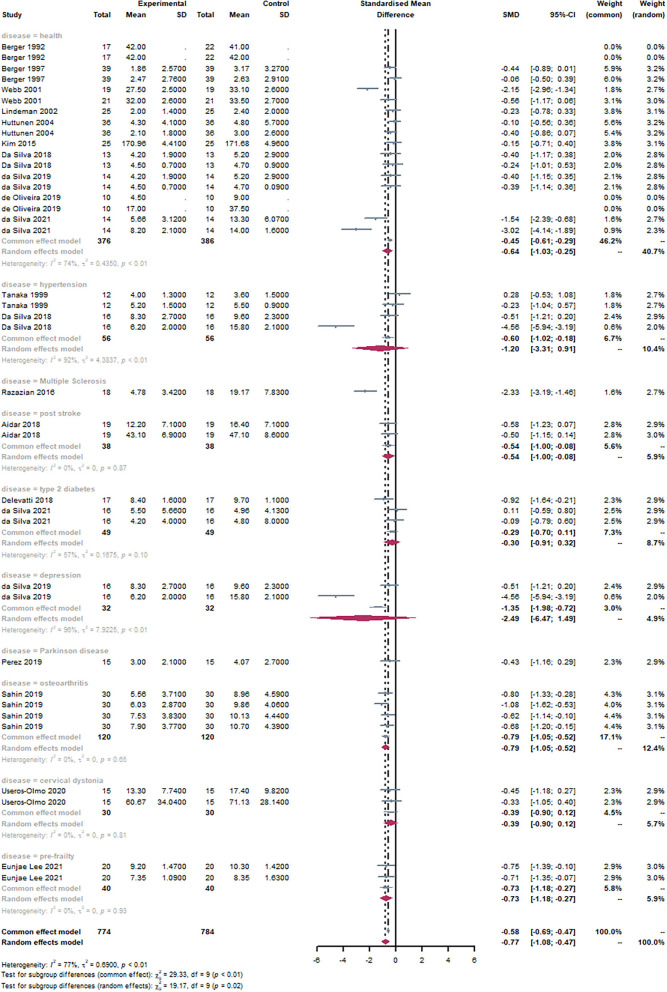
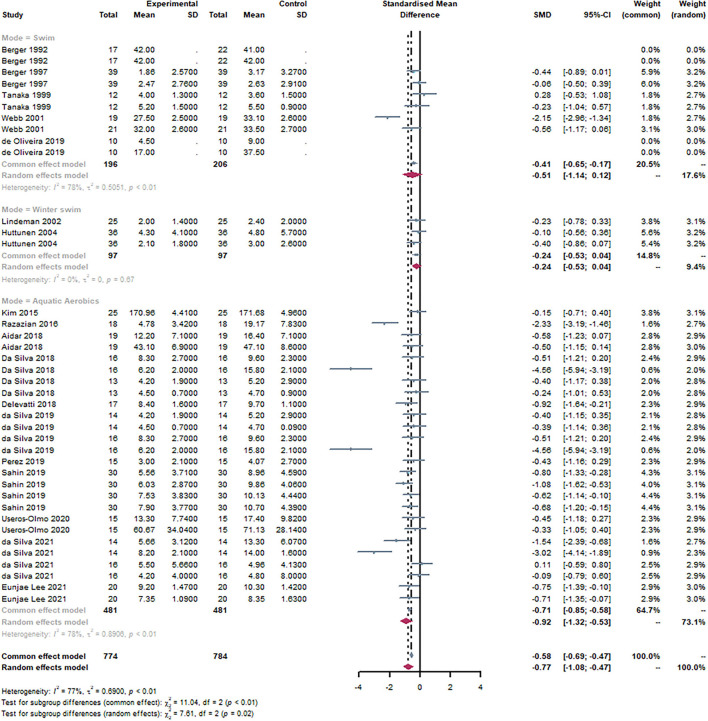
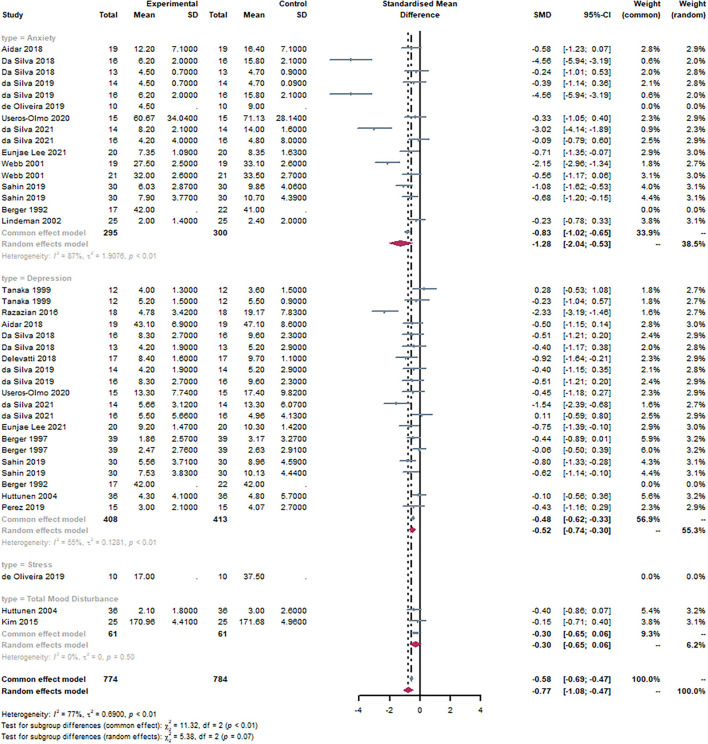
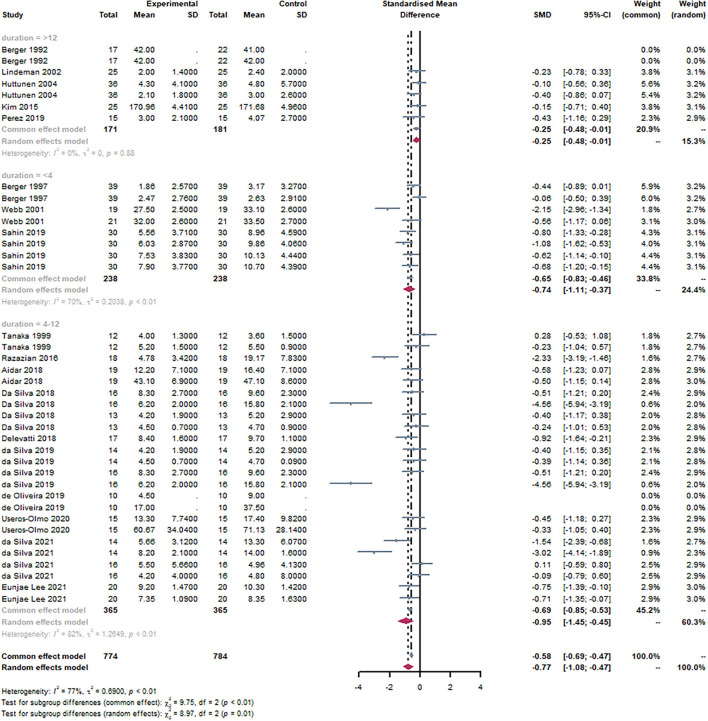
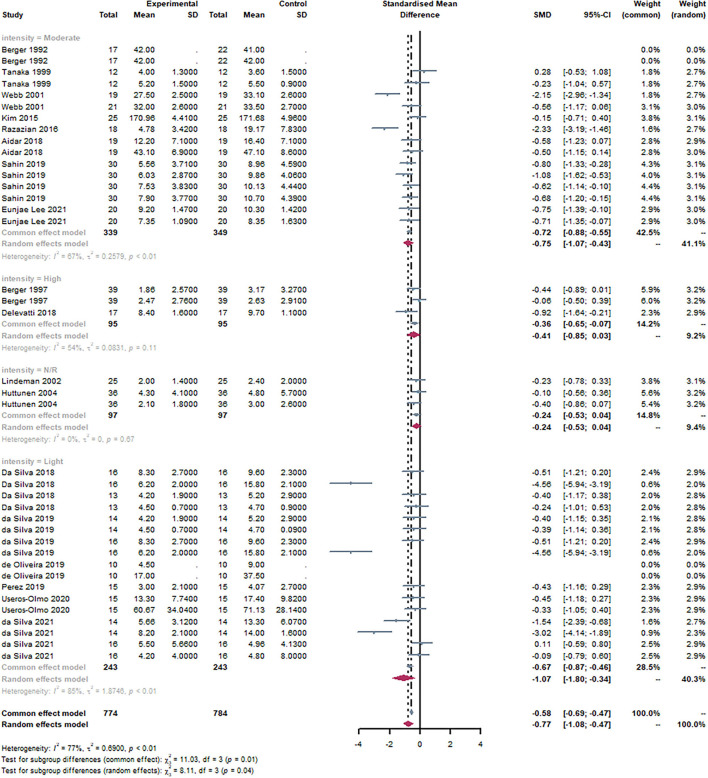
A total of 18 original trials were included. People who received aquatic exercise intervention had a statistically significant reduction in mental disorder symptoms compared with before. The results were aquatic exercise [SMD = -0.77, 95% CI (-1.08, -0.47), I = 77%, < 0.01], swimming [SMD = -0.51, 95% CI (-1.14, 0.12), I = 78%, < 0.01], aquatic aerobics [SMD = -0.92, 95% CI (-1.32, -0.53), I = 78%, < 0.01], moderate intensity [SMD = -0.75, 95% CI (-1.07, -0.43), I = 67%, < 0.01], and low intensity [SMD = -1.07, 95% CI (-1.08, -0.47), I = 85%, < 0.01].
Aquatic exercise could statistically significantly improve mental health. Light aquatic aerobics probably has a better effect on mood and anxiety symptoms. However, given the number and quality of included research, verifying the aforementioned conclusions requires a larger sample of high-quality studies.
运动对情绪和焦虑症状有有益影响。然而,水上运动对情绪和焦虑症状的影响尚未得到明确证实。因此,本研究旨在综合并系统分析通过水上运动促进心理健康的现有证据。
根据PRISMA 2020指南进行系统评价和荟萃分析。于2022年5月检索了PubMed、BIOSIS Previews、PsycINFO、Medline、SPORTDiscus、Education Source和科学引文索引核心合集(WoSCC)。该研究包括水上运动对情绪和焦虑症状的影响。在评估试验质量并完成数据提取后,通过R软件进行荟萃分析。结果以标准化均数差(SMD)及相应的95%置信区间表示。
共纳入18项原始试验。接受水上运动干预的人群与干预前相比,精神障碍症状有统计学意义的减轻。结果为水上运动[SMD = -0.77,95%置信区间(-1.08,-0.47),I² = 77%,P < 0.01]、游泳[SMD = -0.51,95%置信区间(-1.14,0.12),I² = 78%,P < 0.01]、水中有氧运动[SMD = -0.92,95%置信区间(-1.32,-0.53),I² = 78%,P < 0.01]、中等强度[SMD = -0.75,95%置信区间(-1.07,-0.43),I² = 67%,P < 0.01]和低强度[SMD = -1.07,95%置信区间(-1.08,-0.47),I² = 85%,P < 0.01]。
水上运动在统计学上可显著改善心理健康。轻度水中有氧运动可能对情绪和焦虑症状有更好的效果。然而,鉴于纳入研究的数量和质量,验证上述结论需要更大样本量的高质量研究。