Department of Human Genetics, Emory University School of Medicine, Atlanta, GA 30322.
Proc Natl Acad Sci U S A. 2022 Dec 13;119(50):e2214988119. doi: 10.1073/pnas.2214988119. Epub 2022 Dec 5.
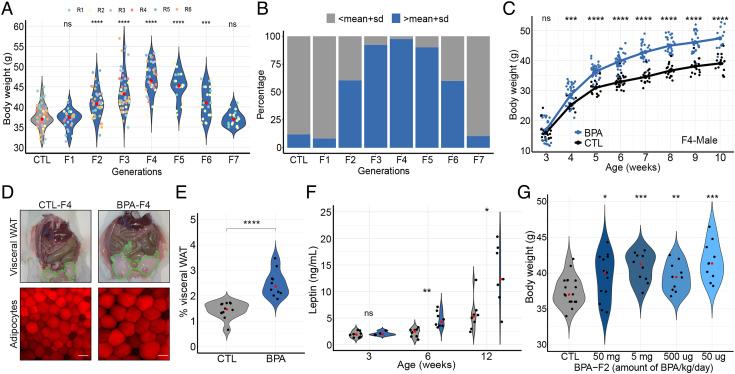
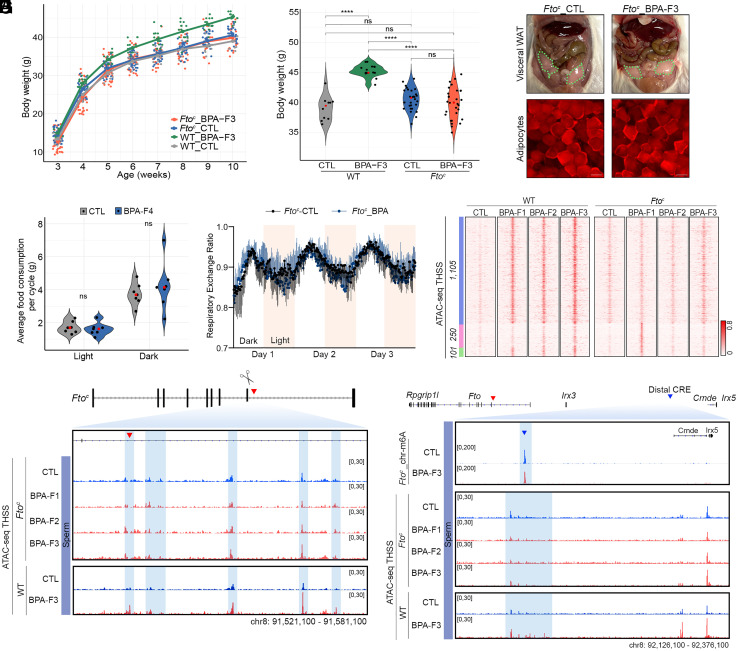
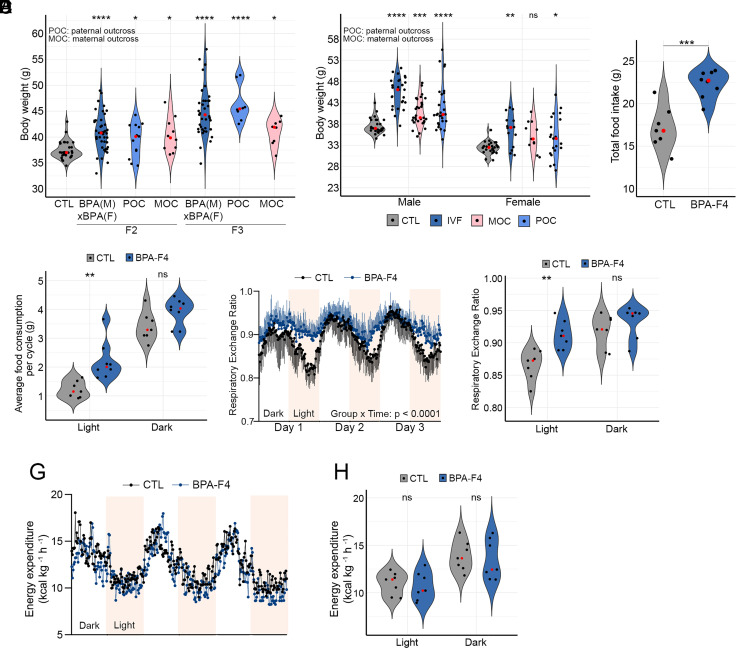
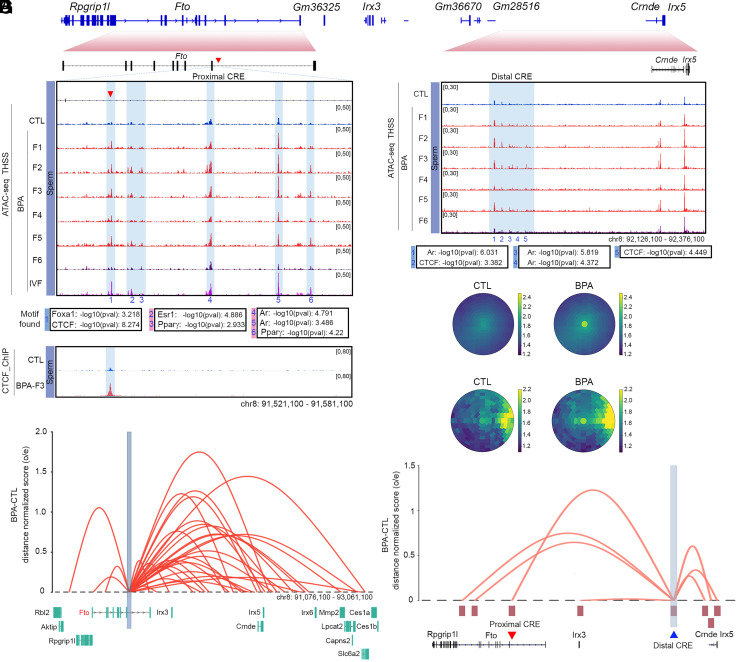
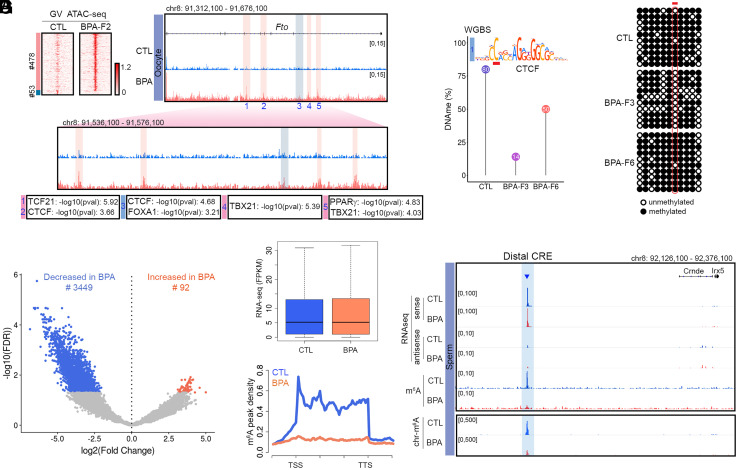
The mechanisms by which environmentally-induced epiphenotypes are transmitted transgenerationally in mammals are poorly understood. Here we show that exposure of pregnant mouse females to bisphenol A (BPA) results in obesity in the F2 progeny due to increased food intake. This epiphenotype can be transmitted up to the F6 generation. Analysis of chromatin accessibility in sperm of the F1-F6 generations reveals alterations at sites containing binding motifs for CCCTC-binding factor (CTCF) at two cis-regulatory elements (CREs) of the gene that correlate with transmission of obesity. These CREs show increased interactions in sperm of obese mice with the and genes, which are involved in the differentiation of appetite-controlling neurons. Deletion of the CTCF site in results in mice that have normal food intake and fail to become obese when ancestrally exposed to BPA. The results suggest that epigenetic alterations of can lead to the same phenotypes as genetic variants.
环境诱导的表型在哺乳动物中跨代传递的机制尚不清楚。在这里,我们表明,怀孕的雌性小鼠暴露在双酚 A(BPA)中会导致 F2 后代肥胖,因为它们的食物摄入量增加。这种表型可以传递到 F6 代。对 F1-F6 代精子的染色质可及性分析显示,在基因的两个顺式调控元件(CREs)中,含有 CCCTC 结合因子(CTCF)结合模体的位点发生了改变,这与肥胖的传递有关。这些 CREs 在肥胖小鼠的精子中与和基因的相互作用增加,这些基因参与控制食欲的神经元的分化。在中删除 CTCF 位点会导致小鼠正常进食,并且在祖先暴露于 BPA 时不会肥胖。结果表明,的表观遗传改变可能导致与遗传变异相同的表型。