Sir William Dunn School of Pathology, University of Oxford, Oxford, UK.
Laboratoire Adhesion et Inflammation, Aix Marseille University UM 61, INSERM UMRS 1067, CNRS UMR 7333, Marseille, France.
EMBO J. 2023 Apr 3;42(7):e111841. doi: 10.15252/embj.2022111841. Epub 2022 Dec 9.
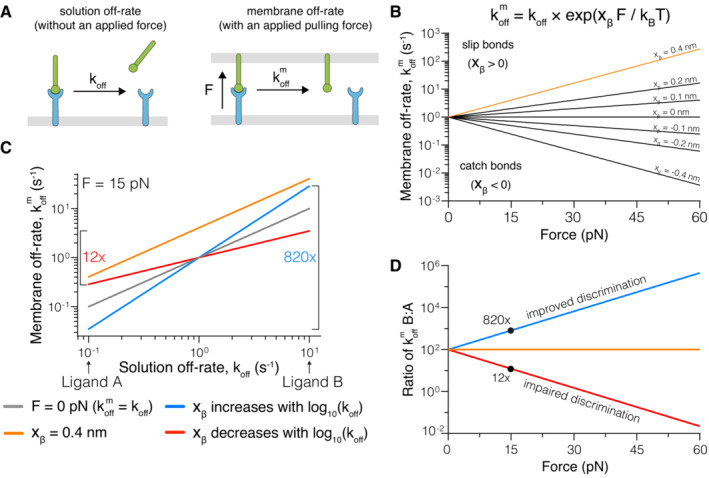
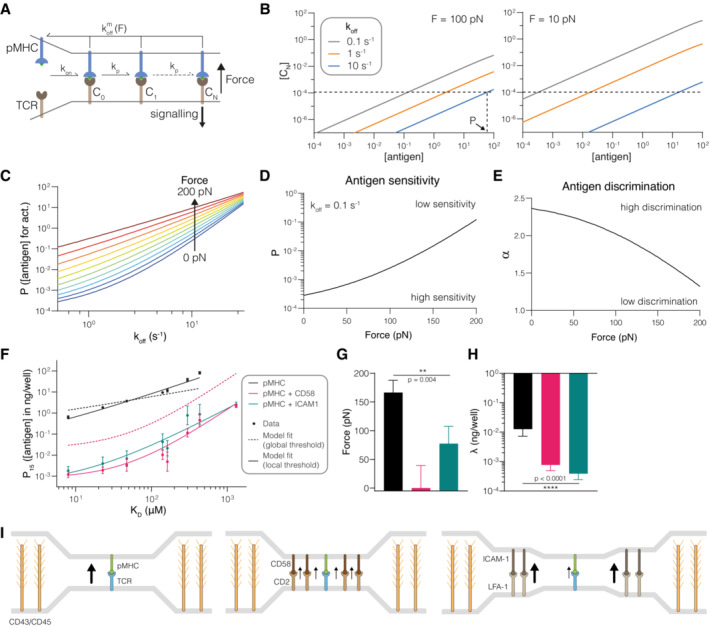
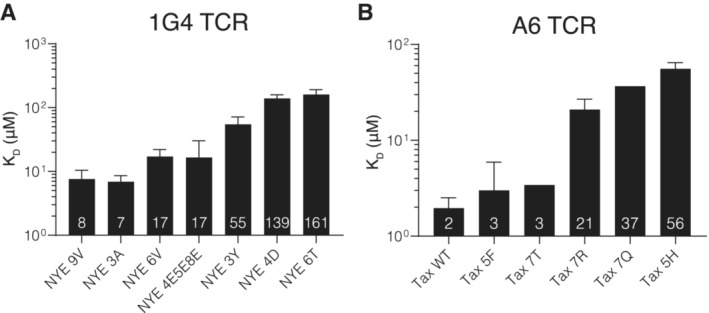
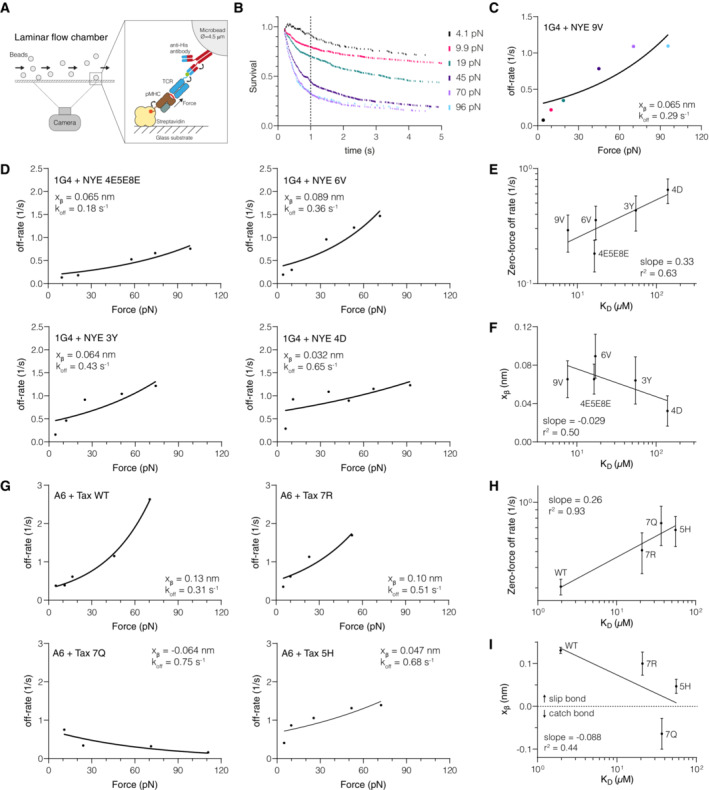
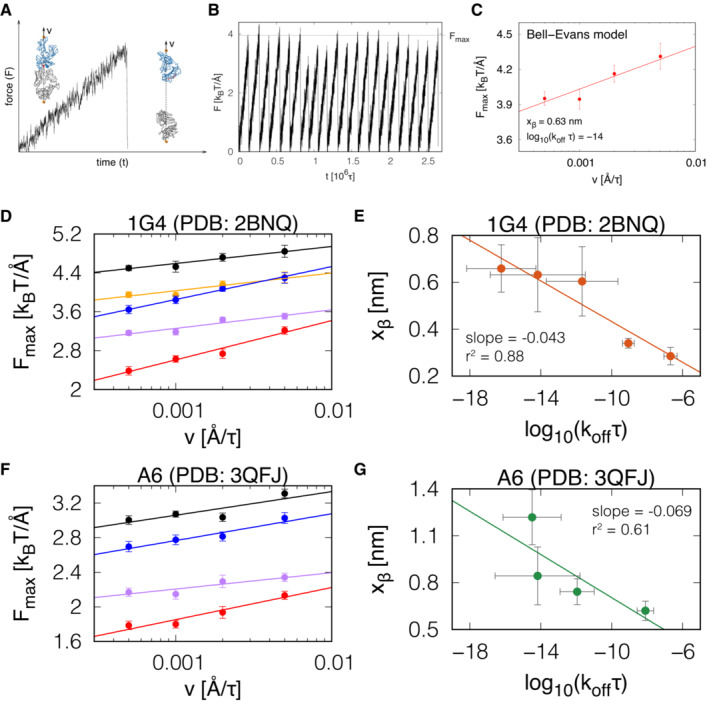
T cells use their T-cell receptors (TCRs) to discriminate between lower-affinity self and higher-affinity foreign peptide major-histocompatibility-complexes (pMHCs) based on the TCR/pMHC off-rate. It is now appreciated that T cells generate mechanical forces during this process but how force impacts the TCR/pMHC off-rate remains debated. Here, we measured the effect of mechanical force on the off-rate of multiple TCR/pMHC interactions. Unexpectedly, we found that lower-affinity TCR/pMHCs with faster solution off-rates were more resistant to mechanical force (weak slip or catch bonds) than higher-affinity interactions (strong slip bonds). This was confirmed by molecular dynamics simulations. Consistent with these findings, we show that the best-characterized catch bond, involving the OT-I TCR, has a low affinity and an exceptionally fast solution off-rate. Our findings imply that reducing forces on the TCR/pMHC interaction improves antigen discrimination, and we suggest a role for the adhesion receptors CD2 and LFA-1 in force-shielding the TCR/pMHC interaction.
T 细胞使用其 T 细胞受体 (TCR) 根据 TCR/pMHC 的离解速率来区分低亲和力的自身和高亲和力的外来肽主要组织相容性复合物 (pMHC)。现在人们已经意识到 T 细胞在这个过程中会产生机械力,但力如何影响 TCR/pMHC 的离解速率仍存在争议。在这里,我们测量了机械力对多种 TCR/pMHC 相互作用离解速率的影响。出乎意料的是,我们发现具有更快溶液离解速率的低亲和力 TCR/pMHC 比高亲和力相互作用(强滑动键合)更能抵抗机械力(弱滑动或捕获键合)。这通过分子动力学模拟得到了证实。与这些发现一致,我们表明涉及 OT-I TCR 的研究最充分的捕获键具有低亲和力和异常快的溶液离解速率。我们的研究结果表明,降低 TCR/pMHC 相互作用的力可以改善抗原识别,我们还提出了粘附受体 CD2 和 LFA-1 在保护 TCR/pMHC 相互作用免受力影响方面的作用。