Institute of Functional Nano & Soft Materials (FUNSOM), Soochow University, Suzhou 215123, China.
State Key Laboratory of Radiation Medicine and Protection, School for Radiological and Interdisciplinary Sciences (RAD-X), Collaborative Innovation Center of Radiation Medicine of Jiangsu Higher Education Institutions, Soochow University, Suzhou 215123, China.
Molecules. 2022 Dec 5;27(23):8552. doi: 10.3390/molecules27238552.
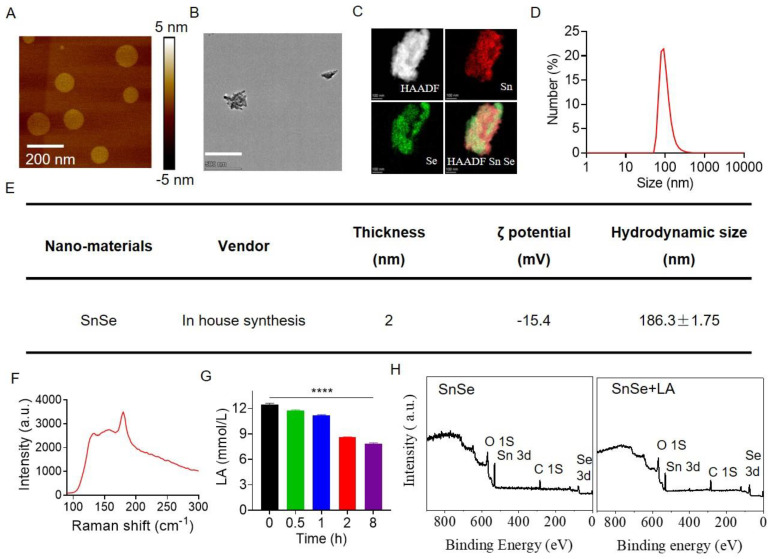
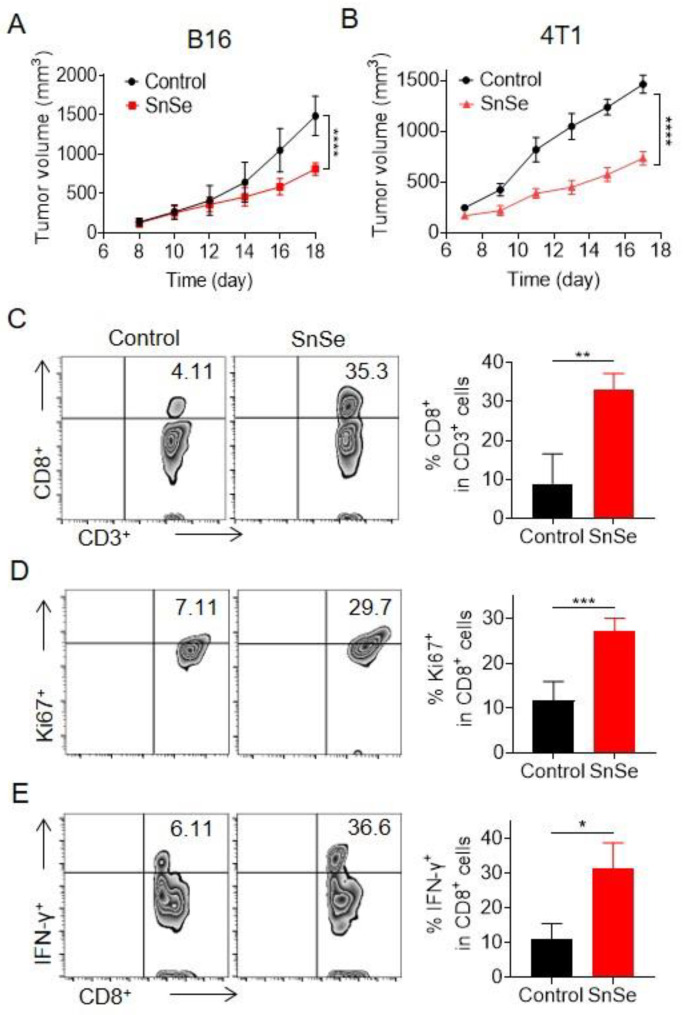
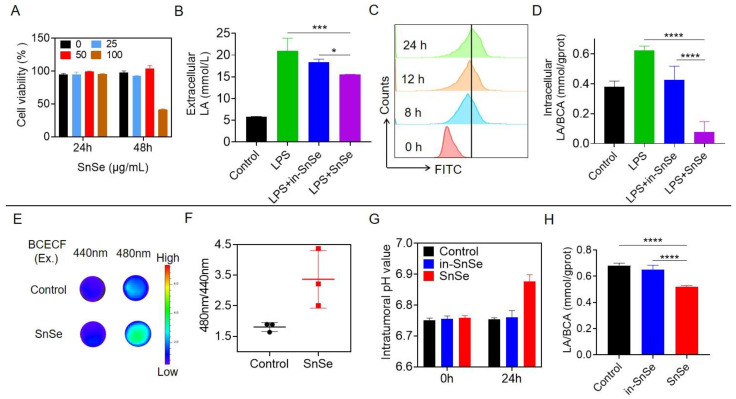
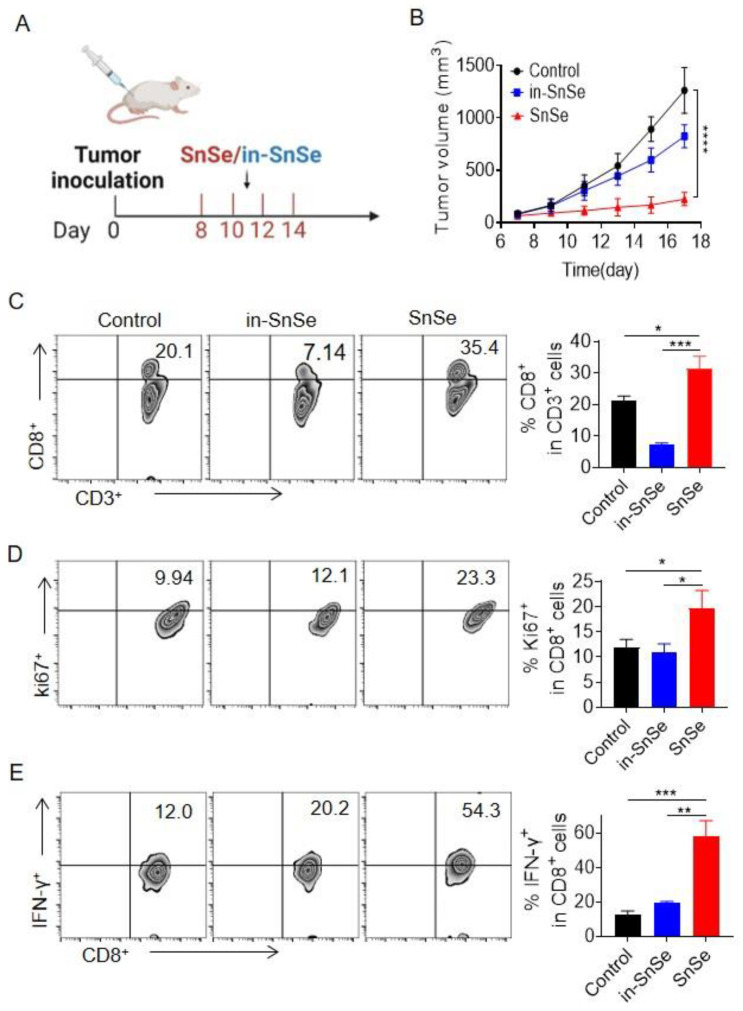
The acidic tumor microenvironment (TME) is unfriendly to the activity and function of immune cells in the TME. Here, we report inorganic nanozymes (i.e., SnSe NSs) that mimic the catalytic activity of lactate dehydrogenase to degrade lactate to pyruvate, contributing to the metabolic treatment of tumors. As found in this study, SnSe NSs successfully decreased lactate levels in cells and tumors, as well as reduced tumor acidity. This is associated with activation of the immune response of T cells, thus alleviating the immunosuppressive environment of the TME. More importantly, the nanozyme successfully inhibited tumor growth in mutilate mouse tumor models. Thus, SnSe NSs show a promising result in lactate depletion and tumor suppression, which exemplifies its potential strategy in targeting lactate for metabolic therapy.
酸性肿瘤微环境(TME)不利于 TME 中免疫细胞的活性和功能。在这里,我们报告了无机纳米酶(即 SnSe NSs),它们模拟乳酸脱氢酶的催化活性将乳酸降解为丙酮酸,有助于肿瘤的代谢治疗。在这项研究中发现,SnSe NSs 成功降低了细胞和肿瘤中的乳酸水平,并降低了肿瘤酸度。这与 T 细胞免疫反应的激活有关,从而减轻了 TME 的免疫抑制环境。更重要的是,纳米酶成功抑制了多发性小鼠肿瘤模型中的肿瘤生长。因此,SnSe NSs 在耗尽乳酸和抑制肿瘤方面显示出有希望的结果,这证明了其针对乳酸进行代谢治疗的潜在策略。