School of Pharmacy, Division of Pharmaceutical Sciences, University of Wisconsin-Madison, Madison, WI, USA.
School of Pharmacy, Division of Pharmaceutical Sciences, University of Wisconsin-Madison, Madison, WI, USA.
Dev Biol. 2023 Feb;494:46-59. doi: 10.1016/j.ydbio.2022.11.007. Epub 2022 Dec 9.
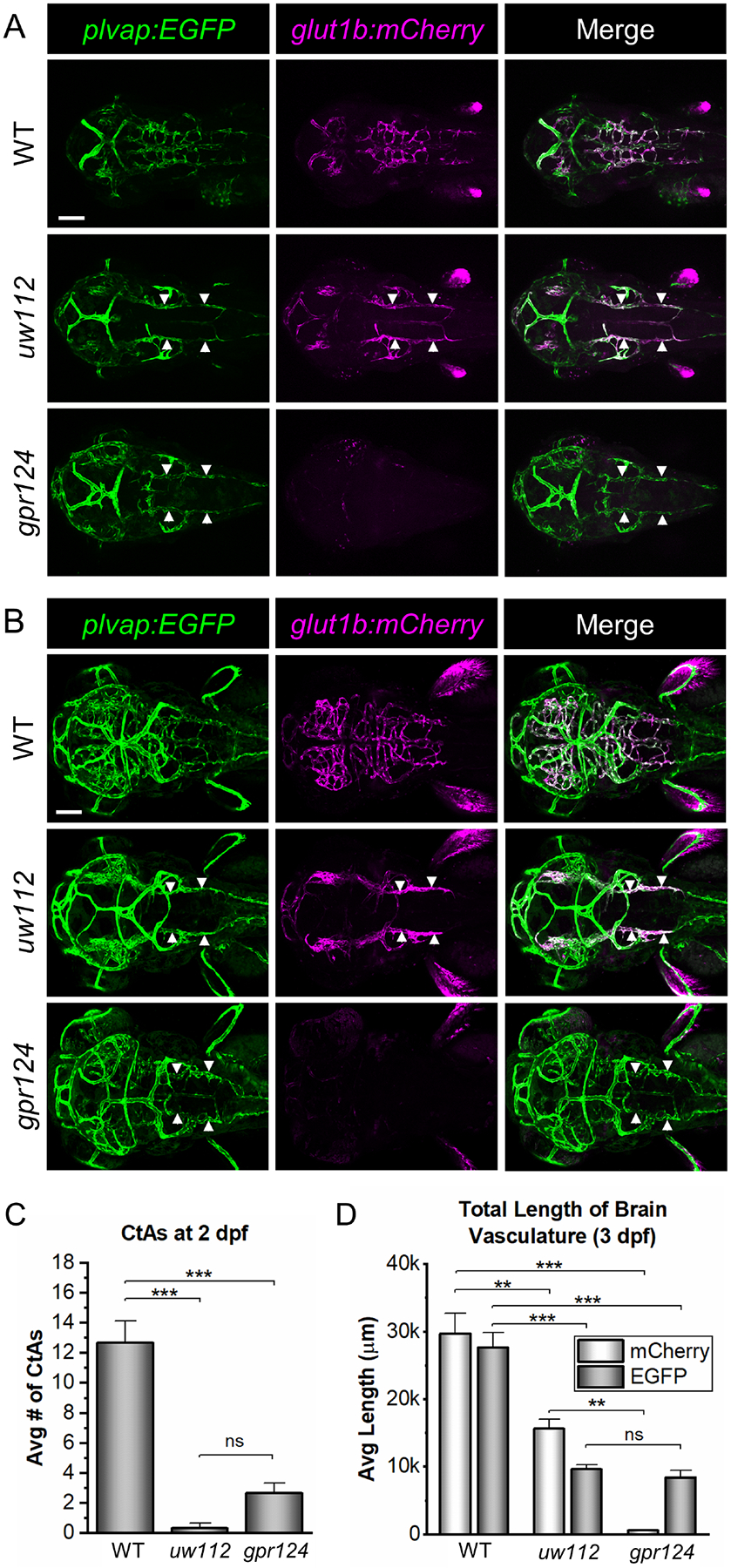
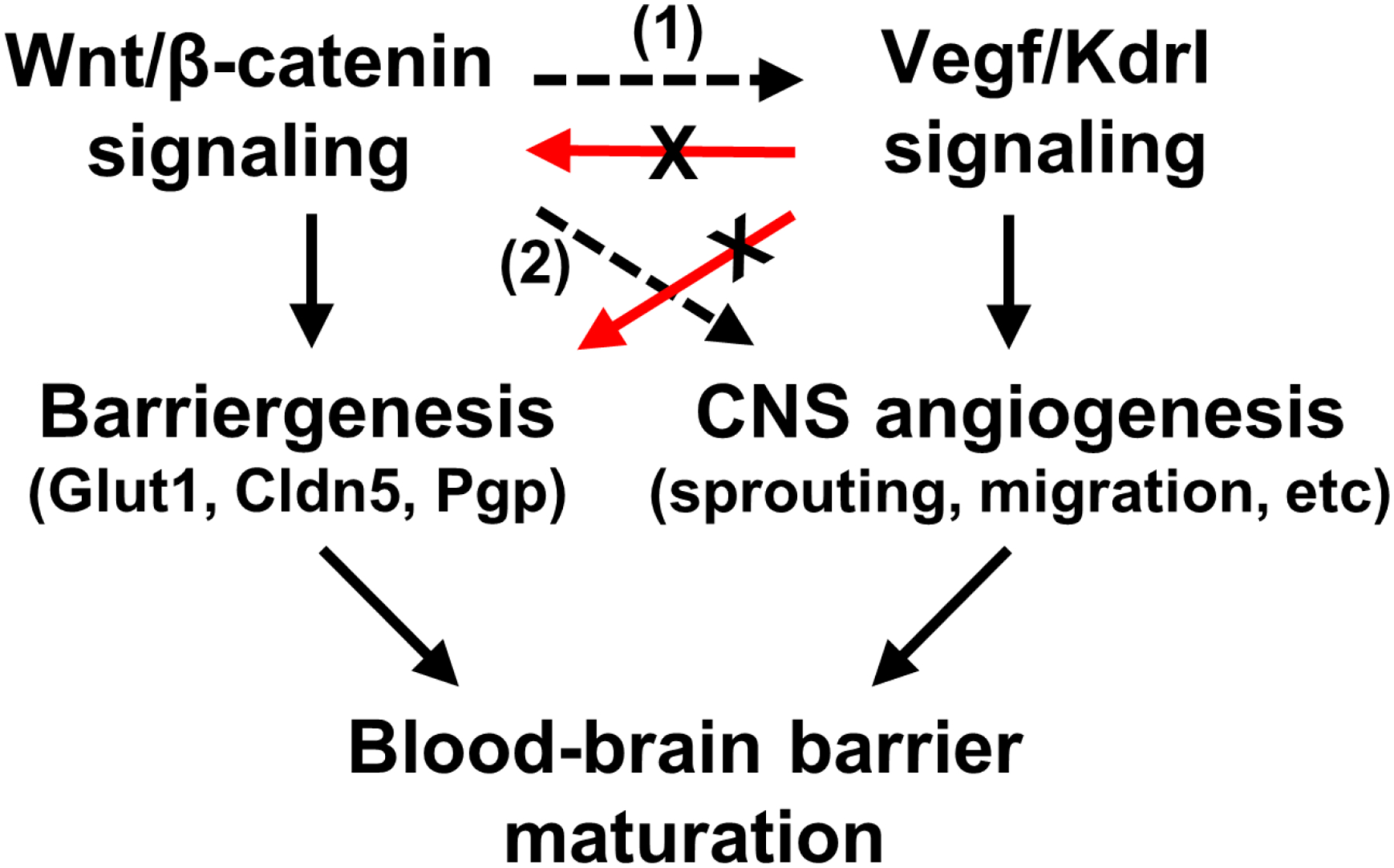
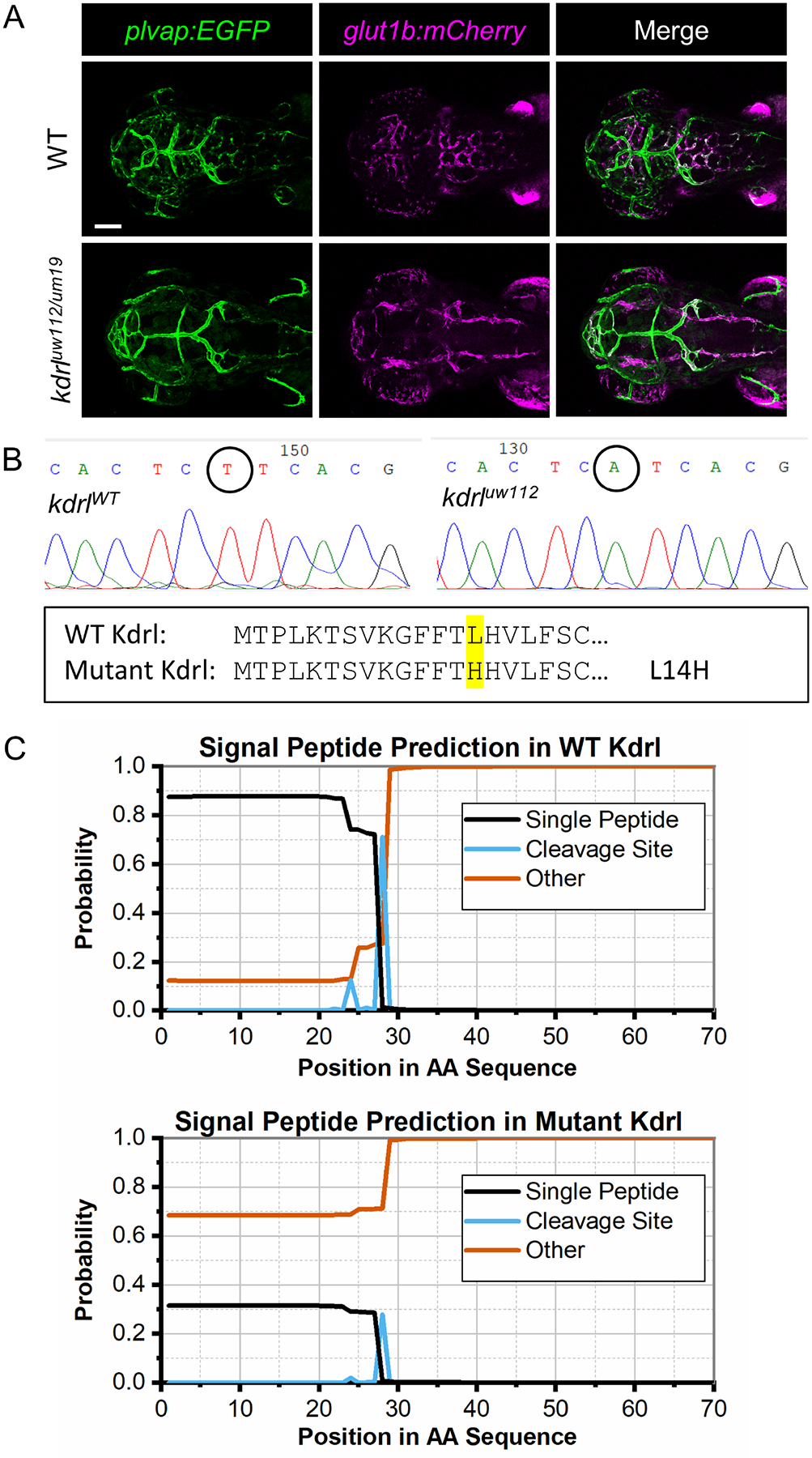
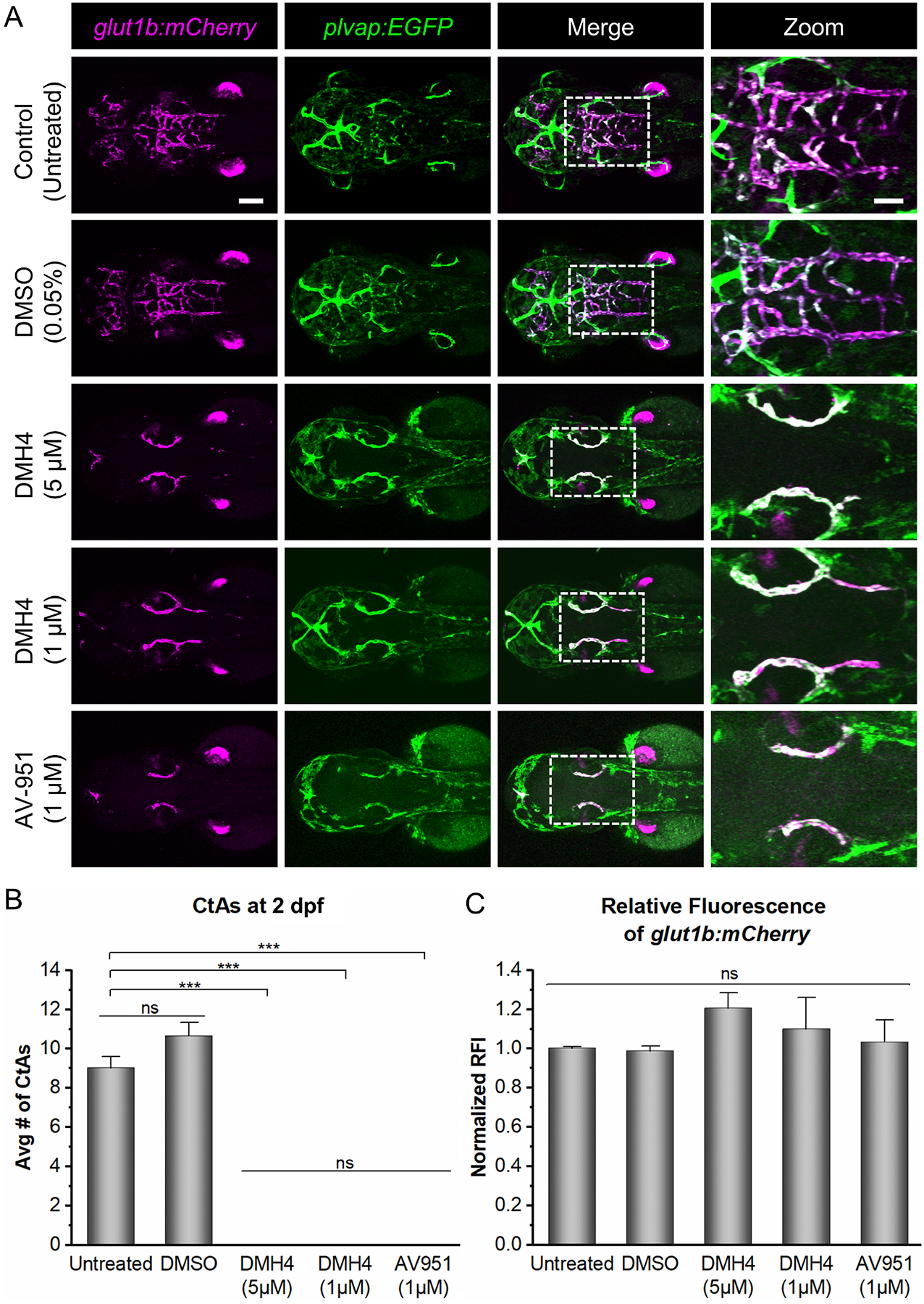
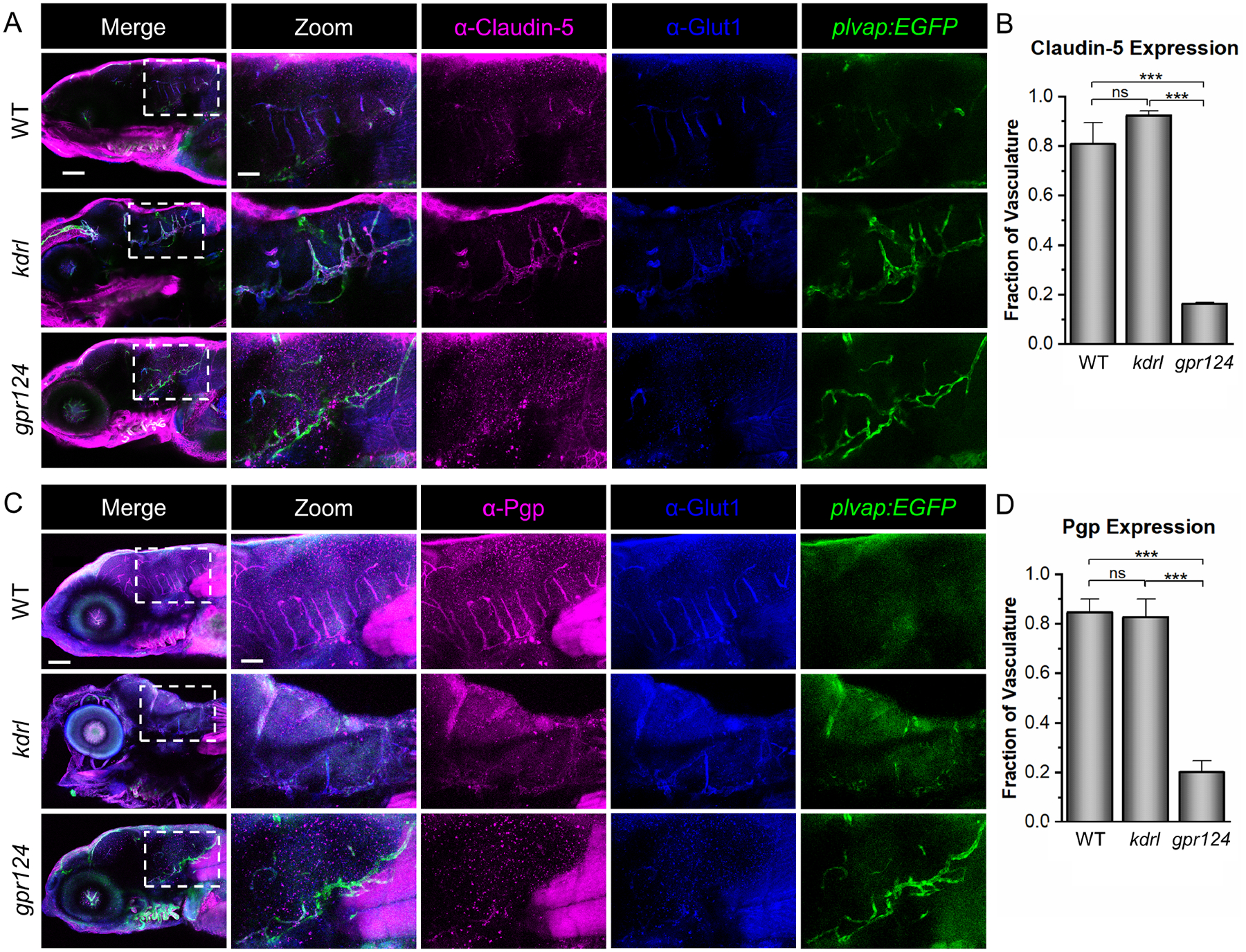
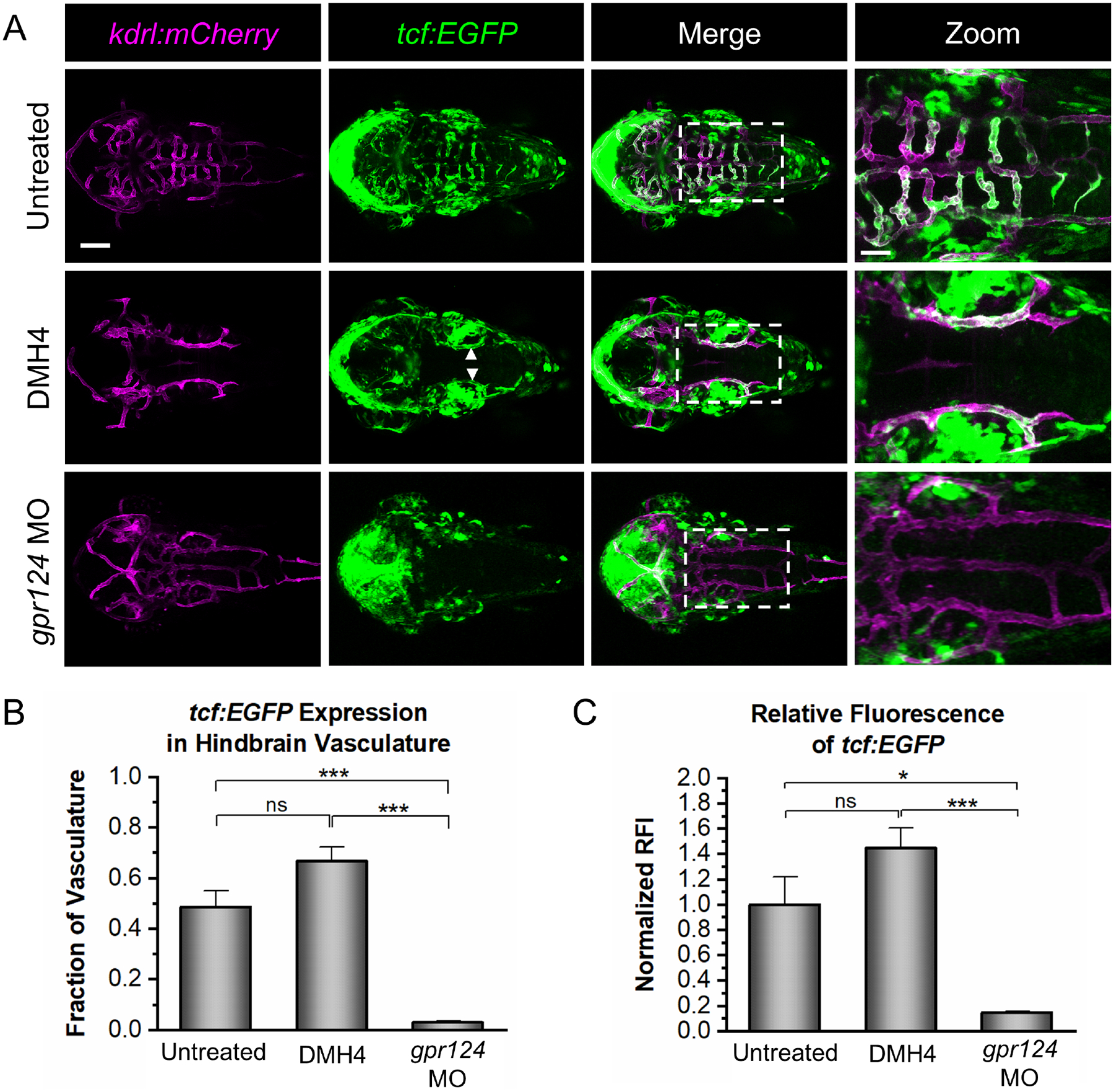
During neurovascular development, brain endothelial cells (BECs) respond to secreted signals from the neuroectoderm that regulate CNS angiogenesis, the formation of new blood vessels in the brain, and barriergenesis, the acquisition of blood-brain barrier (BBB) properties. Wnt/β-catenin signaling and Vegf signaling are both required for CNS angiogenesis; however, the relationship between these pathways is not understood. Furthermore, while Wnt/β-catenin signaling is essential for barriergenesis, the role of Vegf signaling in this vital process remains unknown. Here, we provide the first direct evidence, to our knowledge, that Vegf signaling is not required for barriergenesis and that activation of Wnt/β-catenin in BECs is independent of Vegf signaling during neurovascular development. Using double transgenic glut1b:mCherry and plvap:EGFP zebrafish (Danio rerio) to visualize the developing brain vasculature, we performed a forward genetic screen and identified a new mutant allele of kdrl, an ortholog of mammalian Vegfr2. The kdrl mutant lacks CNS angiogenesis but, unlike the Wnt/β-catenin pathway mutant gpr124, acquires BBB properties in BECs. To examine Wnt/β-catenin pathway activation in BECs, we chemically inhibited Vegf signaling and found robust expression of the Wnt/β-catenin transcriptional reporter line 7xtcf-Xla.Siam:EGFP. Taken together, our results establish that Vegf signaling is essential for CNS angiogenesis but is not required for Wnt/β-catenin-dependent barriergenesis. Given the clinical significance of either inhibiting pathological angiogenesis or stimulating neovascularization, our study provides valuable new insights that are critical for the development of effective therapies that target the vasculature in neurological disorders.
在神经血管发育过程中,脑内皮细胞 (BEC) 对神经外胚层分泌的信号做出反应,这些信号调节中枢神经系统血管生成、大脑中新血管的形成以及血脑屏障的形成、血脑屏障 (BBB) 特性的获得。Wnt/β-catenin 信号和 Vegf 信号都需要中枢神经系统血管生成;然而,这些途径之间的关系尚不清楚。此外,虽然 Wnt/β-catenin 信号对血脑屏障的形成至关重要,但 Vegf 信号在这一重要过程中的作用仍然未知。在这里,我们提供了第一个直接证据,据我们所知,Vegf 信号对于血脑屏障的形成不是必需的,并且在神经血管发育过程中,BEC 中 Wnt/β-catenin 的激活独立于 Vegf 信号。使用双转基因 glut1b:mCherry 和 plvap:EGFP 斑马鱼(Danio rerio)来可视化正在发育的大脑血管系统,我们进行了正向遗传筛选并鉴定了 kdrl 的一个新突变等位基因,该基因是哺乳动物 Vegfr2 的同源物。kdrl 突变体缺乏中枢神经系统血管生成,但与 Wnt/β-catenin 途径突变体 gpr124 不同,它在 BEC 中获得了 BBB 特性。为了检查 BEC 中 Wnt/β-catenin 途径的激活,我们化学抑制了 Vegf 信号,发现 Wnt/β-catenin 转录报告基因线 7xtcf-Xla.Siam:EGFP 的表达非常强烈。总之,我们的结果表明,Vegf 信号对于中枢神经系统血管生成是必需的,但对于 Wnt/β-catenin 依赖性血脑屏障的形成不是必需的。鉴于抑制病理性血管生成或刺激新血管形成的临床意义,我们的研究提供了有价值的新见解,这对于开发针对神经紊乱血管的有效治疗方法至关重要。