Center for Neurogenetics, Feil Family Brain and Mind Research Institute, Weill Cornell Medicine, Cornell University, New York, NY, USA.
Ansary Stem Cell Institute, Division of Regenerative Medicine, Department of Medicine, Weill Cornell Medicine, New York, NY, USA.
Transl Psychiatry. 2024 Jan 23;14(1):53. doi: 10.1038/s41398-024-02740-2.
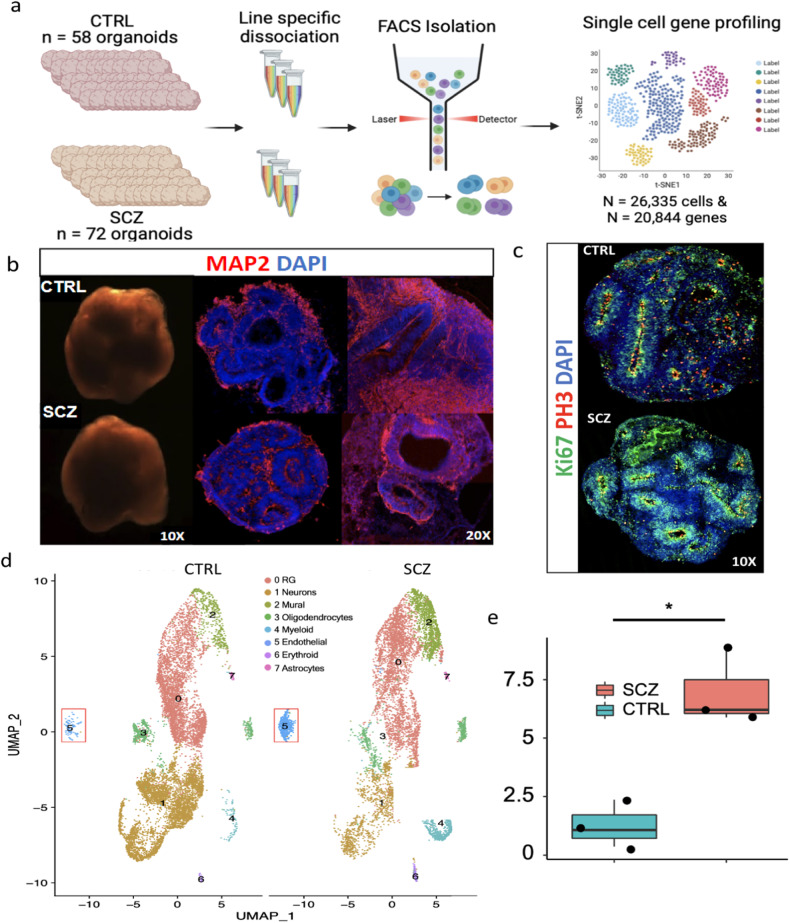
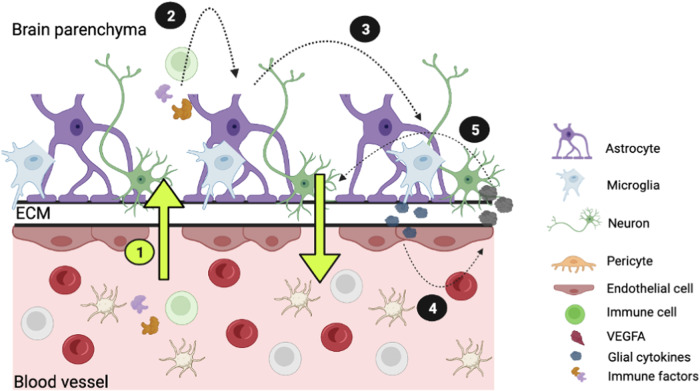
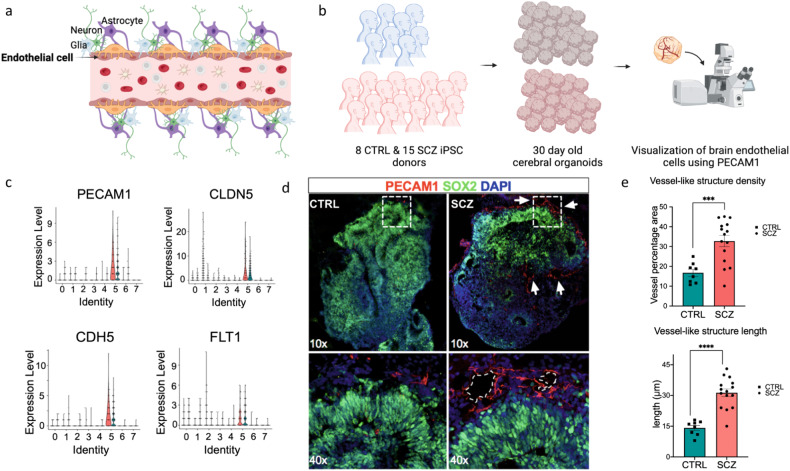
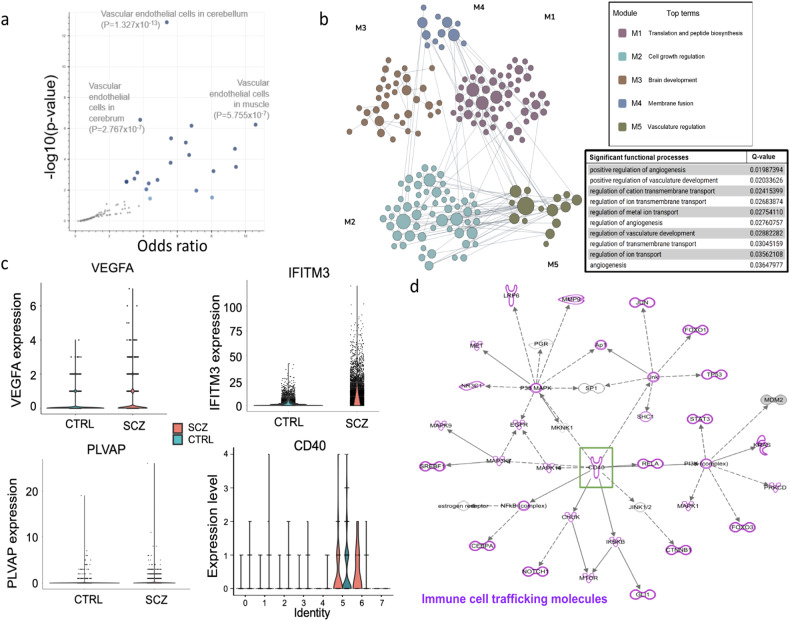
Schizophrenia (SCZ) is a complex neurodevelopmental disorder characterized by the manifestation of psychiatric symptoms in early adulthood. While many research avenues into the origins of SCZ during brain development have been explored, the contribution of endothelial/vascular dysfunction to the disease remains largely elusive. To model the neuropathology of SCZ during early critical periods of brain development, we utilized patient-derived induced pluripotent stem cells (iPSCs) to generate 3D cerebral organoids and define cell-specific signatures of disease. Single-cell RNA sequencing revealed that while SCZ organoids were similar in their macromolecular diversity to organoids generated from healthy controls (CTRL), SCZ organoids exhibited a higher percentage of endothelial cells when normalized to total cell numbers. Additionally, when compared to CTRL, differential gene expression analysis revealed a significant enrichment in genes that function in vessel formation, vascular regulation, and inflammatory response in SCZ endothelial cells. In line with these findings, data from 23 donors demonstrated that PECAM1 microvascular vessel-like structures were increased in length and number in SCZ organoids in comparison to CTRL organoids. Furthermore, we report that patient-derived endothelial cells displayed higher paracellular permeability, implicating elevated vascular activity. Collectively, our data identified altered gene expression patterns, vessel-like structural changes, and enhanced permeability of endothelial cells in patient-derived models of SCZ. Hence, brain microvascular cells could play a role in the etiology of SCZ by modulating the permeability of the developing blood brain barrier (BBB).
精神分裂症 (SCZ) 是一种复杂的神经发育障碍,其特征是在成年早期出现精神症状。虽然已经探索了许多研究途径来了解大脑发育过程中 SCZ 的起源,但内皮/血管功能障碍对该疾病的贡献仍然很大程度上难以捉摸。为了在大脑发育的早期关键时期模拟 SCZ 的神经病理学,我们利用患者来源的诱导多能干细胞 (iPSC) 生成 3D 大脑类器官,并定义疾病的细胞特异性特征。单细胞 RNA 测序显示,虽然 SCZ 类器官在其大分子多样性方面与来自健康对照 (CTRL) 的类器官相似,但当与总细胞数归一化时,SCZ 类器官表现出更高比例的内皮细胞。此外,与 CTRL 相比,差异基因表达分析显示,在 SCZ 内皮细胞中,与血管形成、血管调节和炎症反应相关的基因显著富集。与这些发现一致,来自 23 名供体的数据表明,与 CTRL 类器官相比,SCZ 类器官中 PECAM1 微血管样结构的长度和数量增加。此外,我们报告说,源自患者的内皮细胞表现出更高的细胞旁通透性,暗示血管活性升高。总的来说,我们的数据在源自患者的 SCZ 模型中鉴定出改变的基因表达模式、类似血管的结构变化以及内皮细胞通透性增强。因此,脑微血管细胞可能通过调节发育中血脑屏障 (BBB) 的通透性在 SCZ 的发病机制中发挥作用。