Joint Department of Biomedical Engineering, North Carolina State University & University of North Carolina-Chapel Hill, 4130 Engineering Building III, Campus Box 7115, Raleigh, NC 27695, USA.
Comparative Medicine Institute, North Carolina State University, 1060 William Moore Drive, Raleigh, NC 27606, USA.
Biomater Sci. 2023 Jan 17;11(2):641-654. doi: 10.1039/d2bm01012g.
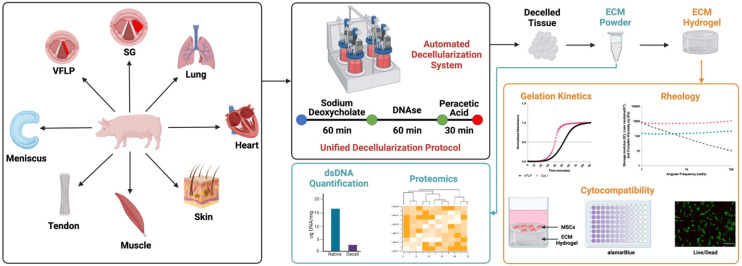
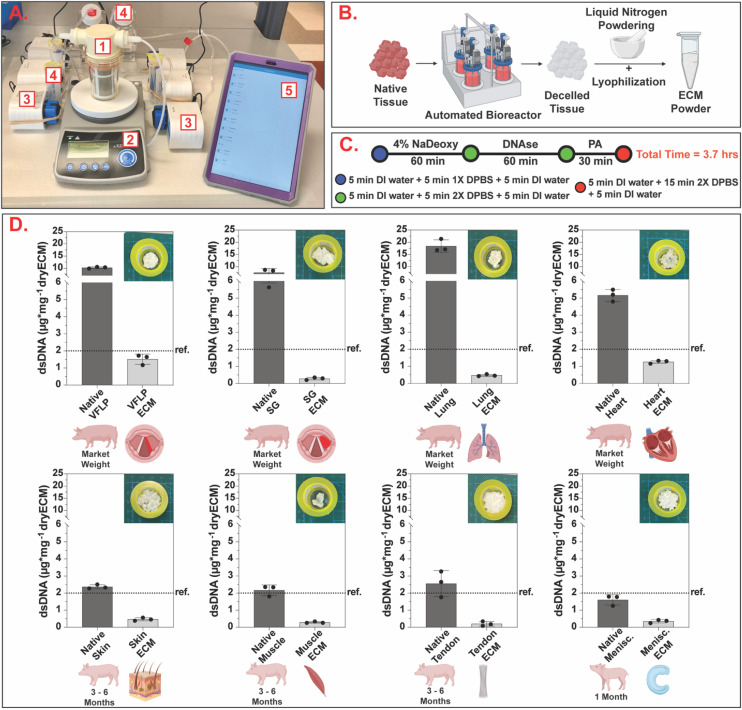
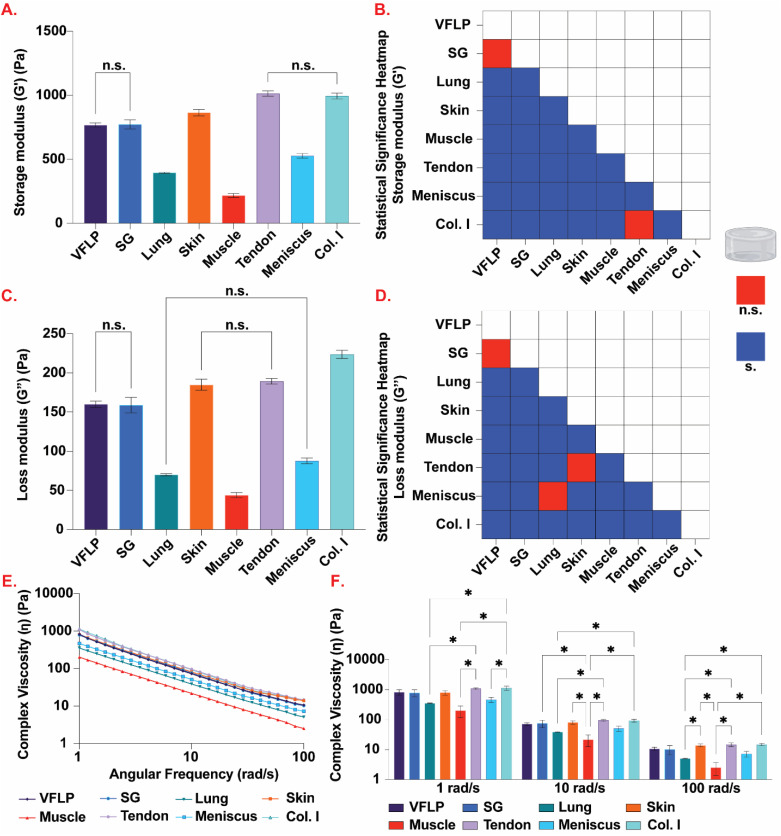
The goal of tissue decellularization is to efficiently remove unwanted cellular components, such as DNA and cellular debris, while retaining the complex structural and molecular milieu within the extracellular matrix (ECM). Decellularization protocols to date are centered on customized tissue-specific and lab-specific protocols that involve consecutive manual steps which results in variable and protocol-specific ECM material. The differences that result from the inconsistent protocols between decellularized ECMs affect consistency across batches, limit comparisons between results obtained from different laboratories, and could limit the transferability of the material for consistent laboratory or clinical use. The present study is the first proof-of-concept towards the development of a standardized protocol that can be used to derive multiple ECM biomaterials (powders and hydrogels) a previously established automated system. The automated decellularization method developed by our group was used due to its short decellularization time (4 hours) and its ability to reduce batch-to-batch variability. The ECM obtained using this first iteration of a unified protocol was able to produce ECM hydrogels from skin, lung, muscle, tendons, cartilage, and laryngeal tissues. All hydrogels formed in this study were cytocompatible and showed gelation and rheological properties consistent with previous ECM hydrogels. The ECMs also showed unique proteomic composition. The present study represents the first step towards developing standardized protocols that can be used on multiple tissues in a fast, scalable, and reproducible manner.
组织脱细胞的目的是高效去除不需要的细胞成分,如 DNA 和细胞碎片,同时保留细胞外基质 (ECM) 中的复杂结构和分子环境。迄今为止,脱细胞方案集中在针对特定组织和实验室的定制方案上,这些方案涉及连续的手动步骤,导致 ECM 材料具有可变性和特定于方案的特点。脱细胞 ECM 之间不一致的方案导致的差异会影响批次间的一致性,限制不同实验室获得的结果之间的比较,并可能限制材料的可转移性,使其无法在实验室或临床中保持一致使用。本研究首次证明了开发标准化方案的概念,该方案可用于从先前建立的自动化系统中获得多种 ECM 生物材料(粉末和水凝胶)。由于我们小组开发的自动化脱细胞方法具有较短的脱细胞时间(4 小时)和降低批次间变异性的能力,因此使用了该方法。使用这种统一方案的第一个迭代获得的 ECM 能够从皮肤、肺、肌肉、肌腱、软骨和喉组织中产生 ECM 水凝胶。本研究中形成的所有水凝胶均具有细胞相容性,并表现出与以前的 ECM 水凝胶一致的凝胶化和流变学特性。ECMs 还显示出独特的蛋白质组组成。本研究代表了朝着开发可用于快速、可扩展和可重复方式处理多种组织的标准化方案迈出的第一步。