
全球 感染的患病率和危险因素:系统评价和荟萃分析。
Global prevalence and risk factors of infection in : A systematic review and meta-analysis.
机构信息
College of Veterinary Medicine, Qingdao Agricultural University, Qingdao, Shandong, China.
College of Life Science, Changchun Sci-Tech University, Shuangyang, Jilin, China.
出版信息
Front Cell Infect Microbiol. 2022 Nov 25;12:1072385. doi: 10.3389/fcimb.2022.1072385. eCollection 2022.
INTODUCTION
Cryptosporidiosis is a zoonotic disease caused by Cryptosporidium infection with the main symptom of diarrhea. The present study performed a metaanalysis to determine the global prevalence of Cryptosporidium in Equus animals.
METHODS
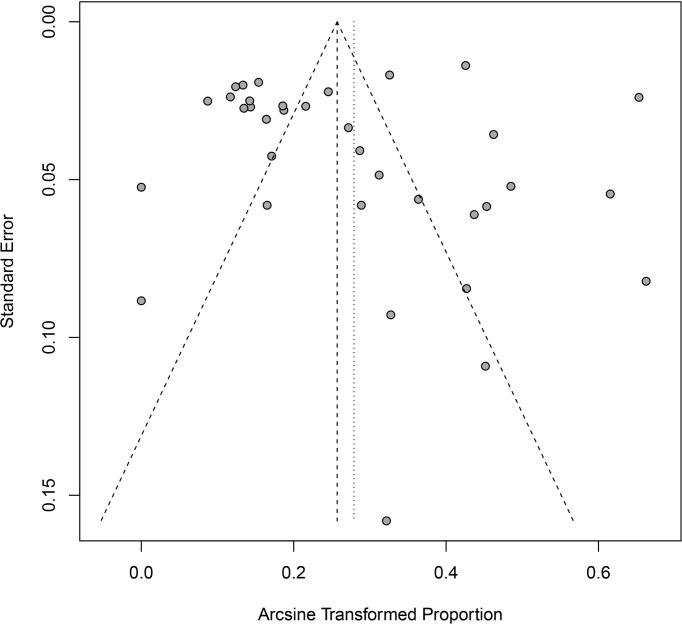
Data collection was carried out using Chinese National Knowledge Infrastructure (CNKI), VIP Chinese journal database (VIP), WanFang Data, PubMed, and ScienceDirect databases, with 35 articles published before 2021 being included in this systematic analysis. This study analyzed the research data through subgroup analysis and univariate regression analysis to reveal the factors leading to high prevalence. We applied a random effects model (REM) to the metadata.
RESULTS
The total prevalence rate of Cryptosporidium in Equus was estimated to be 7.59% from the selected articles. The prevalence of Cryptosporidium in female Equus was 2.60%. The prevalence of Cryptosporidium in Equus under 1-year-old was 11.06%, which was higher than that of Equus over 1-year-old (2.52%). In the experimental method groups, the positive rate detected by microscopy was the highest (10.52%). The highest Cryptosporidium prevalence was found in scale breeding Equus (7.86%). The horses had the lowest Cryptosporidium prevalence (7.32%) among host groups. C. muris was the most frequently detected genotype in the samples (53.55%). In the groups of geographical factors, the prevalence rate of Cryptosporidium in Equus was higher in regions with low altitude (6.88%), rainy (15.63%), humid (22.69%), and tropical climates (16.46%).
DISCUSSION
The search strategy use of five databases might have caused the omission of some researches. This metaanalysis systematically presented the global prevalence and potential risk factors of Cryptosporidium infection in Equus. The farmers should strengthen the management of young and female Equus animals, improve water filtration systems, reduce stocking densities, and harmless treatment of livestock manure.
简介
隐孢子虫病是一种由隐孢子虫感染引起的人畜共患病,主要症状为腹泻。本研究通过荟萃分析来确定全球马属动物隐孢子虫的流行情况。
方法
使用中国知网(CNKI)、维普中文期刊数据库(VIP)、万方数据、PubMed 和 ScienceDirect 数据库进行数据收集,纳入了 2021 年前发表的 35 篇文章进行系统分析。本研究通过亚组分析和单变量回归分析来揭示导致高流行率的因素,对研究数据进行了分析。我们采用随机效应模型(REM)对元数据进行分析。
结果
从所选文章中估计出隐孢子虫在马属动物中的总流行率为 7.59%。雌性马属动物的隐孢子虫流行率为 2.60%。1 岁以下马属动物的隐孢子虫流行率为 11.06%,高于 1 岁以上马属动物(2.52%)。在实验方法组中,显微镜检测的阳性率最高(10.52%)。在规模养殖的马属动物中,隐孢子虫的流行率最高(7.86%)。在宿主群体中,马的隐孢子虫流行率最低(7.32%)。在检测到的基因型中,C. muris 最常见(53.55%)。在地理因素组中,海拔较低(6.88%)、多雨(15.63%)、潮湿(22.69%)和热带气候(16.46%)地区马属动物的隐孢子虫流行率较高。
讨论
对五个数据库的搜索策略的使用可能导致了一些研究的遗漏。本荟萃分析系统地展示了全球马属动物隐孢子虫感染的流行情况和潜在的风险因素。农民应加强对年轻和雌性马属动物的管理,改善水过滤系统,降低饲养密度,并对家畜粪便进行无害处理。




 Zotero 插件