Department of Diagnostic and Interventional Radiology, Hôpital Libanais Geitaoui CHU, Beyrouth, 1100, Achrafieh, Lebanon.
Department of Radiology, Cliniques CHC Montlégia, Boulevard Patience Et Beaujonc 2, 4000, Liège, Belgium.
Skeletal Radiol. 2023 Nov;52(11):2259-2270. doi: 10.1007/s00256-022-04270-8. Epub 2022 Dec 20.
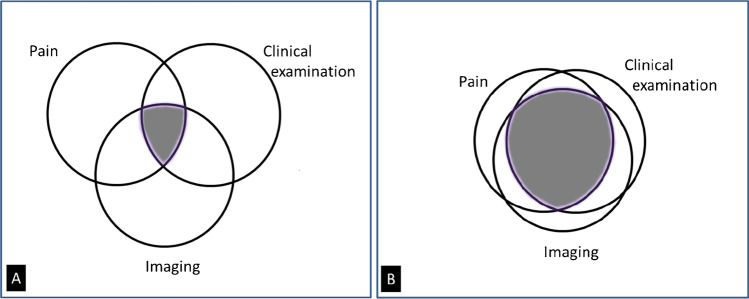
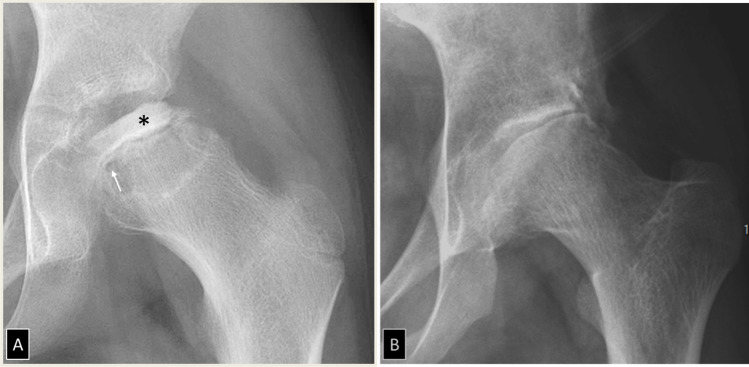
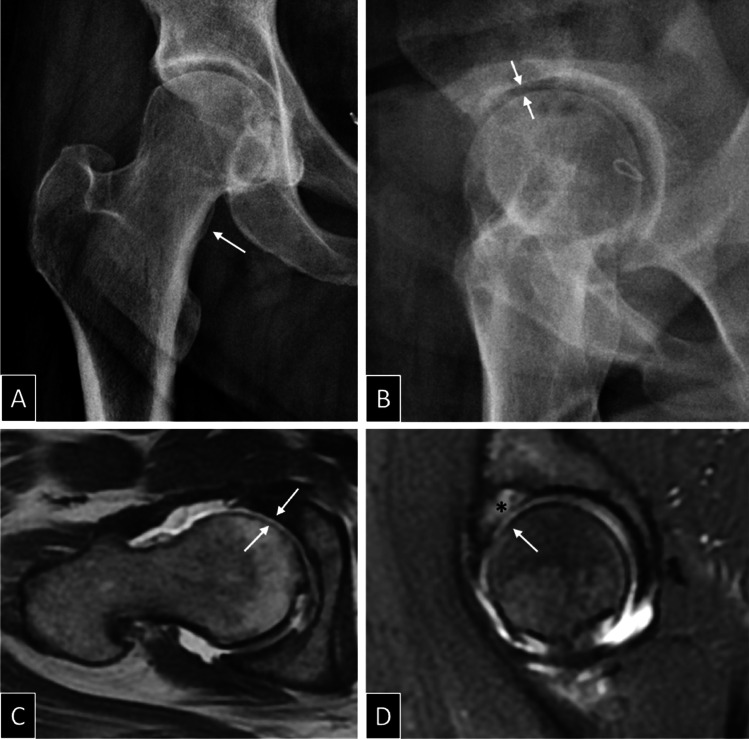
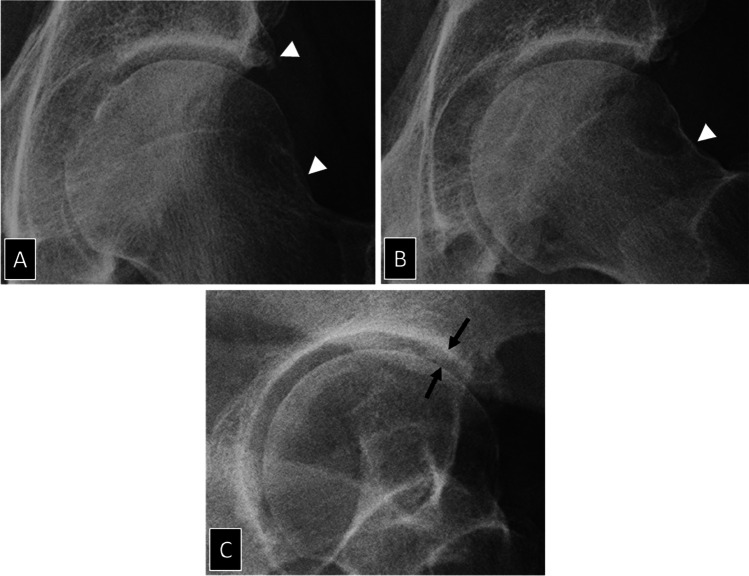
Diagnosis of hip osteoarthritis (OA) is based on clinical arguments, and medical imaging is obtained to confirm the diagnosis and rule out other possible sources of pain. Conventional radiographs are recommended as the first line imaging modality to investigate chronic hip pain. They should be obtained in a rigorous technique that includes an antero-posterior (AP) radiograph of the pelvis. The choice of the appropriate lateral view depends on the clinical indication, Lequesne's false profile being valuable in the assessment of OA. Magnetic resonance imaging (MRI) is more sensitive to detect joint effusion/synovitis, cartilage, labral, and bone marrow lesions. However, structural joint changes are frequent in asymptomatic population and neither radiographs nor MRI have shown a good correlation with pain and functional impairment. MRI seems to be more suitable than radiographs as a biomarker for clinical trials addressing early OA. The absence of a validated MR biomarker of early OA, together with issues related to machine availability and MRI protocol repeatability, prevent the widespread use of MRI in clinical trials.
髋关节骨关节炎(OA)的诊断基于临床依据,并且获取医学影像学检查来确认诊断并排除其他可能的疼痛来源。常规 X 线片被推荐作为研究慢性髋关节疼痛的一线影像学方法。它们应该在严格的技术下获得,包括骨盆的前后位(AP)X 线片。适当的侧位片的选择取决于临床指征,Lequesne 的假性侧面位在 OA 的评估中具有价值。磁共振成像(MRI)对检测关节积液/滑膜炎、软骨、盂唇和骨髓病变更敏感。然而,结构关节变化在无症状人群中很常见,并且 X 线片和 MRI 都没有显示出与疼痛和功能障碍的良好相关性。MRI 似乎比 X 线片更适合作为临床试验中针对早期 OA 的生物标志物。缺乏早期 OA 的经验证的 MRI 生物标志物,以及与机器可用性和 MRI 协议可重复性相关的问题,阻碍了 MRI 在临床试验中的广泛应用。