Jefferson Institute of Molecular Medicine, Scleroderma Center of Thomas Jefferson University, Philadelphia, Pennsylvania, United States of America.
Division of Interdisciplinary Medicine and Biotechnology, Beth Israel Deaconess Medical Center, Boston, Massachusetts, United States of America.
PLoS One. 2022 Dec 22;17(12):e0279461. doi: 10.1371/journal.pone.0279461. eCollection 2022.
A major unmet need for Systemic Sclerosis (SSc) clinical management is the lack of biomarkers for the early diagnosis of patients with Raynaud's Phenomenon at high risk of evolving into SSc.
To identify proteins contained within serum exosomes employing an aptamer proteomic analysis that may serve to reveal patients with Raynaud's Phenomenon at risk of developing SSc.
Exosomes were isolated from serum samples from patients with Primary Raynaud's Phenomenon and from patients with Raynaud's Phenomenon harbouring serum antinuclear antibodies (ANA) who may be at high risk of evolving into SSc. The expression of 1,305 proteins was quantified using SOMAscan aptamer proteomics, and associations of the differentially elevated or reduced proteins with the clinical subsets of Raynaud's Phenomenon were assessed.
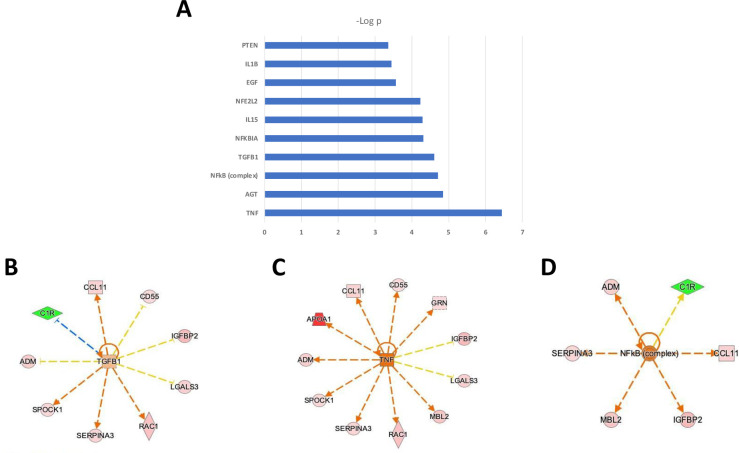
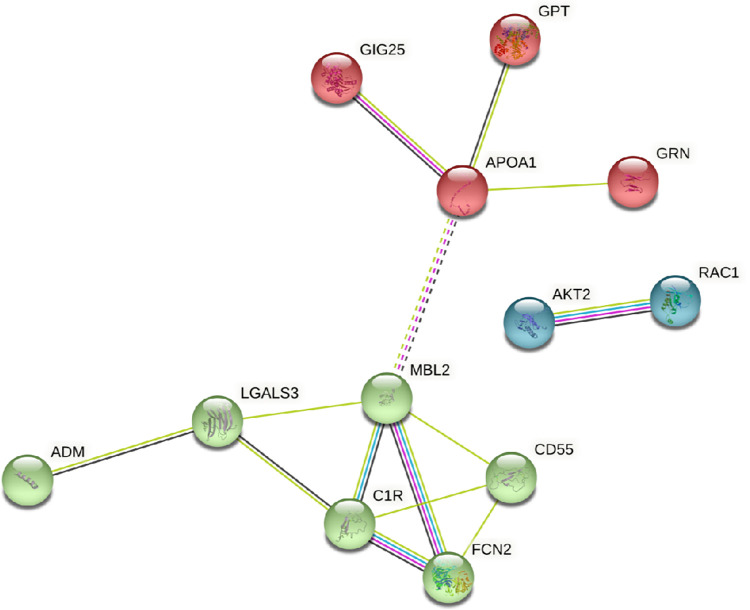
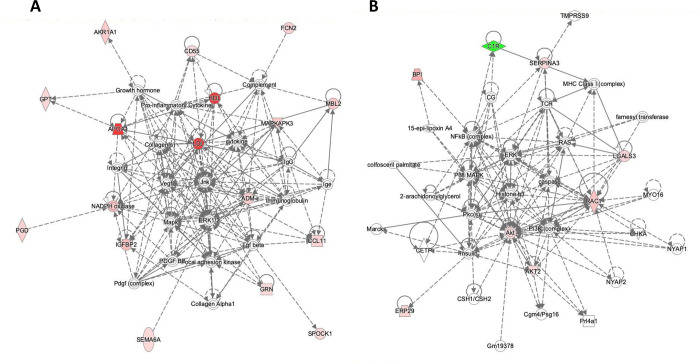
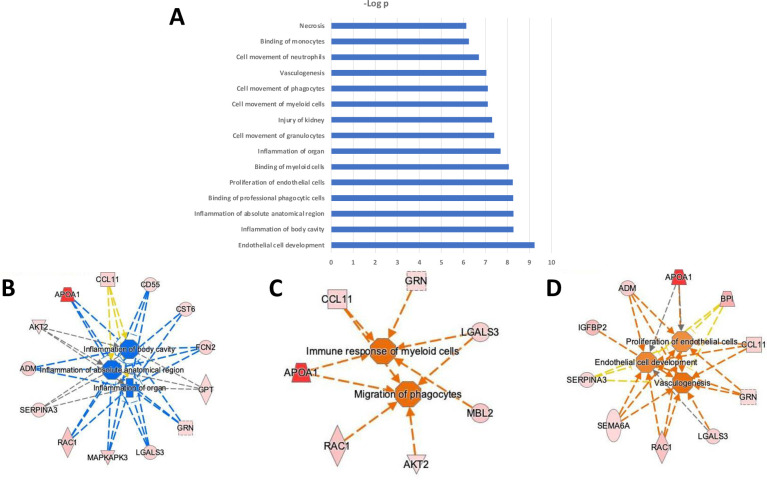
Twenty one differentially elevated and one differentially reduced (absolute fold change >|1.3|) proteins were identified. Principal component analysis using these 22 most differentially expressed proteins resulted in excellent separation of the two Raynaud's Phenomenon clinical subsets. Remarkably, the most differentially elevated proteins are involved in enhanced inflammatory responses, immune cell activation and cell migration, and abnormal vascular functions.
Aptamer proteomic analysis of circulating exosomes identified differentially elevated or reduced proteins between Raynaud's Phenomenon at high risk of evolving into SSc and Primary Raynaud's Phenomenon patients. Some of these proteins are involved in relevant biological pathways that may play a role in SSc pathogenesis including enhanced inflammatory responses, immune cell activation, and endothelial cell and vascular abnormalities.
系统性硬化症(SSc)临床管理的一个主要未满足需求是缺乏生物标志物,以早期诊断有发生 SSc 风险的雷诺现象患者。
采用适体蛋白质组学分析鉴定血清外泌体中包含的蛋白质,这些蛋白质可能有助于揭示有发生 SSc 风险的雷诺现象患者。
从原发性雷诺现象患者和可能有发生 SSc 高风险的血清抗核抗体(ANA)阳性的雷诺现象患者的血清样本中分离外泌体。使用 SOMAscan 适体蛋白质组学定量检测 1305 种蛋白质的表达,并评估差异上调或下调蛋白与雷诺现象临床亚型的相关性。
鉴定出 21 种差异上调和 1 种差异下调(绝对倍数变化> |1.3|)的蛋白质。使用这 22 种差异表达最显著的蛋白质进行主成分分析,导致两种雷诺现象临床亚型的极好分离。值得注意的是,差异上调最显著的蛋白质参与增强的炎症反应、免疫细胞激活和细胞迁移以及异常的血管功能。
对循环外泌体进行适体蛋白质组学分析,鉴定出有发生 SSc 风险的雷诺现象和原发性雷诺现象患者之间差异上调或下调的蛋白质。其中一些蛋白质参与相关的生物学途径,这些途径可能在 SSc 的发病机制中起作用,包括增强的炎症反应、免疫细胞激活和内皮细胞和血管异常。