Center for Genomics and Systems Biology, New York University Abu Dhabi, P. O. Box 129188, Abu Dhabi, UAE.
Department of Biology and Center for Genomics and Systems Biology, New York University, New York, NY, 10003, USA.
Commun Biol. 2022 Dec 22;5(1):1409. doi: 10.1038/s42003-022-04343-3.
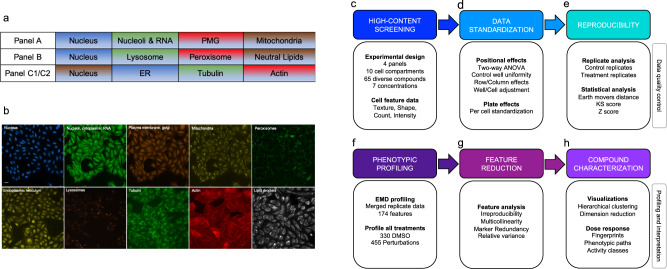
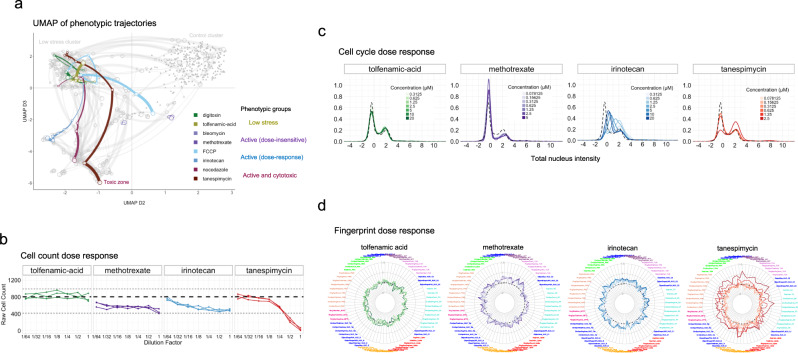
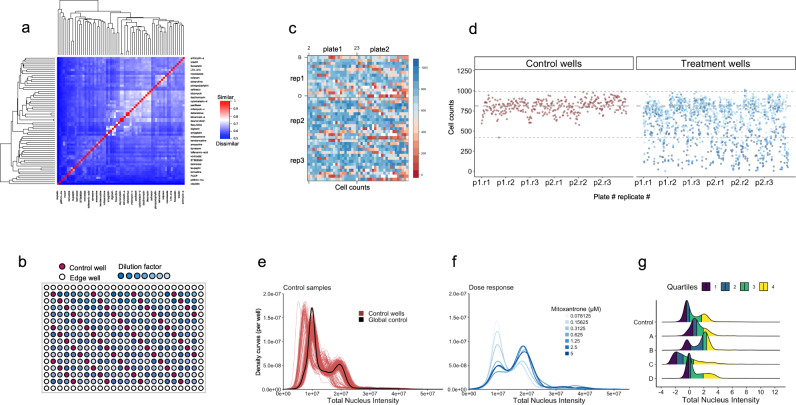
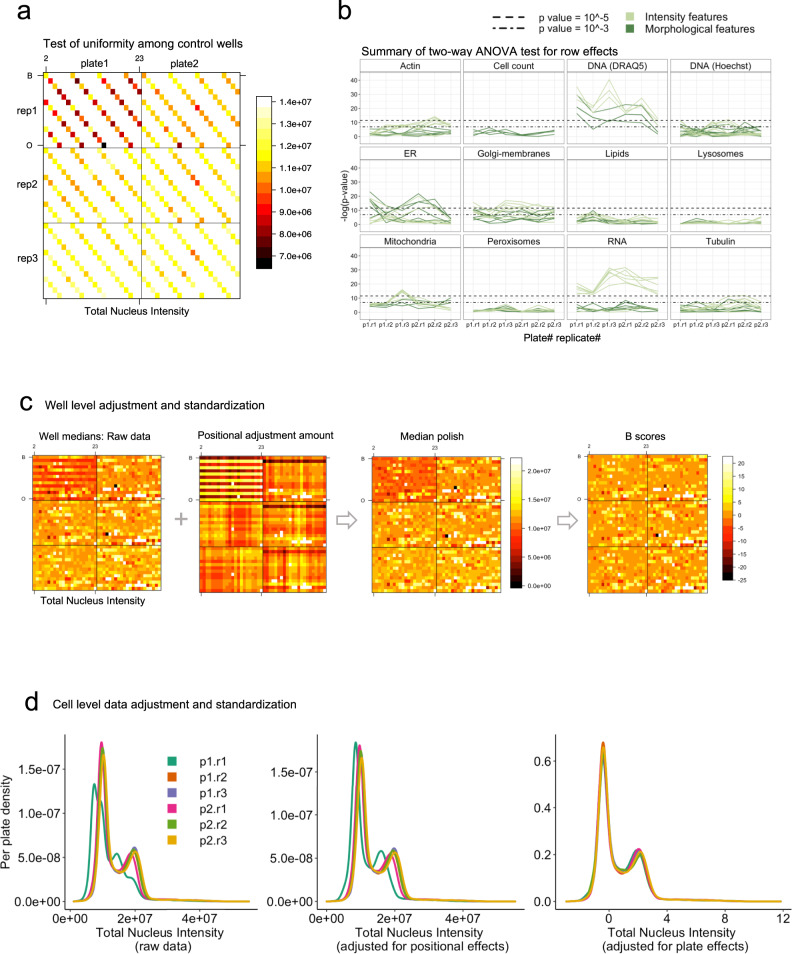
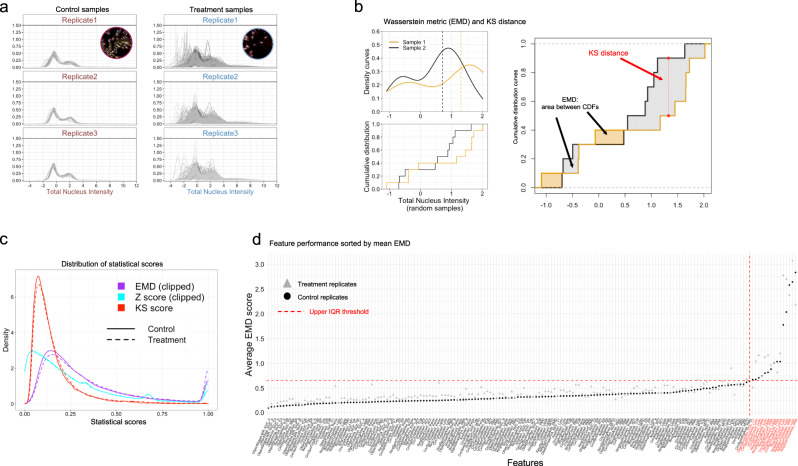
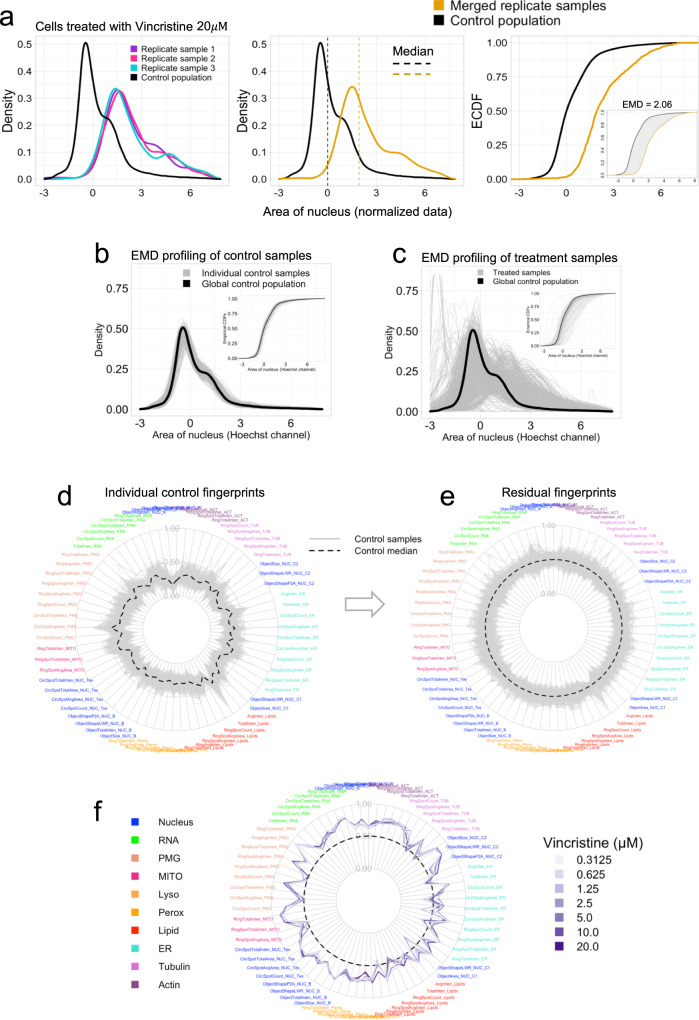
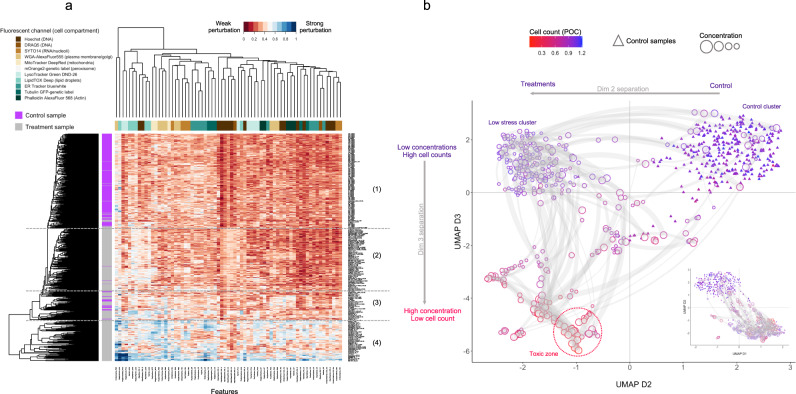
High-content screening (HCS) uses microscopy images to generate phenotypic profiles of cell morphological data in high-dimensional feature space. While HCS provides detailed cytological information at single-cell resolution, these complex datasets are usually aggregated into summary statistics that do not leverage patterns of biological variability within cell populations. Here we present a broad-spectrum HCS analysis system that measures image-based cell features from 10 cellular compartments across multiple assay panels. We introduce quality control measures and statistical strategies to streamline and harmonize the data analysis workflow, including positional and plate effect detection, biological replicates analysis and feature reduction. We also demonstrate that the Wasserstein distance metric is superior over other measures to detect differences between cell feature distributions. With this workflow, we define per-dose phenotypic fingerprints for 65 mechanistically diverse compounds, provide phenotypic path visualizations for each compound and classify compounds into different activity groups.
高内涵筛选 (HCS) 使用显微镜图像在高维特征空间中生成细胞形态数据的表型谱。虽然 HCS 提供了单细胞分辨率的详细细胞学信息,但这些复杂数据集通常被汇总为摘要统计数据,而这些数据无法利用细胞群体内的生物学变异性模式。在这里,我们提出了一个广谱 HCS 分析系统,该系统可从多个检测面板的 10 个细胞区室中测量基于图像的细胞特征。我们引入了质量控制措施和统计策略,以简化和协调数据分析工作流程,包括位置和板效应检测、生物学重复分析和特征减少。我们还证明,Wasserstein 距离度量优于其他度量标准,可用于检测细胞特征分布之间的差异。使用此工作流程,我们为 65 种具有不同机制的化合物定义了剂量相关的表型指纹,为每种化合物提供了表型路径可视化,并将化合物分类为不同的活性组。