Light, Nanomaterials & Nanotechnologies (L2n), CNRS-ERL 7004, Université de Technologie de Troyes, 10000 Troyes, France.
Phaselab Instrument SAS, 10325 Rosières-près-Troyes, France.
Biosensors (Basel). 2022 Dec 6;12(12):1132. doi: 10.3390/bios12121132.
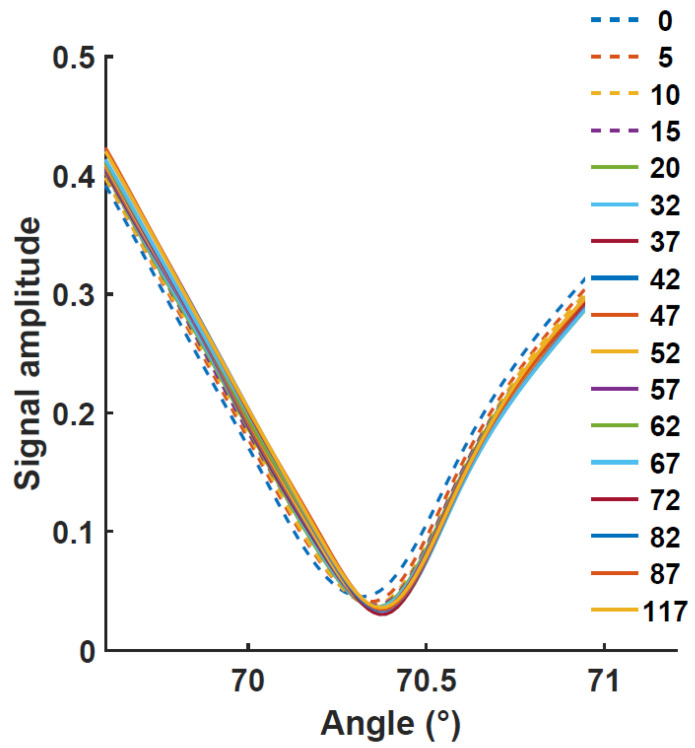
Surface plasmon resonance devices typically rely on the use of gold-coated surfaces, but the use of more abundant metals is desirable for the long-term development of plasmonic biochips. As a substitute for gold, thin copper films have been deposited on glass coverslips by thermal evaporation. As expected, these films immersed in a water solution initially exhibit an intense plasmonic resonance comparable to gold. However, without protection, an angle-resolved optical analysis shows a rapid degradation of the copper, characterized by a continuous angular shift of the plasmonic resonance curve. We show that copper films protected with a thin layer of aluminum oxide of a few nanometers can limit the oxidation rate for a sufficient time to perform some standard measurements. As the process is simple and compatible with the current biochip production technique, such an approach could pave the way for the production of alternative and more sustainable biochips.
表面等离子体共振(SPR)设备通常依赖于金覆盖表面的使用,但为了等离子体生物芯片的长期发展,使用更丰富的金属是可取的。作为金的替代品,通过热蒸发将薄铜膜沉积在玻璃盖玻片上。不出所料,这些浸入水溶液中的薄膜最初表现出与金相当的强烈等离子体共振。然而,如果没有保护,角分辨光学分析显示铜的快速降解,其特征是等离子体共振曲线的连续角位移。我们表明,用几纳米厚的氧化铝薄层保护的铜膜可以在足够长的时间内限制氧化速率,以进行一些标准测量。由于该过程简单并且与当前的生物芯片生产技术兼容,因此这种方法可能为替代和更可持续的生物芯片的生产铺平道路。