Elpeze Gönül, Usgu Günseli
Kalyon Medical Center, Hasan Kalyoncu University, 27010 Gaziantep, Turkey.
Department of Physical Therapy and Rehabilitation, Faculty of Health Sciences, Hasan Kalyoncu University, 27010 Gaziantep, Turkey.
Healthcare (Basel). 2022 Dec 8;10(12):2478. doi: 10.3390/healthcare10122478.
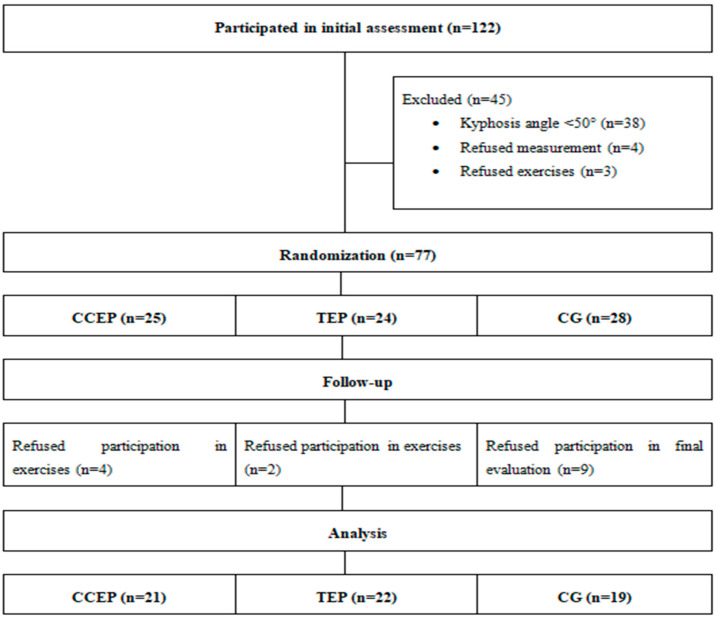
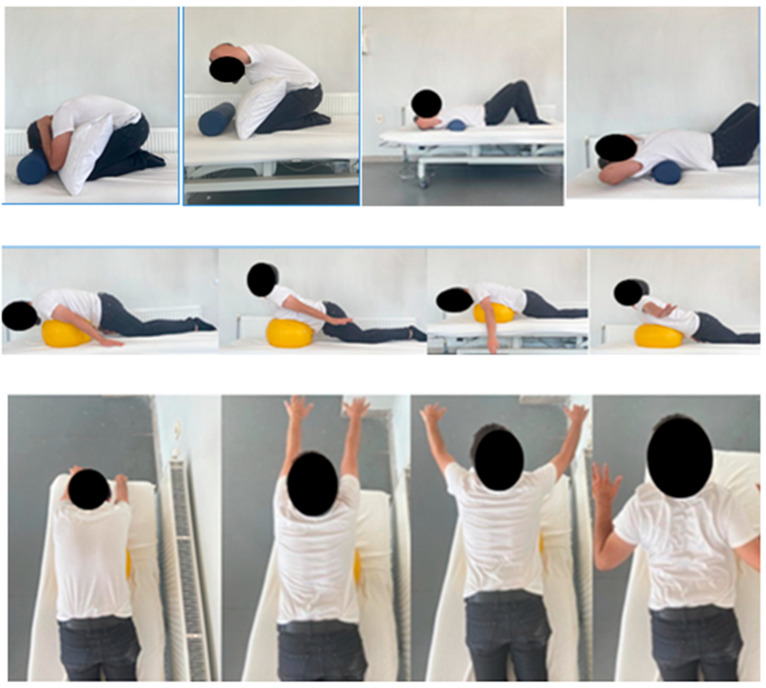
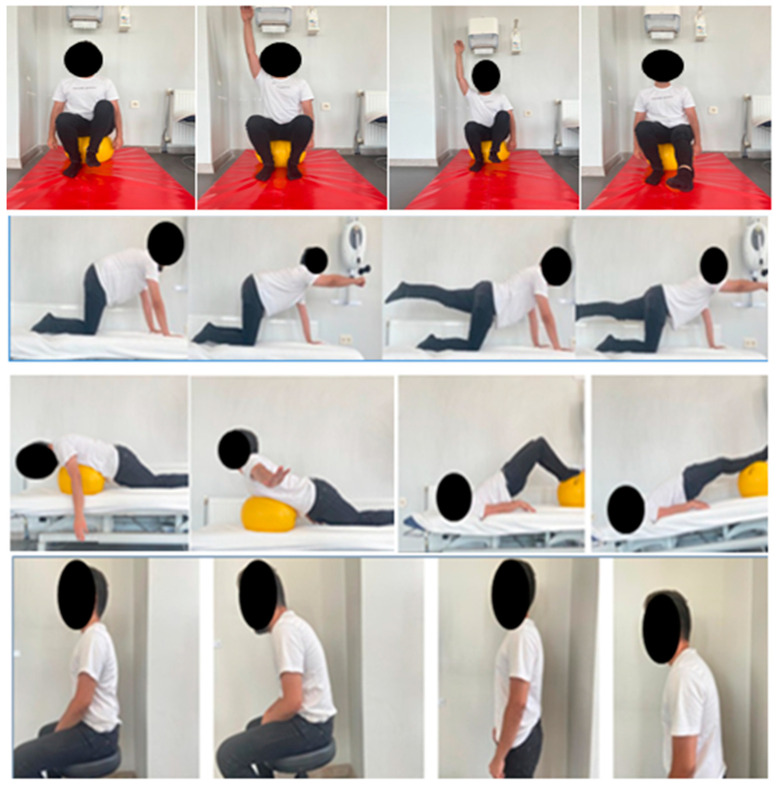
This study aimed to investigate the effects of a comprehensive corrective exercise program on the kyphosis angle and balance in kyphotic adolescents. A total of 62 male adolescents (between the ages of 10 and 18, mean BMI 21.7 kg/m2) with a thoracic kyphosis (TK) angle of ≥ 50° were divided into three groups using the simple randomization method: CCEP (comprehensive corrective exercise program), TEP (thoracic exercise program) and control group. The CCEP program consisted of corrective exercises plus postural perception training (PPT). Exercise programs were applied for 40−50 min, 3 days a week for 12 weeks. The kyphosis angle was measured using a flexible ruler, and balance was assessed using the Romberg index obtained from pedobarography. After training, a highly significant reduction in the kyphosis angle was observed in the CCEP and TEP groups (p < 0.001). Comparison among the groups showed a greater reduction in the kyphosis angle in the CCEP group (p < 0.020). Postural perception improved in the CCEP group versus other groups (p < 0.001). Improvement of the Romberg index (balance) was found only in the CCEP group upon within-group comparison (p < 0.001), with no difference among the groups (p > 0.05). The use of postural perception in combination with corrective exercise programs for thoracic kyphosis represents a comprehensive approach, and PPT can increase the effectiveness of the intervention.
本研究旨在调查一项综合矫正运动计划对脊柱后凸青少年的脊柱后凸角度和平衡能力的影响。共有62名年龄在10至18岁之间(平均BMI为21.7kg/m²)、胸椎后凸(TK)角度≥50°的男性青少年,采用简单随机化方法分为三组:CCEP组(综合矫正运动计划组)、TEP组(胸椎运动计划组)和对照组。CCEP计划包括矫正运动加姿势感知训练(PPT)。运动计划每周进行3天,每次40 - 50分钟,共持续12周。使用软尺测量脊柱后凸角度,并通过足底压力测量获得的罗姆伯格指数评估平衡能力。训练后,CCEP组和TEP组的脊柱后凸角度均显著降低(p < 0.001)。组间比较显示,CCEP组的脊柱后凸角度降低幅度更大(p < 0.020)。与其他组相比,CCEP组的姿势感知能力有所改善(p < 0.001)。组内比较发现,仅CCEP组的罗姆伯格指数(平衡能力)有所改善(p < 0.001),组间差异无统计学意义(p > 0.05)。将姿势感知与胸椎后凸矫正运动计划相结合是一种综合方法,且PPT可提高干预效果。