Gonçalves Micael F M, Fernandes Ângela Rita, Rodrigues Acácio Gonçalves, Lisboa Carmen
Division of Microbiology, Department of Pathology, Faculty of Medicine, University of Porto, 4200-319 Porto, Portugal.
CINTESIS/RISE, Center for Health Technology and Services Research/Rede de Investigação em Saúde, Faculty of Medicine, University of Porto, 4200-319 Porto, Portugal.
Microorganisms. 2022 Nov 22;10(12):2312. doi: 10.3390/microorganisms10122312.
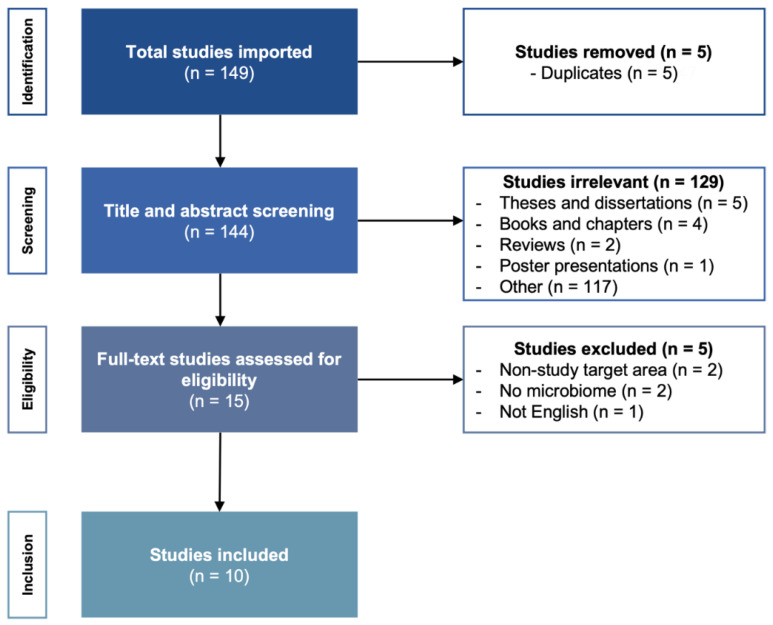
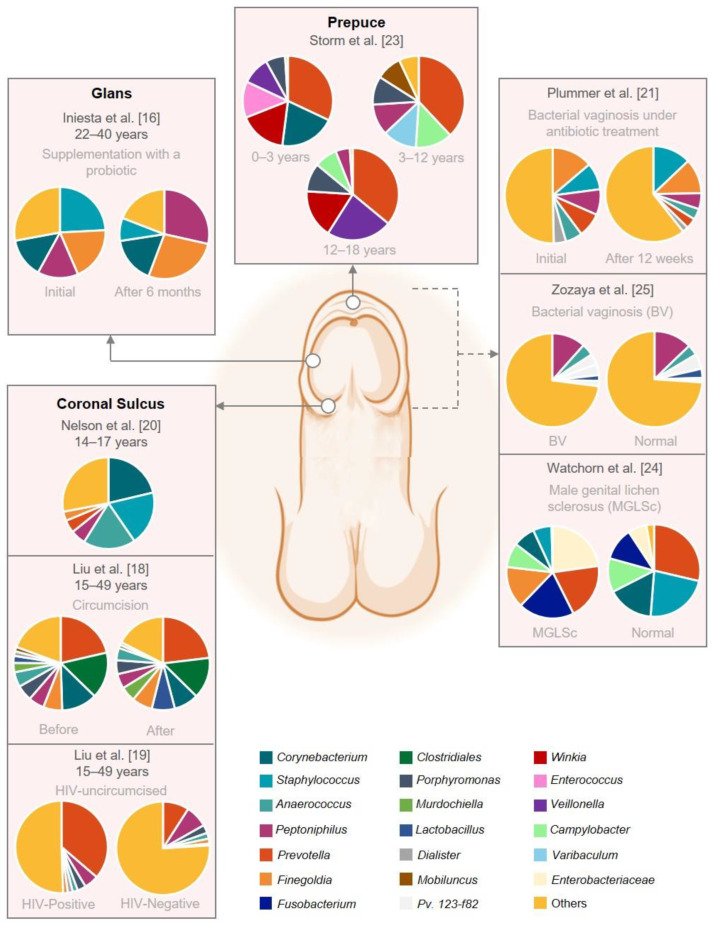
The human body represents a complex and diverse reservoir of microorganisms. Although the human microbiome remains poorly characterized and understood, it should not be underestimated, since recent studies have highlighted its importance in health. This is especially evident when considering microbiota in the male reproductive system, responsible for men’s fertility and sexual behavior. Therefore, the aim of this systematic review is to provide an overview of the microbial communities of the healthy male genital mucosa and its role in disease. This study was performed according to the Preferred Reporting Items for Systematic Reviews and Meta-Analyses (PRISMA) guidelines. The search was limited to the English language and studies published until August 2022 that included culture-independent techniques for microbiome characterization in male genital mucosa. Ten articles were included. The bacterial composition of the male genital mucosa consists of several genera including Prevotella, Finegoldia, Peptoniphilus, Staphylococcus, Corynebacterium, and Anaerococcus, suggesting that the male genital microbiome composition shows similarities with the adjacent anatomical sites and is related with sexual intercourse. Moreover, male circumcision appears to influence the penile microbiome. Despite the lack of knowledge on the male genital mucosa microbiome in disease, it was reported that Staphylococcus warneri and Prevotella bivia were associated with balanoposthitis, whereas Enterobacteriaceae, Prevotella, and Fusobacterium were more abundant in male genital lichen sclerosus. The limited data and paucity of prospective controlled studies highlight the need for additional studies and established criteria for sampling methods and the microbiome assay procedure. Such a consensus would foster the knowledge about the composition of the genital microbiome of healthy males and its role in disease.
人体是一个复杂多样的微生物库。尽管人类微生物组的特征和了解程度仍然很低,但不应低估它,因为最近的研究突出了其在健康方面的重要性。在考虑男性生殖系统中的微生物群时,这一点尤为明显,这些微生物群与男性的生育能力和性行为有关。因此,本系统综述的目的是概述健康男性生殖黏膜的微生物群落及其在疾病中的作用。本研究是根据系统评价和荟萃分析的首选报告项目(PRISMA)指南进行的。检索仅限于英文文献以及截至2022年8月发表的研究,这些研究包括用于男性生殖黏膜微生物组特征分析的非培养技术。共纳入10篇文章。男性生殖黏膜的细菌组成包括多个属,如普雷沃菌属、费氏球菌属、嗜胨菌属、葡萄球菌属、棒状杆菌属和厌氧球菌属,这表明男性生殖微生物组的组成与相邻解剖部位相似,且与性交有关。此外,男性包皮环切术似乎会影响阴茎微生物组。尽管对疾病中男性生殖黏膜微生物组的了解不足,但据报道,沃氏葡萄球菌和二路普雷沃菌与龟头炎有关,而肠杆菌科、普雷沃菌属和梭杆菌属在男性硬化性苔藓中更为丰富。有限的数据和前瞻性对照研究的匮乏凸显了开展更多研究以及建立采样方法和微生物组检测程序标准的必要性。这样的共识将促进对健康男性生殖微生物组组成及其在疾病中作用的了解。