Centre for Pharmacoepidemiology and Drug Safety, Division of Pharmacy and Optometry, School of Health Sciences, Faculty of Biology, Medicine and Health, The University of Manchester, Stopford Building, Oxford Road, 1stFloor Stopford Building, Manchester, M13 9PT, UK.
Manchester Centre for Health Economics, Faculty of Biology, Medicine and Health, The University of Manchester, Oxford Road, Manchester, M13 9PL, UK.
Health Qual Life Outcomes. 2022 Dec 23;20(1):169. doi: 10.1186/s12955-022-02067-w.
An increasing number of postmenopausal women are diagnosed with breast cancer at an older age (≥ 70 years). There is a lack of synthesised health utility data to support decision-making for managing breast cancer in this older population. This study aimed to identify the availability of, and the subsequent impact of age on, health state utility values (HSUVs) measured by the EQ-5D for older women with early-stage breast cancer.
This systematic review identified EQ-5D (3L or 5L version) HSUVs for postmenopausal women with early-stage breast cancer. Studies were identified from a previous systematic review (inception to 2009) and an electronic database search (Medline and Embase; 2009 to September 2021). Mean HSUVs were summarised by health state. Quality appraisal was performed on studies reporting HSUVs for older ages (≥ 70 years). Multivariable meta-regression assessed the association between HSUVs and age, health state, treatments received, and time of measuring the utility values (greater or less than one year post-treatment).
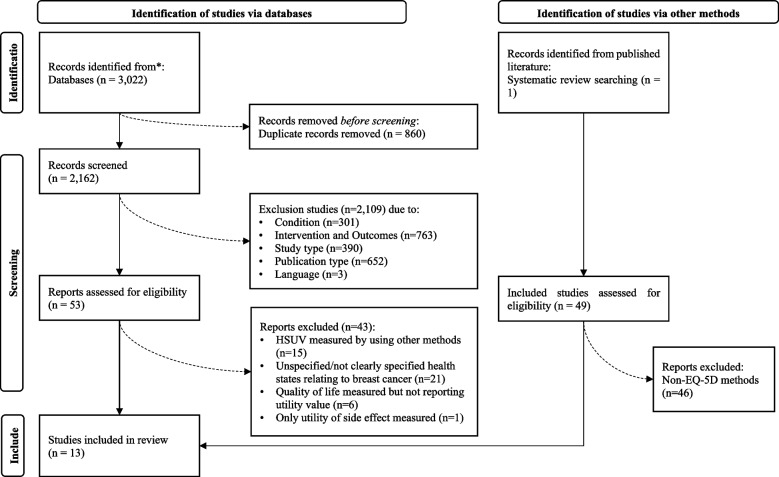
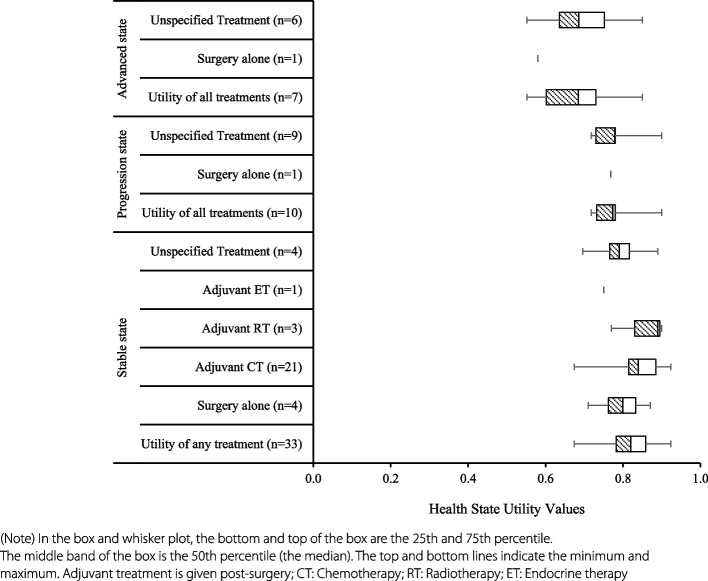
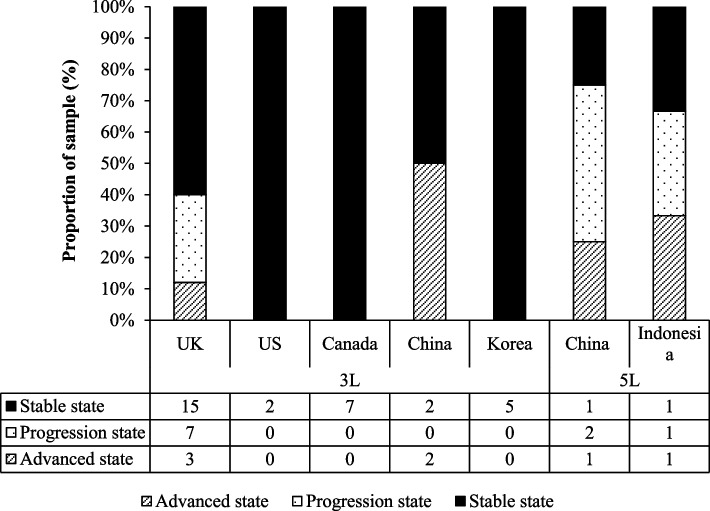
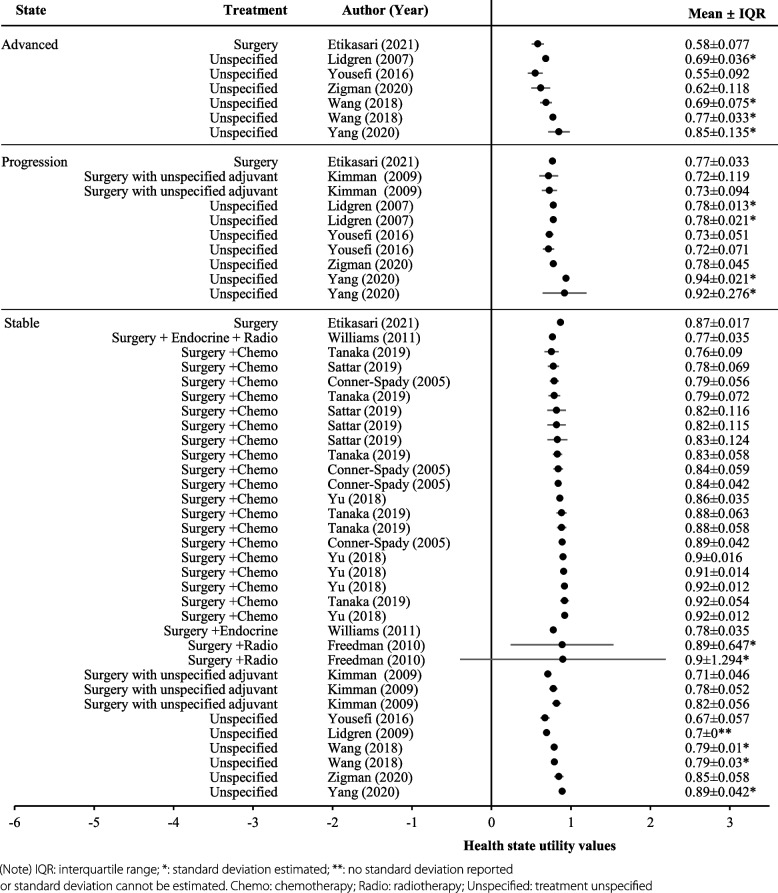
Fifty EQ-5D HSUVs were identified from 13 studies. Mean HSUVs decreased as health state worsened: from the stable (mean=0.83) to progression (mean=0.79) and advanced (mean=0.68) states. Two studies reported six HSUVs estimated from the sample of women with a mean age ≥ 70. Meta-regression model fit improved by including age as an independent variable and attenuated the estimated utility decrements associated with worse health states. Utility decrements for the progression and advanced states were -0.052 (95%CI: -0.097, -0.007) and -0.143 (95%CI: -0.264, -0.022) respectively. The breast cancer-specific utility decrement associated with a one-year increase in age was -0.001 (95%CI: -0.004, 0.002).
Relevant and accurate HSUVs are essential to help support decision-making about the most effective and cost-effective ways to manage early-stage breast cancer in older women. Age has a vital role in determining health utility values in this population. This study provides analysts and decision-makers with HSUVs and utility decrements that reflect the disease process in this older population.
越来越多的绝经后女性在年龄较大(≥70 岁)时被诊断出患有乳腺癌。缺乏针对这一年龄段人群的综合健康效用数据来支持乳腺癌管理决策。本研究旨在确定早期乳腺癌老年女性的 EQ-5D(3L 或 5L 版本)健康状态效用值(HSUVs)的可用性及其年龄的后续影响。
本系统评价确定了绝经后早期乳腺癌女性的 EQ-5D(3L 或 5L 版本)HSUVs。研究从先前的系统评价(成立至 2009 年)和电子数据库检索(Medline 和 Embase;2009 年至 2021 年 9 月)中确定。根据健康状况总结了平均 HSUVs。对报告≥70 岁年龄 HSUVs 的研究进行了质量评估。多变量荟萃回归评估了 HSUVs 与年龄、健康状况、接受的治疗以及测量效用值的时间(治疗后 1 年以上或以下)之间的关联。
从 13 项研究中确定了 50 个 EQ-5D HSUVs。HSUVs 随着健康状况的恶化而降低:从稳定(平均=0.83)到进展(平均=0.79)和晚期(平均=0.68)状态。两项研究报告了来自平均年龄≥70 岁的女性样本中估计的六个 HSUVs。将年龄作为自变量纳入模型后,荟萃回归模型拟合得到改善,并减轻了与较差健康状况相关的估计效用降低。进展和晚期状态的效用降低分别为-0.052(95%CI:-0.097,-0.007)和-0.143(95%CI:-0.264,-0.022)。与一年龄增加相关的乳腺癌特异性效用降低为-0.001(95%CI:-0.004,0.002)。
相关且准确的 HSUVs 对于帮助决策制定治疗绝经后老年女性早期乳腺癌的最有效和最具成本效益的方法至关重要。年龄在该人群中确定健康效用值方面起着至关重要的作用。本研究为分析人员和决策者提供了反映该老年人群疾病过程的 HSUVs 和效用降低。