Botany and Microbiology Department, Faculty of Science, Zagazig University, Zagazig, 44519, Egypt.
BMC Plant Biol. 2022 Dec 29;22(1):617. doi: 10.1186/s12870-022-03965-3.
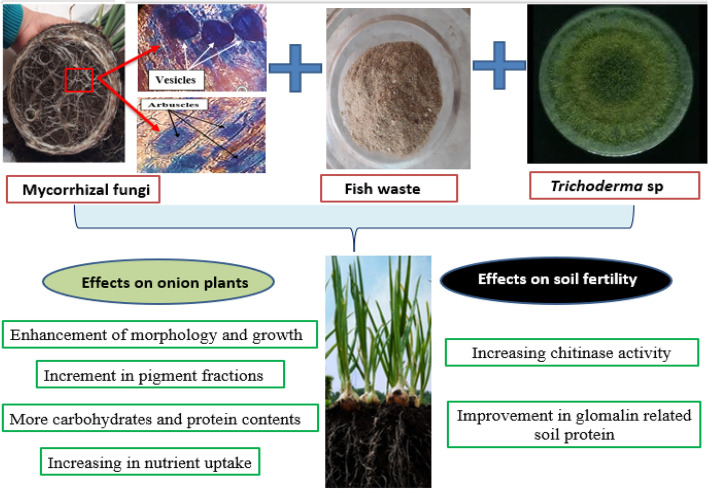
The increase in the human consumption of fish results in the production of organic fish wastes (FW). For enhanced soil fertility and plant growth at a lower cost and without the negative impacts of chemical fertilizers, these wastes could be employed as a valuable organic fertilizer. To determine the synergistic bio-efficacy of Trichoderma sp. and arbuscular mycorrhizal (AM) fungi in stimulating the morphological and physiological characteristics of FW-fertilized Alium cepa, as well as to investigate their involvement in boosting soil fertility, the current study was carried out. Overall, eight treatments were applied as follows: AM, Trichoderma sp., AM + Trichoderma sp., FW, AM + FW, Trichoderma sp. + FW, AM + Trichoderma sp. + FW, and control. Growth and physiological assessments of onion plants were taken after 8 weeks from FW application.
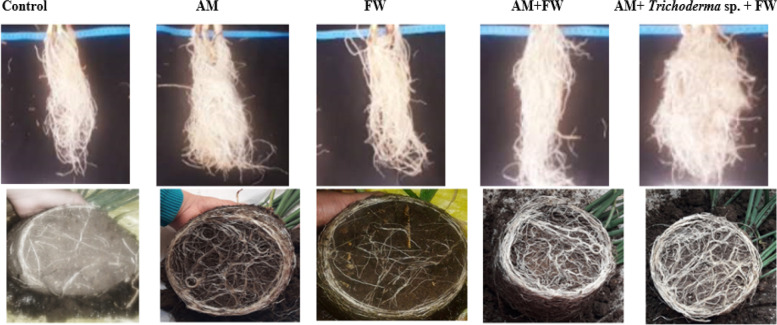
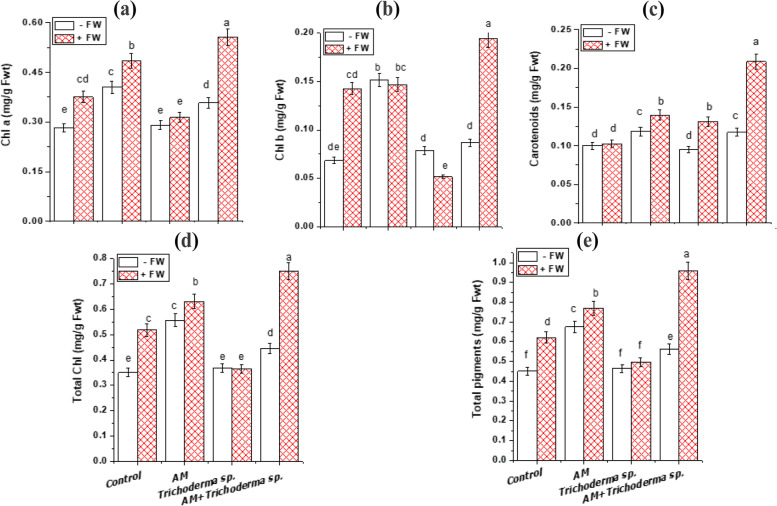
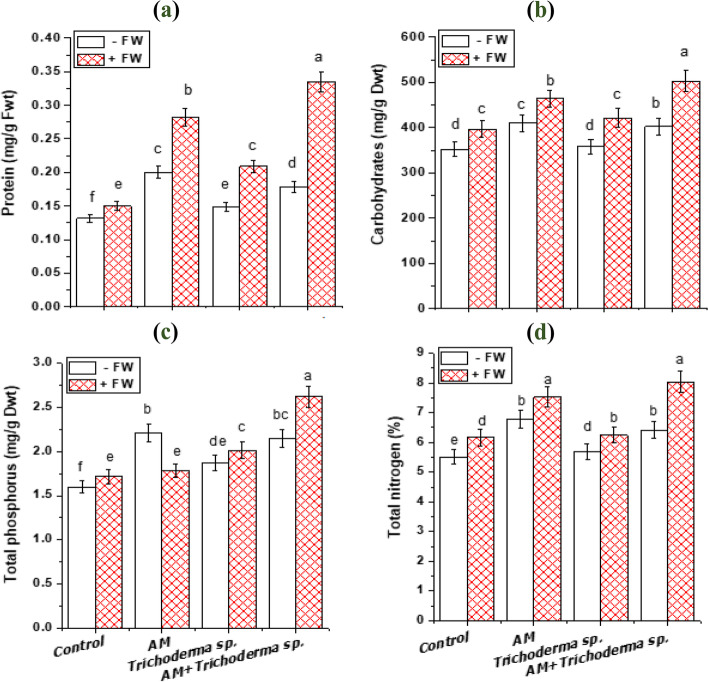
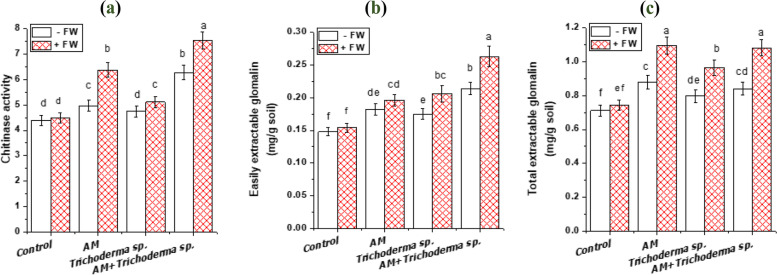
Our results showed that FW application combined with AM fungi and Trichoderma sp. inoculations increased aggregate stability of the soil (glomalin content) and soil chitinase activity. Moreover, using the bio-inoculations along with FW amendments significantly (p < 0.05) improved the photosynthetic pigments, protein, carbohydrates, and nutrients content of onion plants. It's interesting to note that the triple interaction of AM + Trichoderma sp. + FW led to the greatest increase in plant height, root length, number of leaves, and leaf area as well as total fresh and dry weights of shoots and roots. Besides, AM fungal colonization was at its highest percentage with Trichoderma sp. inoculation, although this percentage decreased with FW addition.
We concluded that the combined treatments of AM fungi and Trichoderma sp. along with FW application to the soil can be proposed as a successful strategy for plant performance in nutrient-deficient soils as both fungal inoculants are capable of degrading these wastes and converting them into manure suitable for farming so plants can uptake the minerals effortlessly.
人类对鱼类的消费增加导致了有机鱼废物(FW)的产生。为了在降低成本的同时提高土壤肥力和促进植物生长,并且避免化肥的负面影响,可以将这些废物用作有价值的有机肥料。为了确定木霉(Trichoderma sp.)和丛枝菌根(AM)真菌在刺激 FW 施肥洋葱(Allium cepa)的形态和生理特性方面的协同生物功效,并研究它们在提高土壤肥力方面的作用,进行了本研究。总体而言,应用了以下 8 种处理方法:AM、木霉、AM+木霉、FW、AM+FW、木霉+FW、AM+木霉+FW 和对照。从 FW 施用后 8 周开始对洋葱植株的生长和生理进行评估。
我们的结果表明,FW 与 AM 真菌和木霉接种联合应用增加了土壤团聚体稳定性(几丁质酶活性)和土壤中的 Glomalin 含量。此外,使用生物接种和 FW 改良剂可显著(p<0.05)提高洋葱植株的光合色素、蛋白质、碳水化合物和养分含量。有趣的是,AM+木霉+FW 的三重相互作用导致植株高度、根长、叶片数和叶面积以及地上部和根部总鲜重和干重的最大增加。此外,虽然随着 FW 的添加,真菌的定殖百分比会降低,但木霉接种时 AM 真菌的定殖百分比最高。
我们得出结论,AM 真菌和木霉与 FW 联合应用于土壤可以作为一种成功的策略,用于在营养缺乏的土壤中提高植物的性能,因为这两种真菌接种剂都能够降解这些废物,并将其转化为适合农业的肥料,使植物能够轻松吸收矿物质。