Research Center for Radioisotope, Radiopharmaceutical, and Biodosimetry Technology, Research Organization for Nuclear Energy, National Research and Innovation Agency, Jakarta, Indonesia.
esearch Center for Safety, Metrology, and Nuclear Quality Technology, Research Organization for Nuclear Energy, National Research and Innovation Agency, Indonesia.
Asian Pac J Cancer Prev. 2022 Dec 1;23(12):4005-4012. doi: 10.31557/APJCP.2022.23.12.4005.
The aim of this study was to assess the effect of radiation exposure, human 8-oxoguanine DNA N-glycosylase-1 (hOGG1) exon 7 genetic polymorphism and confounding factors on DNA damage response.
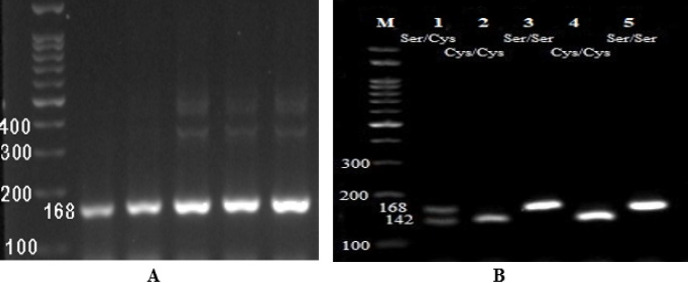
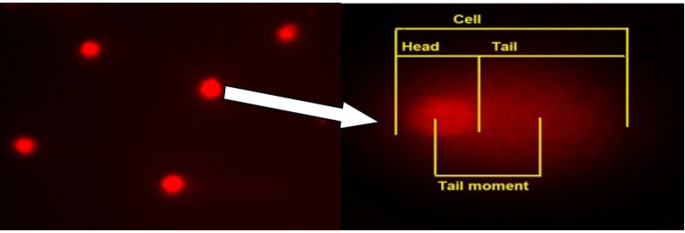
Polymerase Chain Reaction-Restriction Fragment Length Polymorphism (PCR-RFLP) and alkaline Comet assay method were applied to determine the hOGG1 genetic polymorphisms and DNA damage response. A total of 80 participants were enrolled in this study, consisting of 40 radiation-exposed workers as a case group and 40 non-radiation workers as a control group.
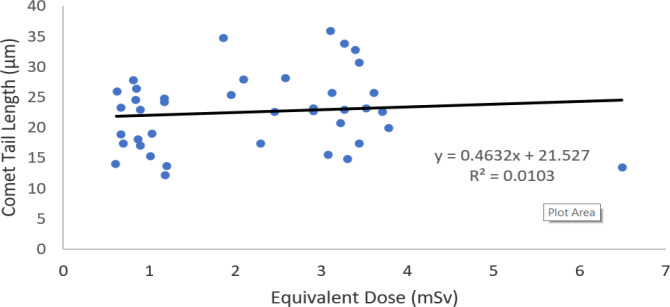
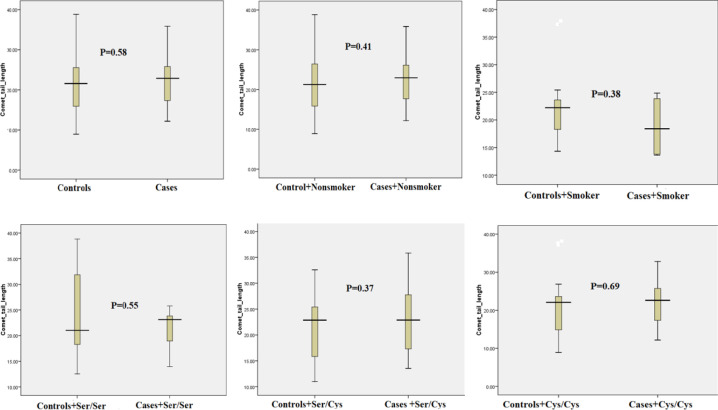
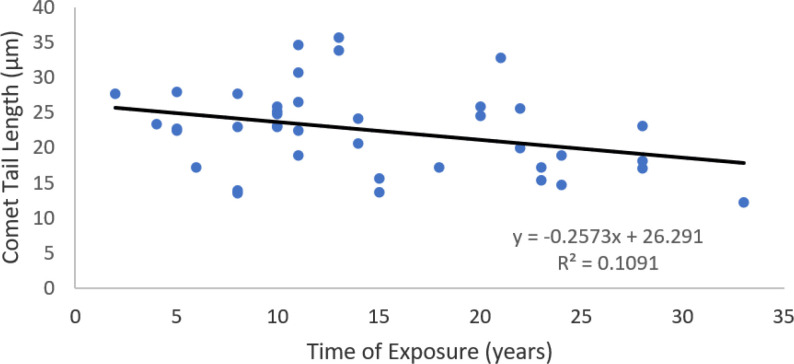
The genotypes frequencies for controls were Ser/Ser (35%), Ser/Cys (32.5%), and Cys/Cys (32.5%), with frequencies of alleles being 326Ser (0.52) and 326Cys (0.48), whereas the genotypes frequencies for radiation-exposed workers (cases group) were Ser/Ser (17.5%), Ser/Cys (57.5%), and Cys/Cys (25%), with frequencies of alleles being 326Ser (0.46) and 326Cys (0.54). The results indicated that DNA damage response were not significantly higher in the exposed workers than in controls (22.55 ± 6.02 versus 21.72 ± 7.14; P=0.58). The time of exposure has a significantly negative correlation with comet tail length value among radiation workers. In addition, it was found that the DNA damage response was strongly associated with age and time of exposure with a decrease of 0.6 percent (P-value: 0.008) and 0.58 percent (P-value: 0.009), respectively. Whereas gender, smoking habit, and equivalent dose were not correlated with DNA damage.
The single-nucleotide polymorphism of hOGG1 exon 7 (rs1052133) demonstrated no association with the extent of DNA damage in radiation-exposed workers.
本研究旨在评估辐射暴露、人 8-氧鸟嘌呤 DNA N-糖基化酶-1(hOGG1)外显子 7 遗传多态性和混杂因素对 DNA 损伤反应的影响。
应用聚合酶链反应-限制性片段长度多态性(PCR-RFLP)和碱性彗星试验方法检测 hOGG1 遗传多态性和 DNA 损伤反应。共纳入 80 名研究对象,其中 40 名辐射暴露工人为病例组,40 名非辐射工人为对照组。
对照组的基因型频率分别为 Ser/Ser(35%)、Ser/Cys(32.5%)和 Cys/Cys(32.5%),等位基因频率分别为 326Ser(0.52)和 326Cys(0.48);而辐射暴露工人(病例组)的基因型频率分别为 Ser/Ser(17.5%)、Ser/Cys(57.5%)和 Cys/Cys(25%),等位基因频率分别为 326Ser(0.46)和 326Cys(0.54)。结果显示,暴露组工人的 DNA 损伤反应并不显著高于对照组(22.55±6.02 比 21.72±7.14;P=0.58)。此外,还发现辐射工人的暴露时间与彗星尾长值呈显著负相关。此外,还发现 DNA 损伤反应与年龄和暴露时间显著相关,分别降低了 0.6%(P 值:0.008)和 0.58%(P 值:0.009)。而性别、吸烟习惯和当量剂量与 DNA 损伤无关。
hOGG1 外显子 7(rs1052133)的单核苷酸多态性与辐射暴露工人的 DNA 损伤程度无关。