Cacciamani Giovanni E, Sanford Daniel I, Chu Timothy N, Kaneko Masatomo, De Castro Abreu Andre L, Duddalwar Vinay, Gill Inderbir S
USC Institute of Urology and Catherine and Joseph Aresty Department of Urology, Keck School of Medicine, University of Southern California, Los Angeles, CA, USA.
Artificial Intelligence Center at USC Urology, USC Institute of Urology, University of Southern California, Los Angeles, CA, USA.
Eur Urol Open Sci. 2022 Dec 19;48:14-16. doi: 10.1016/j.euros.2022.09.024. eCollection 2023 Feb.
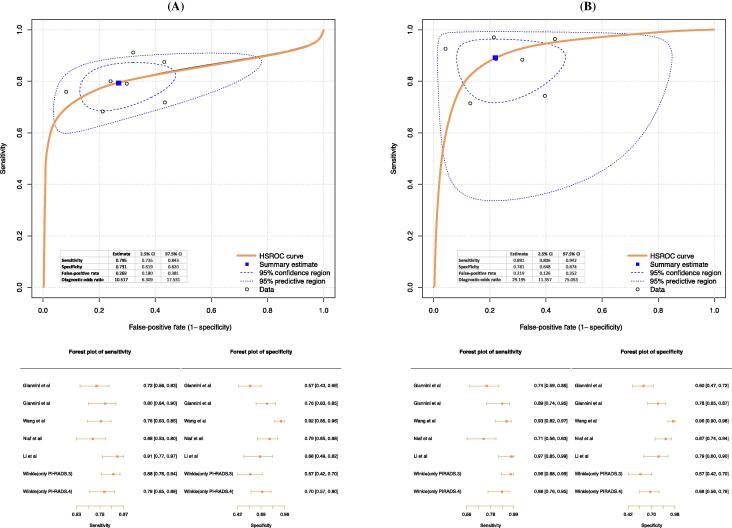
Artificial intelligence (AI) is here to stay and will change health care as we know it. The availability of big data and the increasing numbers of AI algorithms approved by the US Food and Drug Administration together will help in improving the quality of care for patients and in overcoming human fatigue barriers. In oncology practice, patients and providers rely on the interpretation of radiologists when making clinical decisions; however, there is considerable variability among readers, and in particular for prostate imaging. AI represents an emerging solution to this problem, for which it can provide a much-needed form of standardization. The diagnostic performance of AI alone in comparison to a combination of an AI framework and radiologist assessment for evaluation of prostate imaging has yet to be explored. Here, we compare the performance of radiologists alone versus a combination of radiologists aided by a modern computer-aided diagnosis (CAD) AI system. We show that the radiologist-CAD combination demonstrates superior sensitivity and specificity in comparison to both radiologists alone and AI alone. Our findings demonstrate that a radiologist + AI combination could perform best for detection of prostate cancer lesions. A hybrid technology-human system could leverage the benefits of AI in improving radiologist performance while also reducing physician workload, minimizing burnout, and enhancing the quality of patient care.
Our report demonstrates the potential of artificial intelligence (AI) for improving the interpretation of prostate scans. A combination of AI and evaluation by a radiologist has the best performance in determining the severity of prostate cancer. A hybrid system that uses both AI and radiologists could maximize the quality of care for patients while reducing physician workload and burnout.
人工智能(AI)已成为现实,并将改变我们所熟知的医疗保健领域。大数据的可用性以及美国食品药品监督管理局批准的人工智能算法数量的不断增加,将共同有助于提高患者护理质量并克服人为疲劳障碍。在肿瘤学实践中,患者和医疗服务提供者在做出临床决策时依赖放射科医生的解读;然而,不同的阅片者之间存在很大差异,尤其是在前列腺成像方面。人工智能是解决这一问题的新兴方案,它能够提供急需的标准化形式。单独使用人工智能与将人工智能框架和放射科医生评估相结合用于评估前列腺成像的诊断性能尚未得到探索。在此,我们比较了单独的放射科医生与由现代计算机辅助诊断(CAD)人工智能系统辅助的放射科医生组合的性能。我们发现,与单独的放射科医生和单独的人工智能相比,放射科医生 - CAD组合具有更高的敏感性和特异性。我们的研究结果表明,放射科医生 + 人工智能组合在检测前列腺癌病变方面表现最佳。混合技术 - 人类系统可以利用人工智能改善放射科医生的性能方面的优势,同时还能减轻医生工作量、减少职业倦怠并提高患者护理质量。
我们的报告展示了人工智能(AI)在改善前列腺扫描解读方面的潜力。人工智能与放射科医生评估相结合在确定前列腺癌严重程度方面表现最佳。同时使用人工智能和放射科医生的混合系统可以在减轻医生工作量和职业倦怠的同时,最大限度地提高患者护理质量。