Shandong University of Traditional Chinese Medicine, Jinan, China.
Neck, Shoulder, Waist and Leg Pain Hospital Affiliated to Shandong First Medical University, Jinan, China.
Eur J Med Res. 2023 Jan 4;28(1):6. doi: 10.1186/s40001-022-00968-6.
Oligoasthenospermia (OAT) is the most common cause of male infertility, and the annual incidence of the disease continues to increase due to changing lifestyle habits, increased work pressure and increased environmental pollution. A variety of nonpharmacological therapies have been reported to be effective for treating OAT; however, there is a lack of direct evidence comparing these different nonpharmacological therapies. Therefore, the optimal strategy has yet to be identified.
A network meta-analysis was performed to evaluate the efficacy and safety of nonpharmacological treatments for OAT, thus providing an evidence-based medical reference for the clinical treatment of oligoasthenospermia.
The Web of Science, Cochrane Library, Embase, PubMed, Weipu (VIP), Wan Fang Data, China National Knowledge Infrastructure (CNKI), and China Biomedical Literature (CBM) databases were searched from inception to April 2022 to identify randomized controlled trials (RCTs) that examined nonpharmacological treatments for oligozoospermia. Grey literature was also searched. Studies that met the quality criteria were analysed using Stata 16.0 and Review Manager 5.4 software.
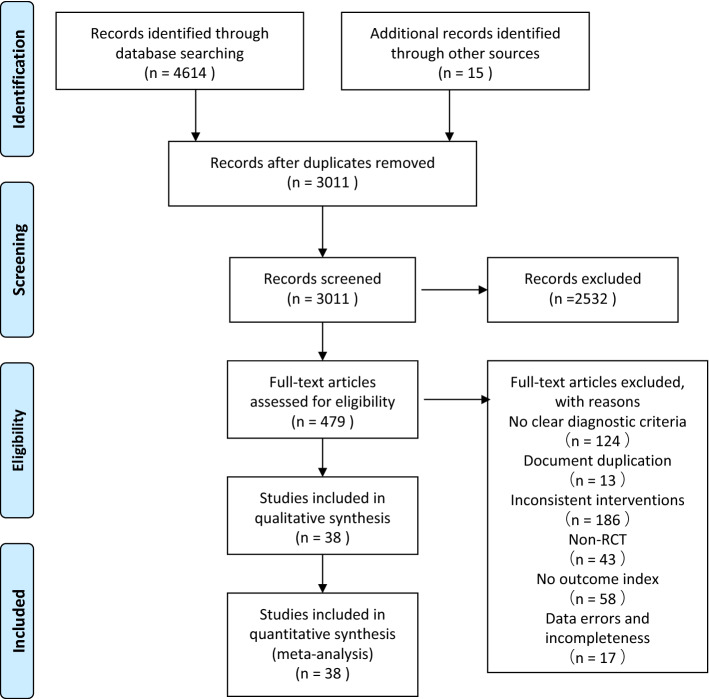
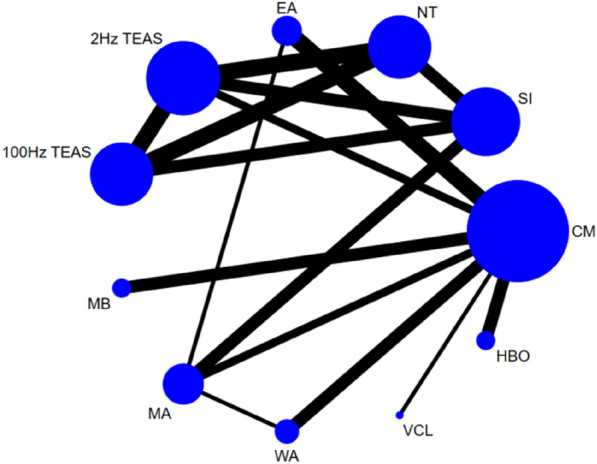
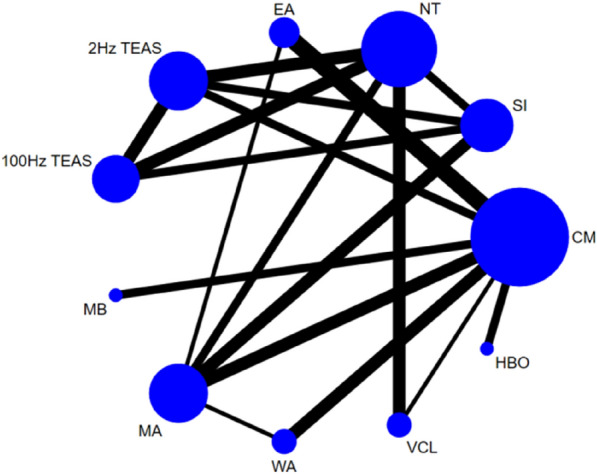
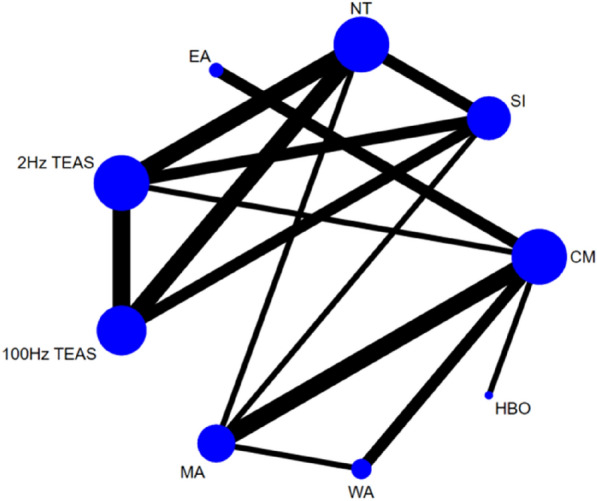
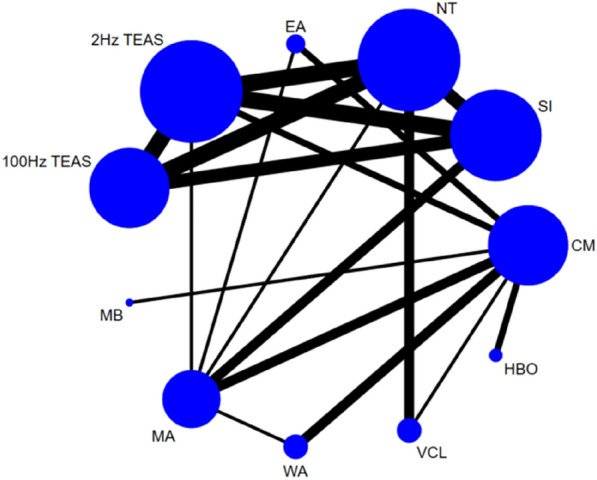
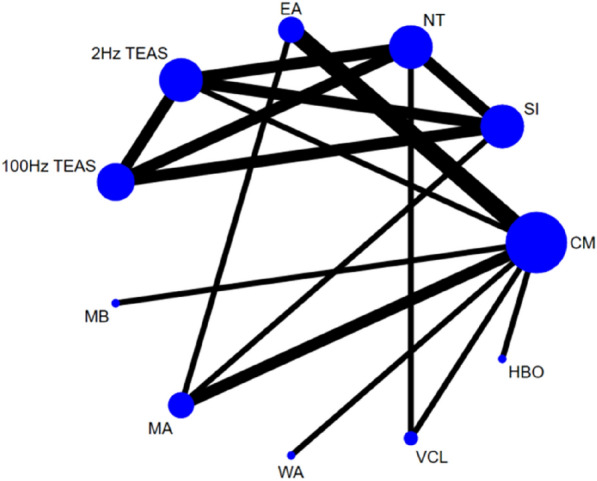
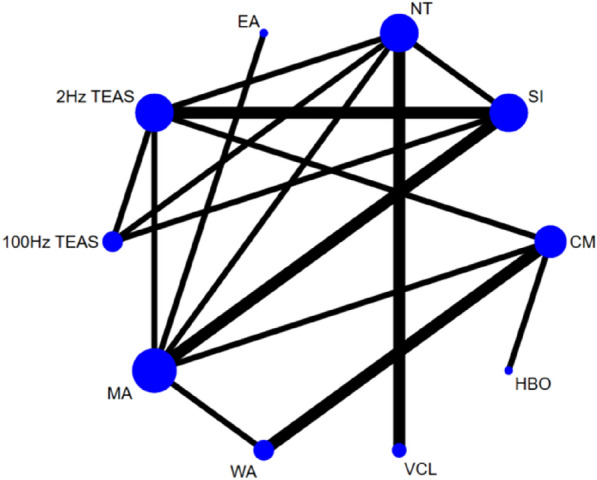
A total of 4629 publications were initially retrieved; ultimately, 38 RCTs were analysed, including 8 nonpharmacological therapies and 3080 patients. Each intervention outperformed the sham intervention and no treatment approaches in terms of improved efficacy. In terms of improved total effective rate and sperm concentration, warming acupuncture may be the most effective treatment (SUCRA = 80.1% and 93.4%, respectively). Electroacupuncture perhaps resulted in the best improvement in sperm motility a% and a + b% (SUCRA = 96.6% and 82.0%, respectively). In terms of the incidence of adverse reactions, the three safest interventions probably were no treatment, warming acupuncture, and sham intervention (SUCRA = 88.0%, 68.8% and 62.9%, respectively). In terms of improving the reproductive hormones FSH, LH, and T, the best interventions perhaps were hyperbaric oxygen, 2 Hz TEAS, and electroacupuncture (SUCRA = 85.1%, 96.8% and 99.4%, respectively).
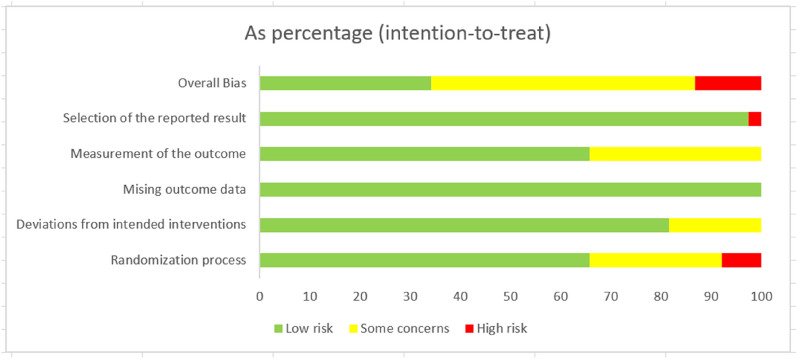
Nonpharmacological treatments for oligoasthenospermia have good clinical efficacy. Warm acupuncture and electroacupuncture have better overall efficacy and safety. These treatment approaches can be recommended based on the actual situation. If a patient is complicated with varicoceles, they should be removed before symptomatic treatment. Due to the limitations of the quality of the included studies, the findings need to be further validated.
少弱精子症(OAT)是男性不育症最常见的原因,由于生活方式习惯的改变、工作压力的增加和环境污染的增加,该病的年发病率持续上升。已报道多种非药物疗法对治疗 OAT 有效;然而,缺乏直接比较这些不同非药物疗法的证据。因此,尚未确定最佳策略。
进行网络荟萃分析以评估非药物治疗 OAT 的疗效和安全性,从而为少弱精子症的临床治疗提供循证医学参考。
从建库至 2022 年 4 月,检索 Web of Science、Cochrane 图书馆、Embase、PubMed、维普(VIP)、万方数据、中国知网(CNKI)和中国生物医学文献(CBM)数据库,以确定检查少精子症非药物治疗的随机对照试验(RCT)。还检索了灰色文献。使用 Stata 16.0 和 Review Manager 5.4 软件分析符合质量标准的研究。
最初检索到 4629 篇文献;最终分析了 38 项 RCT,包括 8 种非药物疗法和 3080 名患者。每种干预措施在改善疗效方面均优于假干预和无治疗方法。在提高总有效率和精子浓度方面,温针灸可能是最有效的治疗方法(SUCRA=80.1%和 93.4%)。电针对精子活动率 a%和 a+b%的改善可能最好(SUCRA=96.6%和 82.0%)。在不良反应发生率方面,无治疗、温针灸和假干预可能是最安全的三种干预措施(SUCRA=88.0%、68.8%和 62.9%)。在改善生殖激素 FSH、LH 和 T 方面,高压氧、2 Hz TEAS 和电针可能是最佳干预措施(SUCRA=85.1%、96.8%和 99.4%)。
非药物治疗少弱精子症具有良好的临床疗效。温针灸和电针具有更好的整体疗效和安全性。可根据实际情况推荐这些治疗方法。如果患者伴有精索静脉曲张,应在对症治疗前进行手术切除。由于纳入研究的质量限制,需要进一步验证这些发现。