Postgraduate Program in Physical Education, Federal University of Pelotas, Pelotas, Brazil.
Neuroscience and Physical Activity Research Group, Federal University of Pelotas, Pelotas, Brazil.
BMC Public Health. 2023 Jan 6;23(1):44. doi: 10.1186/s12889-022-14932-w.
To evaluate the short-term impact of COVID-19 pandemic on low back pain (LBP) outcomes in southern Brazil.
Data from the PAMPA Cohort were analyzed. Adults were recruited between June and July 2020 in the Rio Grande do Sul state using online-based strategies. Participants responded a self-reported, online questionnaire on LBP with two timepoints: before (retrospectively) and during COVID-19 pandemic. We assessed LBP experience, LBP-related activity limitation (no/yes), and LBP intensity (0 to 10 [strongest pain]).
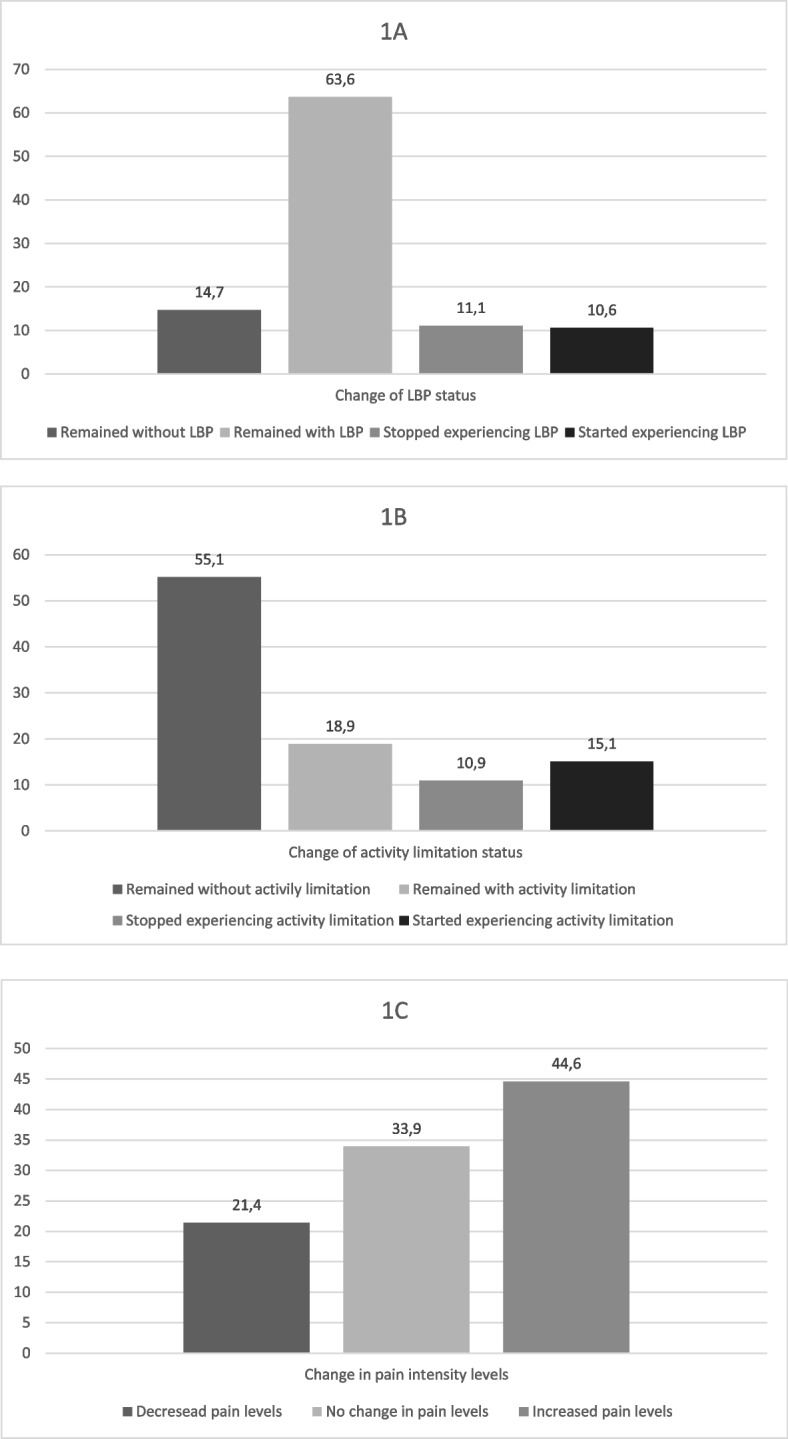
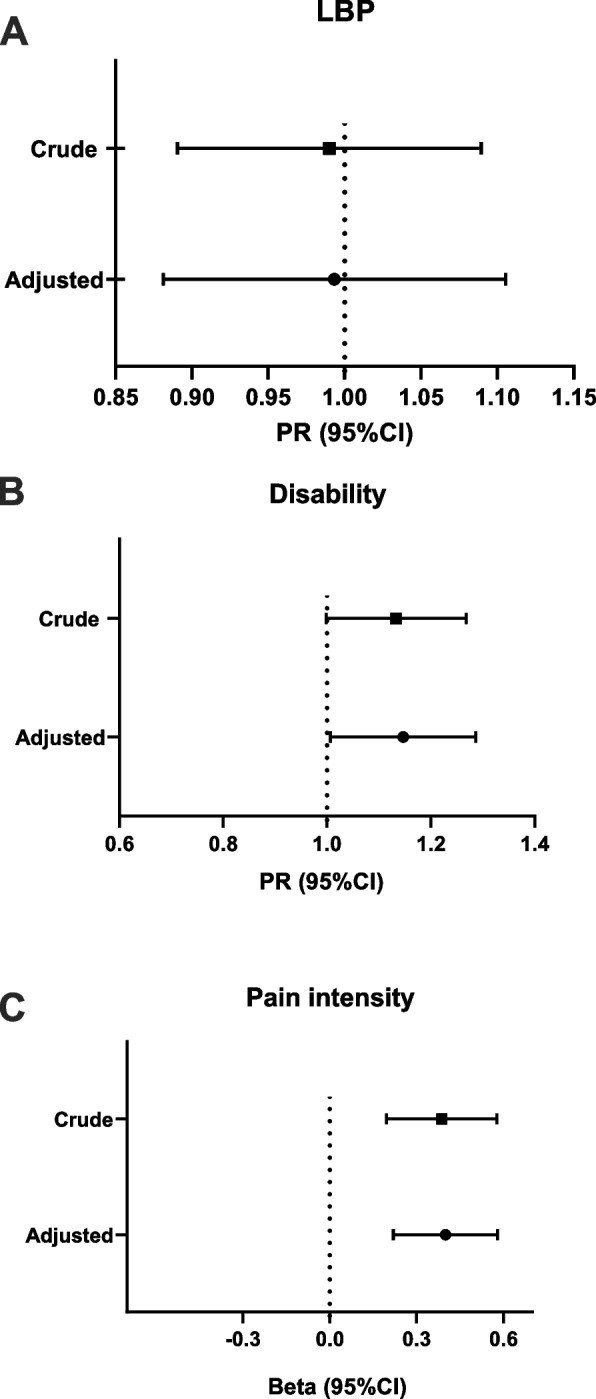
From a total sample of 2,321 respondents (mean age: 37.6 ± 13.5; 75.4% women), the prevalence of LBP did not change significantly from before (74.7% [95%CI 72.3; 76.9]) to the first months of pandemic (74.2% [95%CI 71.9; 76.3]). However, an increased pain levels (β: 0.40; 95%CI 0.22; 0.58) and a higher likelihood for activity limitation due to LBP was observed (PR 1.14; 95%CI 1.01; 1.29). Longitudinal analyzes showed that age, gender, BMI, chronic diseases, physical activity, and anxiety and depression symptoms, were associated with LBP in the first pandemic months.
Although the prevalence of LBP did not change at the first months of COVID-19 pandemic, LBP-induced impairment in daily activities and pain intensity was higher when compared to before the pandemic.
评估 COVID-19 大流行对巴西南部腰痛(LBP)结局的短期影响。
分析 PAMPA 队列的数据。2020 年 6 月至 7 月,在南里奥格兰德州使用基于在线的策略招募成年人。参与者在两个时间点通过在线自我报告问卷回答 LBP 问题:大流行前(回顾性)和 COVID-19 大流行期间。我们评估了 LBP 经历、与 LBP 相关的活动受限(无/是)和 LBP 强度(0 到 10[最剧烈疼痛])。
在总共 2321 名应答者的样本中(平均年龄:37.6±13.5;75.4%为女性),LBP 的患病率在大流行前(74.7%[95%CI 72.3;76.9])和大流行的头几个月之间没有显著变化(74.2%[95%CI 71.9;76.3])。然而,疼痛水平升高(β:0.40;95%CI 0.22;0.58)和由于 LBP 导致活动受限的可能性增加(PR 1.14;95%CI 1.01;1.29)。纵向分析表明,年龄、性别、BMI、慢性疾病、身体活动以及焦虑和抑郁症状与大流行第一个月的 LBP 相关。
尽管 COVID-19 大流行的头几个月 LBP 的患病率没有变化,但与大流行前相比,由于 LBP 导致的日常活动受损和疼痛强度更高。