Department of Nephrology, Radboud Institute for Health Sciences, Radboud University Medical Center, 6525 GA Nijmegen, The Netherlands.
Department of Molecular Biology, Faculty of Science, Radboud Institute for Molecular Life Sciences, Radboud University Nijmegen, 6525 GA Nijmegen, The Netherlands.
Int J Mol Sci. 2022 Dec 22;24(1):194. doi: 10.3390/ijms24010194.
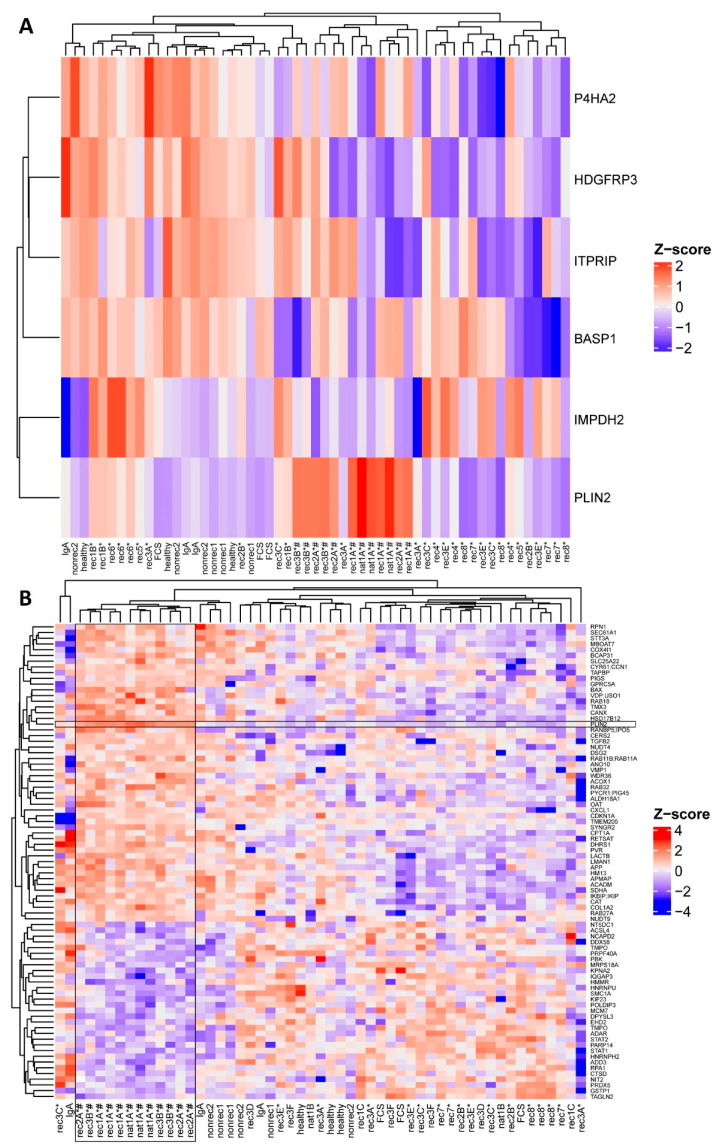
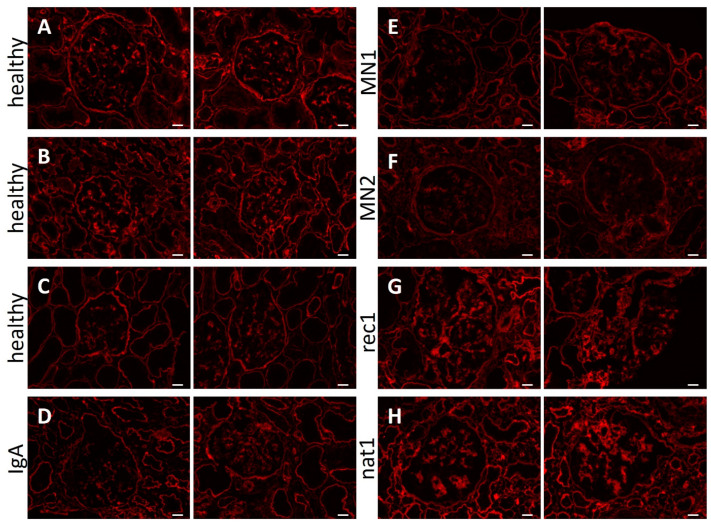
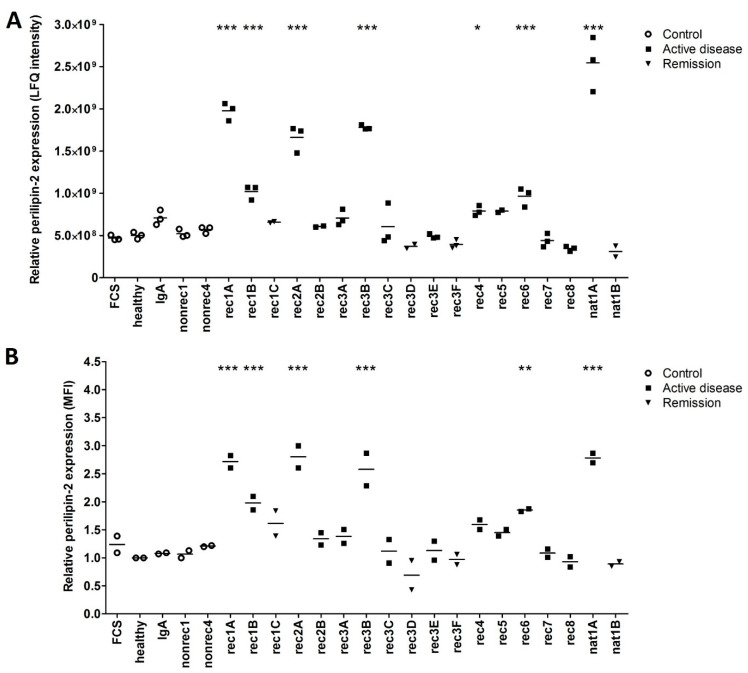
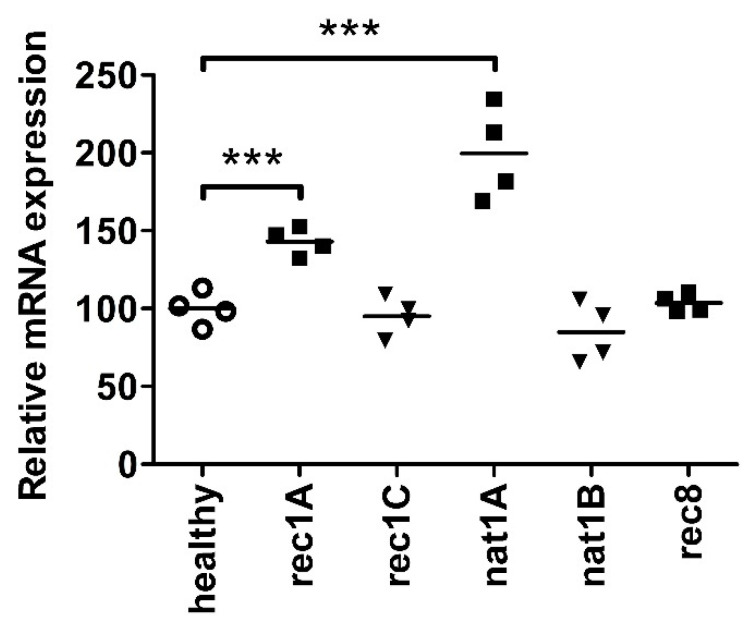
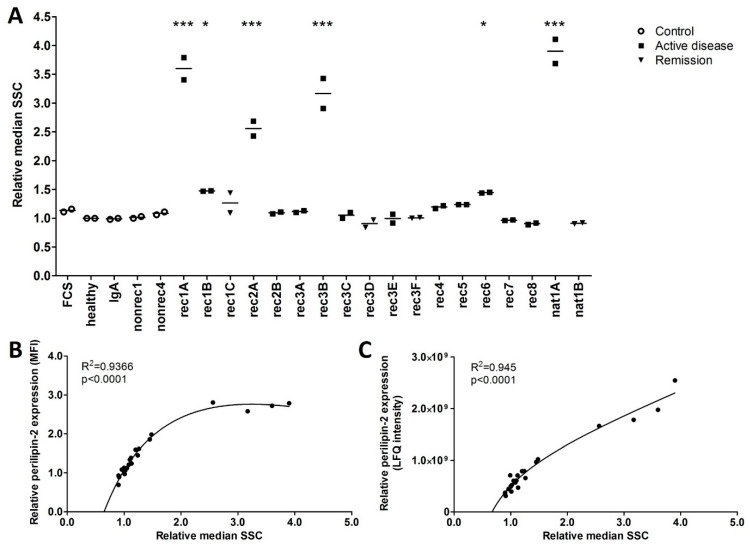
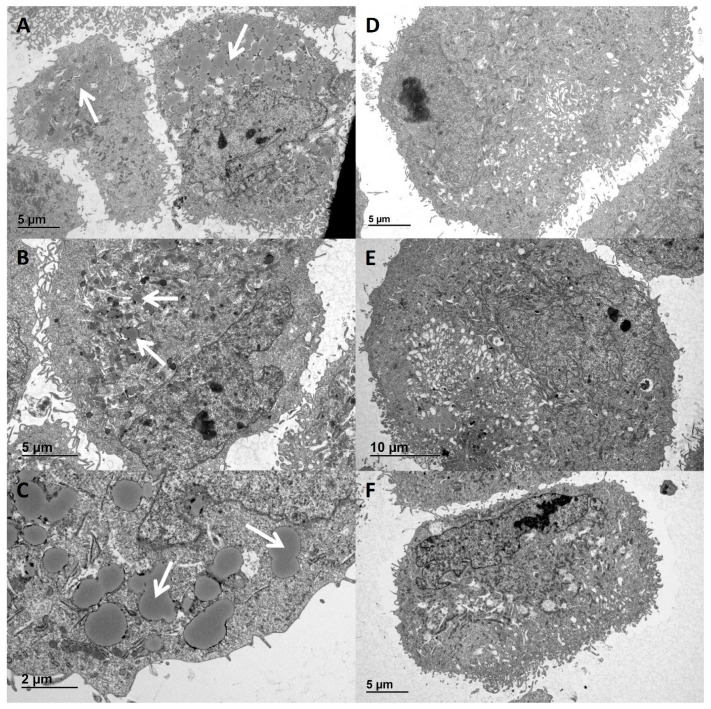
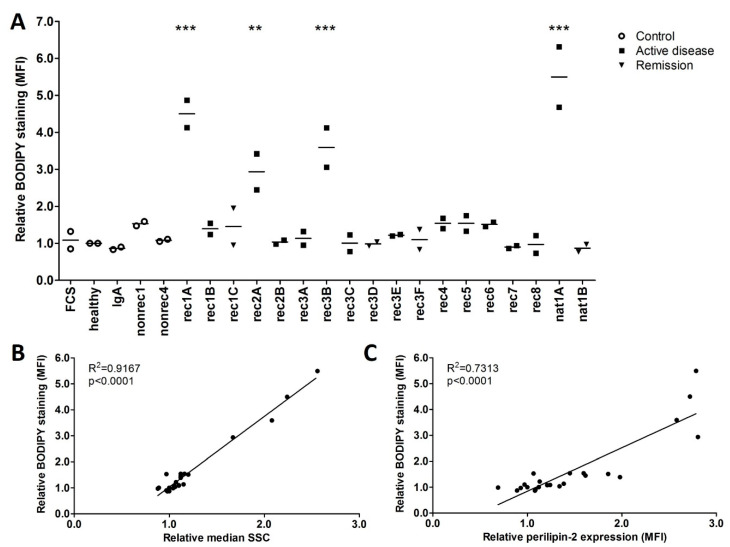
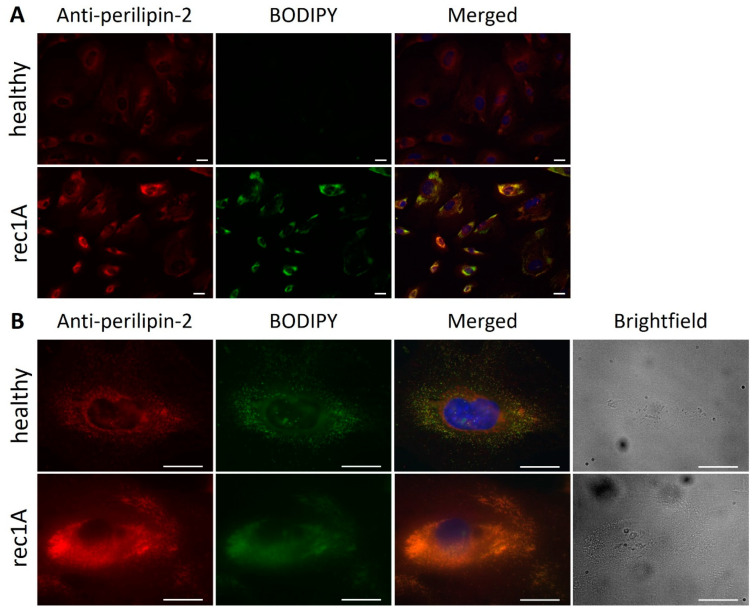
Many patients with primary focal segmental glomerulosclerosis (FSGS) develop recurrence of proteinuria after kidney transplantation. Several circulating permeability factors (CPFs) responsible for recurrence have been suggested, but were never validated. We aimed to find proteins involved in the mechanism of action of CPF(s) and/or potential biomarkers for the presence of CPF(s). Cultured human podocytes were exposed to plasma from patients with FSGS with presumed CPF(s) or healthy and disease controls. Podocyte proteomes were analyzed by LC-MS. Results were validated using flow cytometry, RT-PCR, and immunofluorescence. Podocyte granularity was examined using flow cytometry, electron microscopy imaging, and BODIPY staining. Perilipin-2 protein expression was increased in podocytes exposed to presumed CPF-containing plasmas, and correlated with the capacity of plasma to induce podocyte granularity, identified as lipid droplet accumulation. Elevated podocyte perilipin-2 was confirmed at protein and mRNA level and was also detected in glomeruli of FSGS patients whose active disease plasmas induced podocyte perilipin-2 and lipid droplets. Our study demonstrates that presumably, CPF-containing plasmas from FSGS patients induce podocyte lipid droplet accumulation and perilipin-2 expression, identifying perilipin-2 as a potential biomarker. Future research should address the mechanism underlying CPF-induced alterations in podocyte lipid metabolism, which ultimately may result in novel leads for treatment.
许多原发性局灶节段性肾小球硬化症(FSGS)患者在肾移植后会出现蛋白尿复发。已经提出了几种负责复发的循环通透性因子(CPF),但从未得到验证。我们旨在寻找参与 CPF(s)作用机制的蛋白质和/或 CPF(s)存在的潜在生物标志物。将培养的人足细胞暴露于推测含有 CPF(s)的 FSGS 患者或健康和疾病对照的血浆中。通过 LC-MS 分析足细胞蛋白质组。使用流式细胞术、RT-PCR 和免疫荧光法验证结果。使用流式细胞术、电子显微镜成像和 BODIPY 染色检查足细胞的颗粒度。暴露于推测含有 CPF 的血浆中的足细胞中 perilipin-2 蛋白表达增加,并且与血浆诱导足细胞颗粒度的能力相关,这被鉴定为脂滴积累。升高的足细胞 perilipin-2 在蛋白质和 mRNA 水平上得到证实,并在其活动期血浆诱导足细胞 perilipin-2 和脂滴的 FSGS 患者的肾小球中也检测到。我们的研究表明,来自 FSGS 患者的含有 CPF 的血浆可能会诱导足细胞脂滴积累和 perilipin-2 表达,从而将 perilipin-2 鉴定为潜在的生物标志物。未来的研究应该解决 CPF 诱导的足细胞脂质代谢改变的机制,这最终可能为治疗提供新的线索。