Yu Keyan, Ying Jia, Zhao Tianyun, Lei Lan, Zhong Lijie, Hu Jiaping, Zhou Juin W, Huang Chuan, Zhang Xiaodong
Department of Medical Imaging, The Third Affiliated Hospital of Southern Medical University (Academy of Orthopedics Guangdong Province), Guangzhou, China.
Department of Radiology, Peking University Shenzhen Hospital, Shenzhen, China.
Quant Imaging Med Surg. 2023 Jan 1;13(1):352-369. doi: 10.21037/qims-22-368. Epub 2022 Nov 17.
The infrapatellar fat pad (IPFP) plays an important role in the incidence of knee osteoarthritis (OA). Magnetic resonance (MR) signal heterogeneity of the IPFP is related to pathologic changes. In this study, we aimed to investigate whether the IPFP radiomic features have predictive value for incident radiographic knee OA (iROA) 1 year prior to iROA diagnosis.
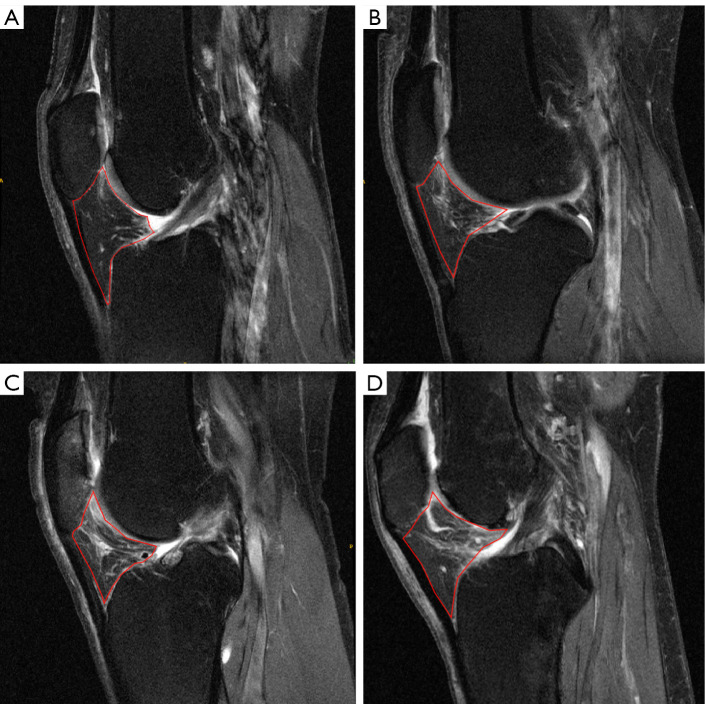
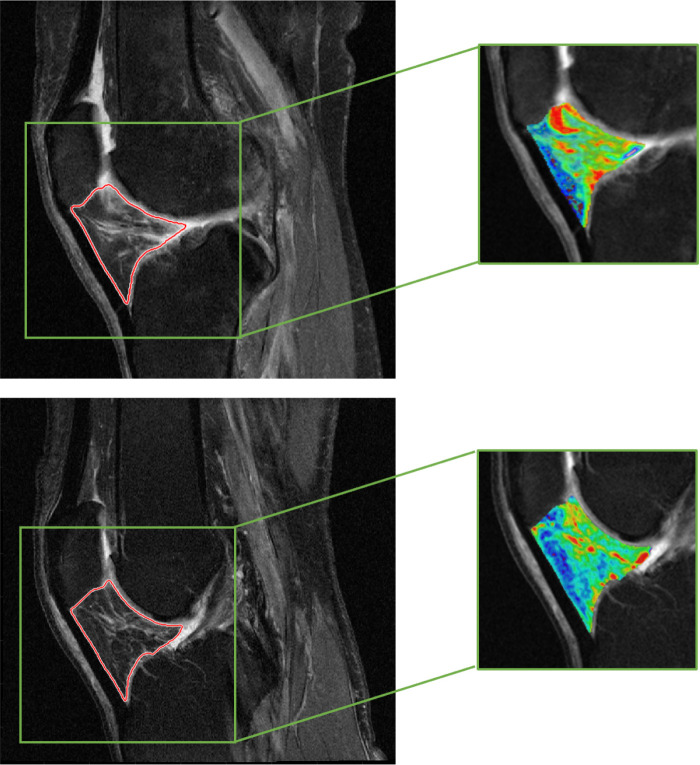
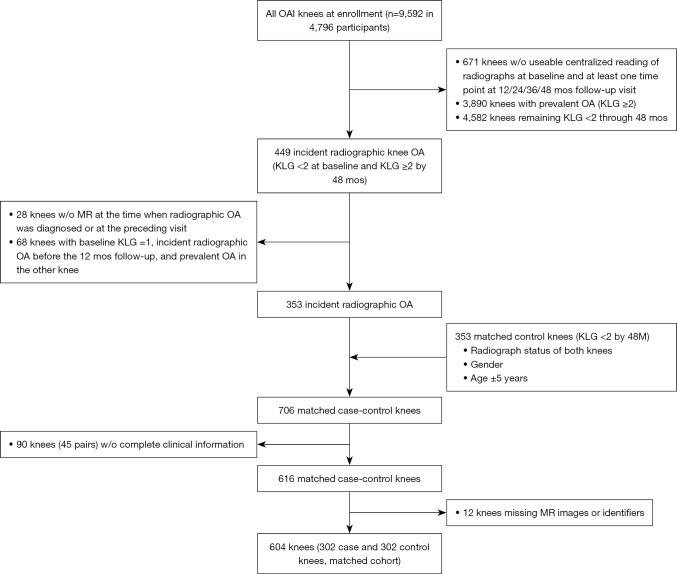
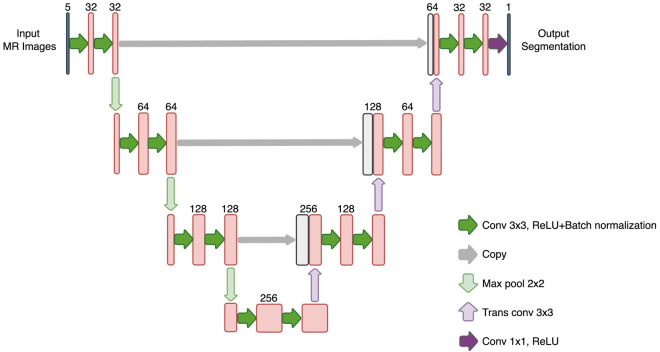
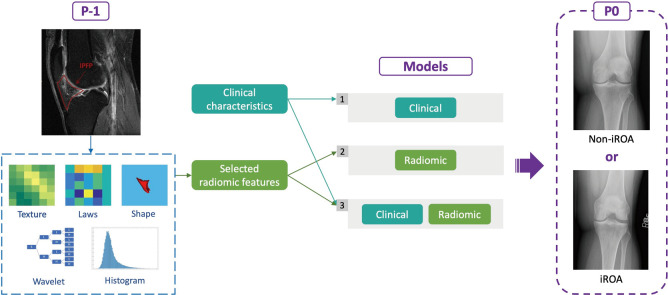
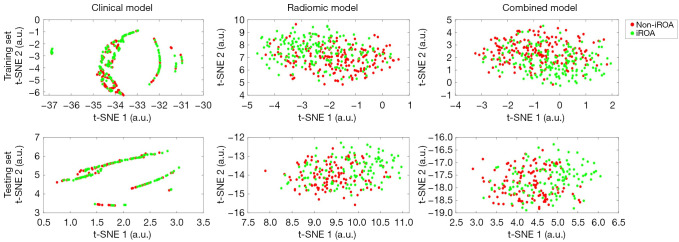
Data used in this work were obtained from the osteoarthritis initiative (OAI). In this study, iROA was defined as a knee with a baseline Kellgren-Lawrence grade (KLG) of 0 or 1 that further progressed to KLG ≥2 during the follow-up visit. Intermediate-weighted turbo spin-echo knee MR images at the time of iROA diagnosis and 1 year prior were obtained. Five clinical characteristics-age, sex, body mass index, knee injury history, and knee surgery history-were obtained. A total of 604 knees were selected and matched (302 cases and 302 controls). A U-Net segmentation model was independently trained to automatically segment the IPFP. The prediction models were established in the training set (60%). Three main models were generated using (I) clinical characteristics; (II) radiomic features; (III) combined (clinical plus radiomic) features. Model performance was evaluated in an independent testing set (remaining 40%) using the area under the curve (AUC). Two secondary models were also generated using Hoffa-synovitis scores and clinical characteristics.
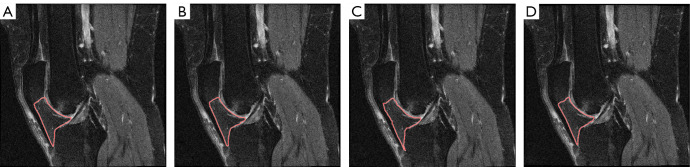
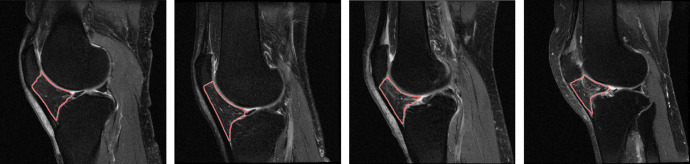
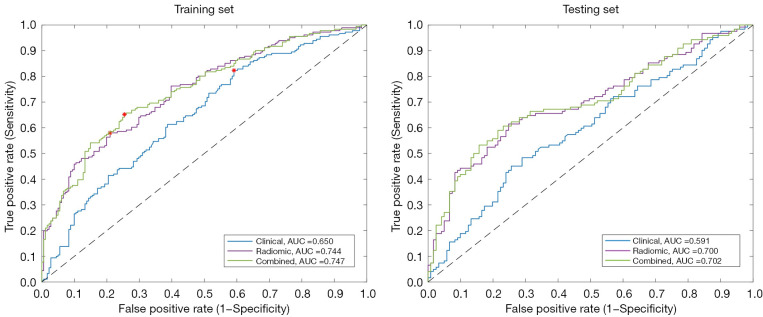
The comparison between the automated and manual segmentations of the IPFP achieved a Dice coefficient of 0.900 (95% CI: 0.891-0.908), which was comparable to that of experienced radiologists. The radiomic features model and the combined model yielded superior AUCs of 0.700 (95% CI: 0.630-0.763) and 0.702 (95% CI: 0.635-0.763), respectively. The DeLong test found no statistically significant difference between the receiver operating curves of the radiomic and combined models (P=0.831); however, both models outperformed the clinical model (P=0.014 and 0.004, respectively).
Our results demonstrated that radiomic features of the IPFP are predictive of iROA 1 year prior to the diagnosis, suggesting that IPFP radiomic features can serve as an early quantitative prediction biomarker of iROA.
髌下脂肪垫(IPFP)在膝关节骨关节炎(OA)的发病中起重要作用。IPFP的磁共振(MR)信号异质性与病理变化相关。在本研究中,我们旨在调查IPFP的放射组学特征在影像学诊断膝关节OA(iROA)前1年是否对iROA具有预测价值。
本研究使用的数据来自骨关节炎倡议(OAI)。在本研究中,iROA被定义为基线Kellgren-Lawrence分级(KLG)为0或1的膝关节,在随访期间进一步进展至KLG≥2。获取iROA诊断时及1年前的中等加权快速自旋回波膝关节MR图像。获取五个临床特征——年龄、性别、体重指数、膝关节损伤史和膝关节手术史。共选择并匹配了604个膝关节(302例病例和302例对照)。独立训练一个U-Net分割模型以自动分割IPFP。在训练集(60%)中建立预测模型。使用(I)临床特征;(II)放射组学特征;(III)联合(临床加放射组学)特征生成三个主要模型。在独立测试集(其余40%)中使用曲线下面积(AUC)评估模型性能。还使用Hoffa滑膜炎评分和临床特征生成了两个次要模型。
IPFP自动分割与手动分割之间的比较获得了0.900的Dice系数(95%CI:0.891-0.908),与经验丰富的放射科医生相当。放射组学特征模型和联合模型分别产生了0.700(95%CI:0.630-0.763)和0.702(95%CI:0.635-0.763)的优异AUC。DeLong检验发现放射组学模型和联合模型的受试者操作曲线之间无统计学显著差异(P=0.831);然而,两个模型均优于临床模型(分别为P=0.014和0.004)。
我们的结果表明,IPFP的放射组学特征在诊断前1年可预测iROA,提示IPFP放射组学特征可作为iROA的早期定量预测生物标志物。