Department of Molecular Biology, University of Texas Southwestern Medical Center, Dallas, TX 75390, USA.
Hamon Center for Regenerative Science and Medicine, University of Texas Southwestern Medical Center, Dallas, TX 75390, USA.
Science. 2023 Jan 13;379(6628):179-185. doi: 10.1126/science.ade1105. Epub 2023 Jan 12.
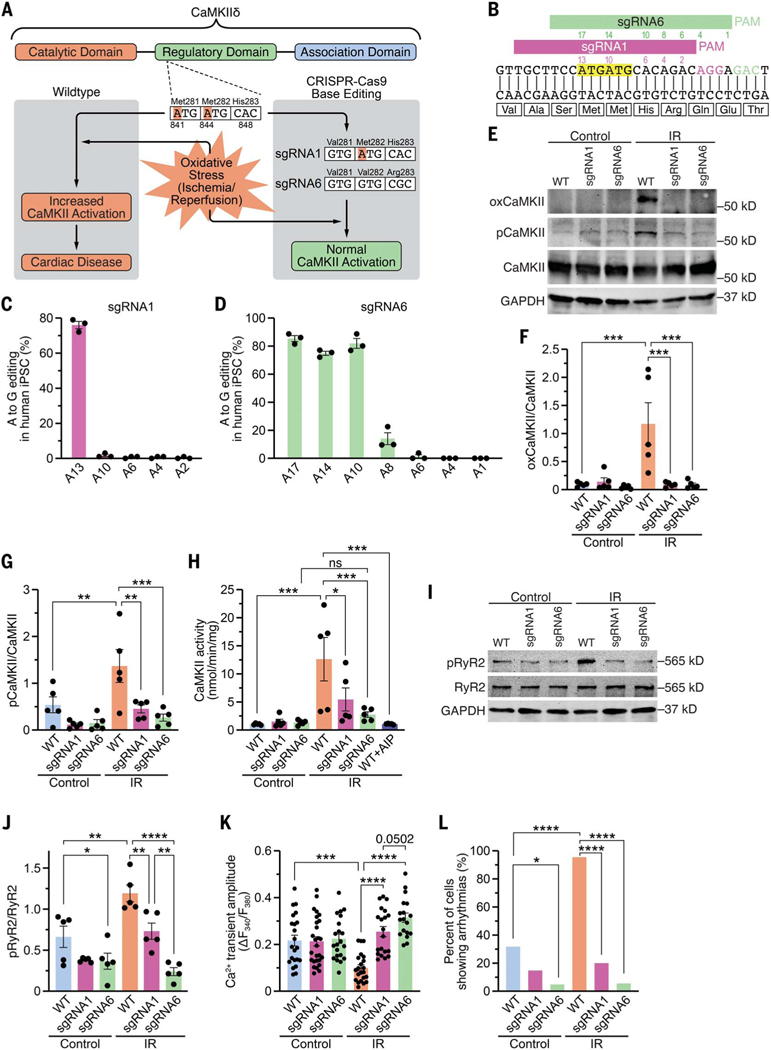
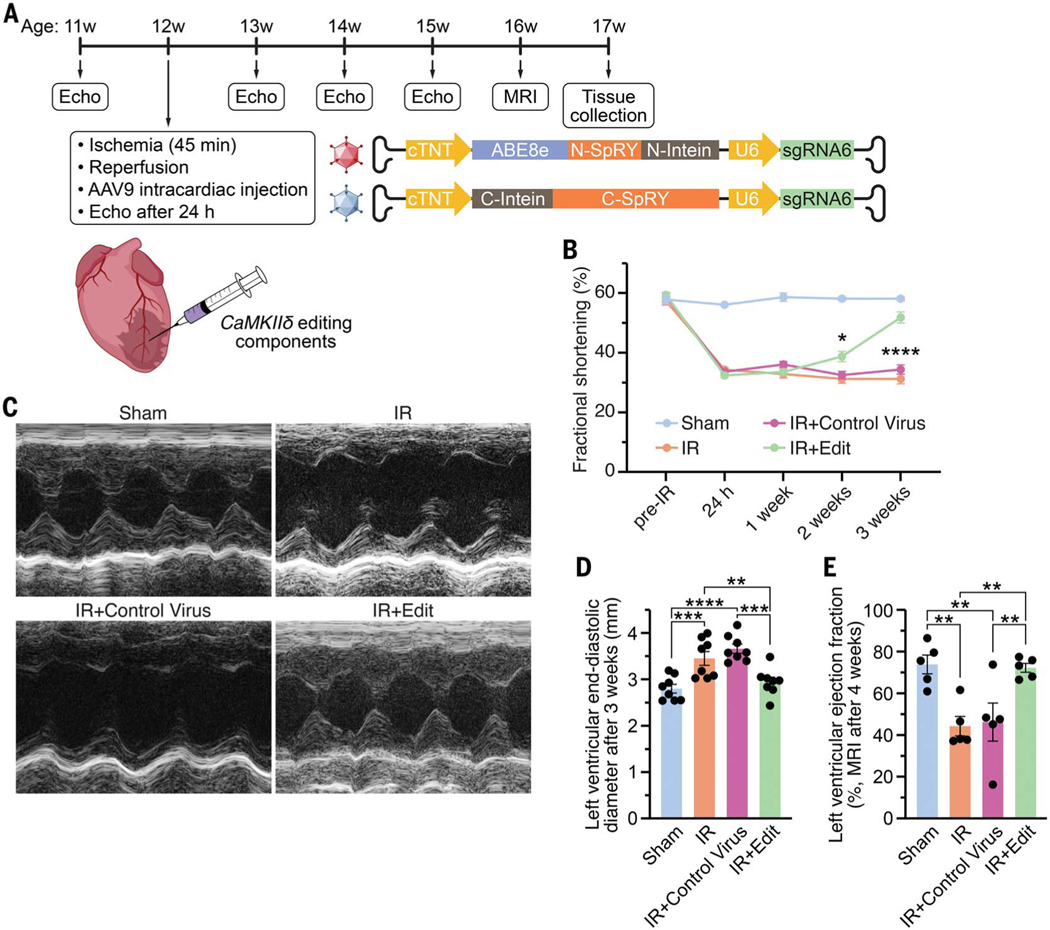
CRISPR-Cas9 gene editing is emerging as a prospective therapy for genomic mutations. However, current editing approaches are directed primarily toward relatively small cohorts of patients with specific mutations. Here, we describe a cardioprotective strategy potentially applicable to a broad range of patients with heart disease. We used base editing to ablate the oxidative activation sites of CaMKIIδ, a primary driver of cardiac disease. We show in cardiomyocytes derived from human induced pluripotent stem cells that editing the gene to eliminate oxidation-sensitive methionine residues confers protection from ischemia/reperfusion (IR) injury. Moreover, editing in mice at the time of IR enables the heart to recover function from otherwise severe damage. gene editing may thus represent a permanent and advanced strategy for heart disease therapy.
CRISPR-Cas9 基因编辑技术正成为治疗基因突变的一种有前途的疗法。然而,目前的编辑方法主要针对特定基因突变的相对较小的患者群体。在这里,我们描述了一种潜在适用于广泛心脏病患者的心脏保护策略。我们使用碱基编辑技术来消除 CaMKIIδ 的氧化激活位点,CaMKIIδ 是心脏病的主要驱动因素。我们在源自人类诱导多能干细胞的心肌细胞中表明,编辑 基因以消除对氧化敏感的蛋氨酸残基可提供对缺血/再灌注 (IR) 损伤的保护。此外,在 IR 时在小鼠中进行 编辑可使心脏从严重损伤中恢复功能。因此,基因编辑可能代表一种用于心脏病治疗的永久性和先进策略。