Karri Dileep R, Zhang Yu, Chemello Francesco, Min Yi-Li, Huang Jian, Kim Jiwoong, Mammen Pradeep P A, Xu Lin, Liu Ning, Bassel-Duby Rhonda, Olson Eric N
Department of Molecular Biology, University of Texas Southwestern Medical Center, Dallas, TX 75390, USA.
Senator Paul D. Wellstone Muscular Dystrophy Cooperative Research Center, University of Texas Southwestern Medical Center, Dallas, TX 75390, USA.
Mol Ther Nucleic Acids. 2022 Mar 8;28:154-167. doi: 10.1016/j.omtn.2022.03.004. eCollection 2022 Jun 14.
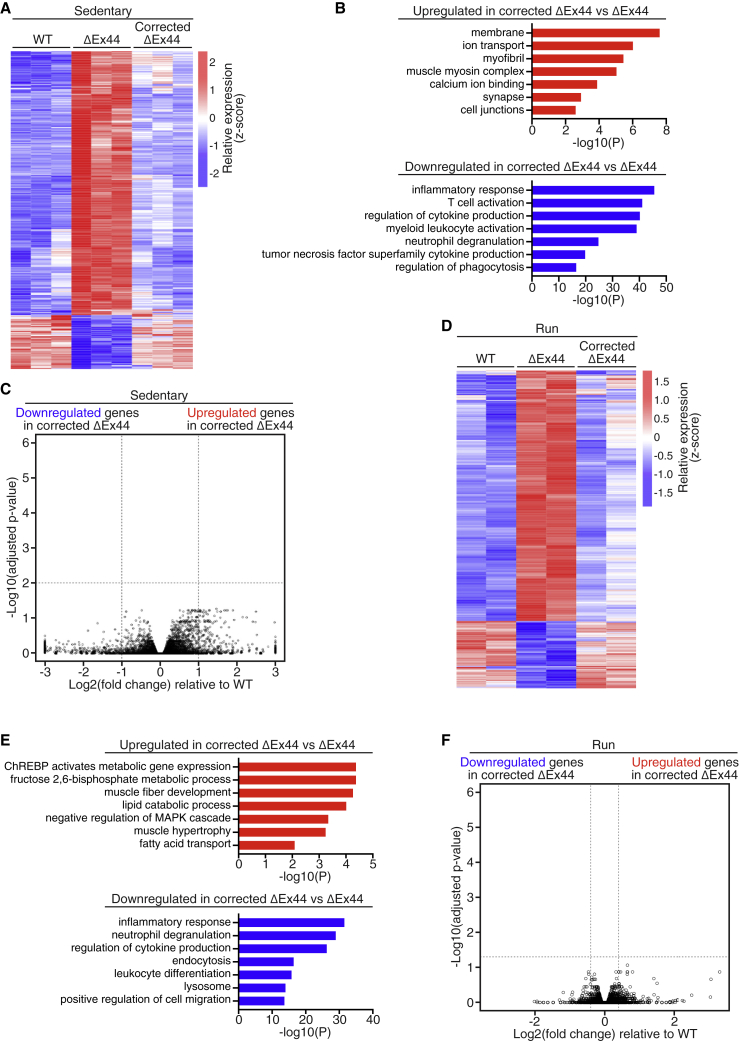
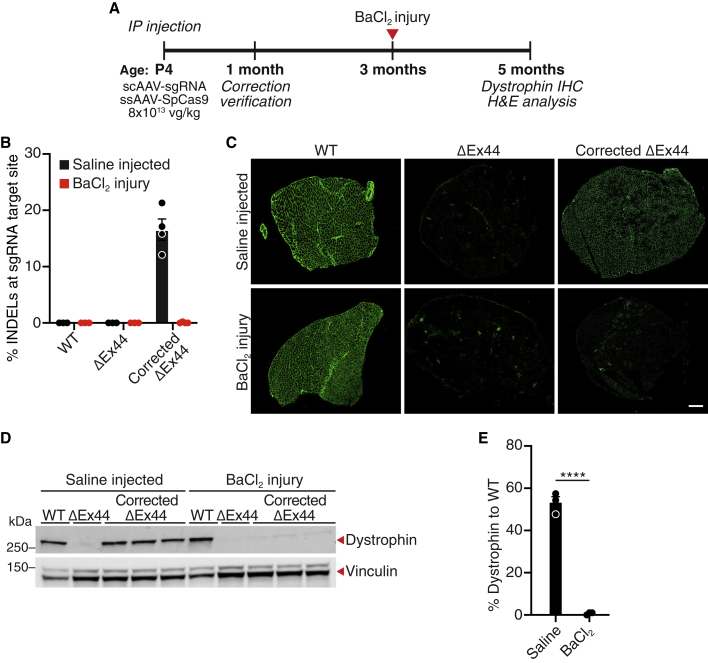
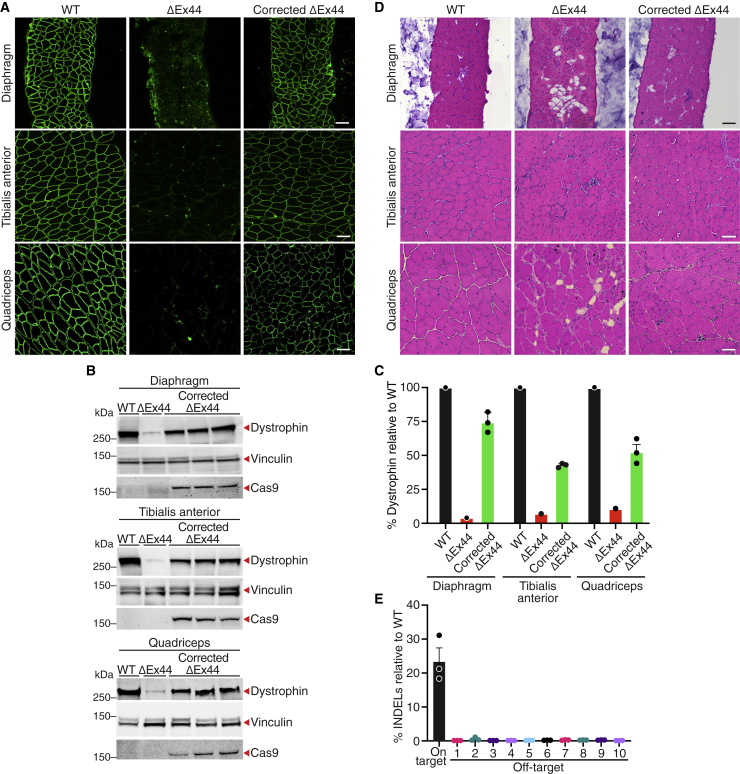
Duchenne muscular dystrophy (DMD) is a lethal muscle disease caused by mutations in the dystrophin gene. CRISPR/Cas9 genome editing has been used to correct DMD mutations in animal models at young ages. However, the longevity and durability of CRISPR/Cas9 editing remained to be determined. To address these issues, we subjected ΔEx44 DMD mice to systemic delivery of AAV9-expressing CRISPR/Cas9 gene editing components to reframe exon 45 of the dystrophin gene, allowing robust dystrophin expression and maintenance of muscle structure and function. We found that genome correction by CRISPR/Cas9 confers lifelong expression of dystrophin in mice and that corrected skeletal muscle is highly durable and resistant to myofiber necrosis and fibrosis, even in response to chronic injury. In contrast, when muscle fibers were ablated by barium chloride injection, we observed a loss of gene edited dystrophin expression. Analysis of on- and off-target editing in aged mice confirmed the stability of gene correction and the lack of significant off-target editing at 18 months of age. These findings demonstrate the long-term durability of CRISPR/Cas9 genome editing as a therapy for maintaining the integrity and function of DMD muscle, even under conditions of stress.
杜氏肌营养不良症(DMD)是一种由肌营养不良蛋白基因突变引起的致命性肌肉疾病。CRISPR/Cas9基因组编辑已被用于在幼年动物模型中纠正DMD突变。然而,CRISPR/Cas9编辑的寿命和持久性仍有待确定。为了解决这些问题,我们对ΔEx44 DMD小鼠进行了全身递送表达CRISPR/Cas9基因编辑组件的AAV9,以重新构建肌营养不良蛋白基因的外显子45,从而实现强大的肌营养不良蛋白表达并维持肌肉结构和功能。我们发现,CRISPR/Cas9介导的基因组校正可使小鼠终身表达肌营养不良蛋白,并且校正后的骨骼肌具有高度的持久性,即使在受到慢性损伤时也能抵抗肌纤维坏死和纤维化。相比之下,当通过注射氯化钡消融肌纤维时,我们观察到基因编辑的肌营养不良蛋白表达丧失。对老年小鼠的靶向和脱靶编辑分析证实了基因校正的稳定性以及在18个月龄时没有明显的脱靶编辑。这些发现表明,即使在应激条件下,CRISPR/Cas9基因组编辑作为一种维持DMD肌肉完整性和功能的疗法也具有长期的持久性。